



Baidu Designs In-Memory Database Based on 'Intel Optane DC Persistent Memory'
 Published2019.09.09 12:22
| Intel Optane DC Persistent Memory and DRAM
With a hybrid memory configuration design that incorporates all components
| Improved 'Feed Stream' to provide customer-tailored content
Intel's memory capabilities are reflected in Baidu's internet services.
Intel announced on the 2nd that Baidu is designing an in-memory database for its 'Feed Stream' service to utilize the large-capacity, high-performance capabilities of 'Intel Optane DC persistent memory'.
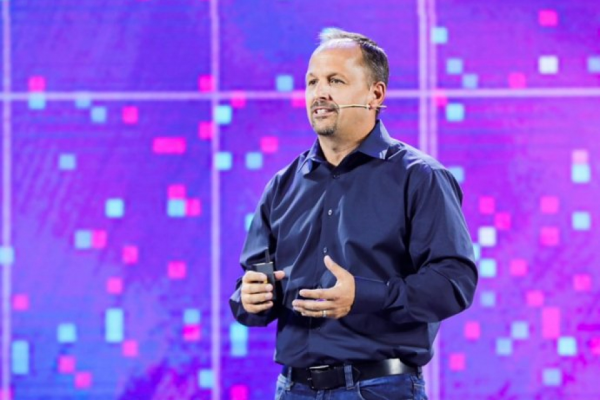
Jason Greve, Intel Vice President (Photo: Intel)
By building a memory platform equipped with 2nd generation Intel Xeon Scalable processors and based on Intel Optane DC Persistent Memory, Baidu has been able to provide personalized search results to users while lowering the Total Cost of Ownership (TCO).
Intel and Baidu [discussed] details regarding this cooperation between the two companies at the 2019 Baidu ABC Summit held at the Beijing National Convention Center on August 29.Revealed.
Internet service providers like Baidu have been forced to achieve fast and efficient data access and storage as they manage explosively growing data. With this announcement, Baidu is improving its feed stream services to provide more personalized content to customers.
Baidu uses the in-memory database 'Feed-Cube' to accelerate data storage and information retrieval in its cloud-based feed stream service. By deploying Intel Optane DC Persistent Memory and 2nd Gen Intel Xeon processors, Baidu ensures concurrency and high performance for large volumes for Feed-Cube.
Intel and Baidu designed a hybrid memory configuration within the Baidu Feed Stream service that incorporates both Intel Optane DC Persistent Memory and DRAM. Through this approach, FeedCube improved response times for search results even under the pressure of massive concurrent traffic. At the same time, single-server DRAM usage was reduced to less than half, and costs were reduced in terms of FeedCube's petabyte-scale storage capacity.
Intel and Baidu released case studies on the research, including examples of other applications using Intel Optane DC Persistent Memory technology, such as Redis, Spark, and service functions.
Jason Grebe, Vice President and General Manager of Intel’s Cloud Platform and Technology Group, said, “Intel has been supporting Baidu’s core businesses, ranging from search, AI, and autonomous driving to the cloud, for over 10 years,” adding, “Through this close collaboration between the two companies, we are rapidly deploying the latest Intel technologies and enhancing the customer experience of Baidu’s services.”
Tao Wang, Senior Architect of Recommendation Technology Architecture at Baidu, stated, “Using Intel Optane DC Persistent Memory for the FeedCube database allows for cost-effective scaling of memory capacity to meet the demands of feed stream services.”
In addition, Intel and Baidu unveiled a storage solution that accelerates machine learning performance in high-performance computing (HPC) workloads. The new HPC solution is delivered within Baidu's cloud environment and provides users with end-to-end HPC support encompassing a wide range of functions, from data preprocessing, model training, and evaluation to inference and result publication. Baidu Cloud ABC Storage Service uses Intel Optane DC SSDs and Intel QLC 3D NAND SSDs.
Meanwhile, Intel and Baidu recently joined the Confidential Computing Consortium (CCC) under the Linux Foundation. As part of the consortium, Intel and Baidu plan to collaborate with industry partners to build and store private trusted computing services on the Baidu Cloud based on Intel Software Guard Extension (SGX) technology.
Comments
Related news
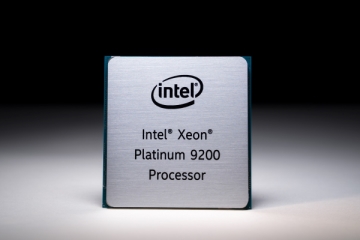
Next-generation Intel Xeon 'Cooper Lake' processor with up to 56 cores to be released in the first half of next year
Intel announced the Xeon Scalable processor family, the Cooperlake processor. The Cooperlake processor provides up to 56 cores per socket on standard and CPU sockets with built-in AI acceleration capabilities. The platform performance delivered by the Cooperlake processor leverages features built into the Intel Xeon Platinum 9200 series. With lower power consumption compared to the current Intel Xeon Platinum 9200 processor, Cooperlake, as an x86 processor, will add bfloat16 support to Intel Deep Learning Boost to provide built-in high-performance AI acceleration capabilities.
2019.08.08by 이수민 기자
.png)
Lenovo Partners with Intel to Strengthen AI Leadership in HPC
Lenovo's Data Center Group is entering into a multi-year collaboration with Intel in the convergence of HPC and AI domains. Lenovo plans to optimize Intel's complete portfolio of HPC and AI hardware and software solutions and leverage this as the foundation for its market acceleration strategy. The combination of the 2nd Generation Intel Xeon Scalable platform and Lenovo Neptune liquid cooling technology is delivering results through joint engineering between the two companies and a unique combination of HPC intellectual property. By adopting liquid cooling technology rather than the conventional air cooling approach, Lenovo has achieved a 40-45% reduction in power consumption compared to previous systems. At the end of July, our procurement authority selected Lenovo as the supplier for the Meteorological Administration supercomputer deployment project and concluded a supply contract.
2019.08.08by 이수민 기자
.png)
Intel Begins Full-Scale Shipments of 10nm FPGA "Agilex" for '5G Era Data Centers'
Intel has begun shipping Intel Agilex FPGAs manufactured on its 10-nanometer process to early access program customers. Reconfigurable and power-efficient, Agilex provides the flexibility and agility needed to address these challenges with high performance and low latency. It also creates intelligent, higher-bandwidth networks through accelerated AI and other analytics performed across edge, cloud, and network environments. It also offers compute capabilities and high-speed interface capabilities that deliver actionable insights in real time. Intel provides a custom logic continuum that enables developers to seamlessly migrate designs from FPGAs to structured ASICs.
2019.09.02by 이수민 기자

Intel Unveils Next-Generation 'Core Ultra Series 3' and vPro Platform for Enterprise PCs
Intel has officially unveiled the "Intel Core Ultra Series 3" for next-generation enterprise PCs and the latest vPro platform, addressing a wide range of demands from enterprise notebooks to high-performance workstations.
2026.03.26by 배종인 기자

ROHM Launches ESD Protection Diode Compatible with High-Speed Interfaces of 10Gbps or Higher
Semiconductor specialist ROHM has developed the 'RESDxVx series' of ESD (electrostatic discharge) protection diodes capable of responding to next-generation high-speed data communication environments exceeding 10Gbps, simultaneously enhancing both signal quality maintenance required in high-speed interfaces and IC protection performance.
2026.03.26by 배종인 기자











