


Delphi Reduces EV Charging Time by 50% with 800V SiC Inverter
 Published2019.09.25 17:00
Securing unit price competitiveness through mass production of SiC inverters
Delphi Technologies announced that it is mass-producing 800V silicon carbide (SiC) inverters, a component that plays a key role in both high-efficiency next-generation electric vehicles and hybrids.
This new inverter raises the electric system to 800V to extend the driving range and reduces charging time by 50% compared to the currently used 400V system.
This technology, which supports multi-voltage platforms, is an advanced version of the high-voltage inverter introduced by Delphi.
Delphi Technologies 800V inverters use state-of-the-art silicon carbide MOSFET semiconductors (silicon carbide-based metal oxide semiconductor field-effect transistor wide bandgap technology).
Delphi recently secured a $2.7 billion customer with a global OEM to mass-produce this technology for over eight years. It is expected to launch in 2022 and will initially be offered for high-performance vehicles operating at up to 800V.
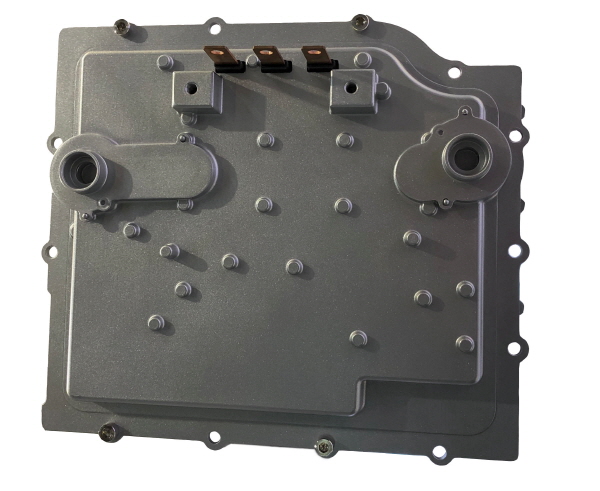
Delphi's 800V SiC inverter
In addition, Delphi stated, "Through a partnership with Cree, a leading company in the silicon carbide semiconductor field, we are improving the long-distance driving, reduced charging times, and efficiency of next-generation electric vehicles." Delphi Technologies inverters use Cree's Wolfspeed® silicon carbide-based MOSFETs.
According to IHS, up to 45% of global automobile production will be electrified by 2025, with approximately 46 million electric vehicles sold annually, and this figure is estimated to increase to up to 57% (approximately 62 million vehicles annually) by 2030.
Inverters are considered the most valuable electrification components, and their efficiency has a transformative impact on many aspects of automotive performance.
Delphi CEO Richard F. Dow “Doubling the voltage from the current standard 400V would bring a wide range of benefits to both car drivers and manufacturers,” said Dauch. “We developed this technology to simplify multi-voltage strategies as automakers extend the driving range of electric and hybrid vehicles.”
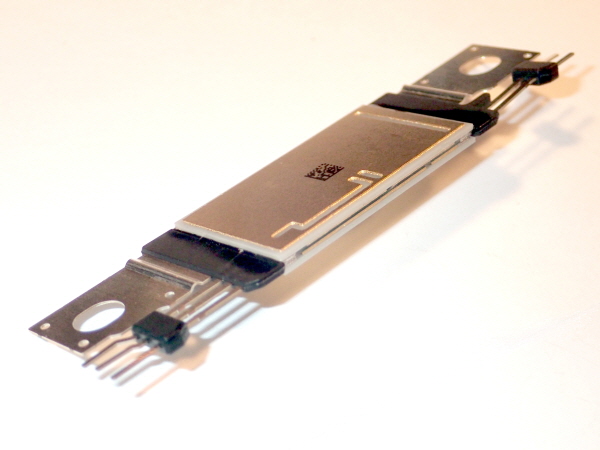
Delphi Viper 4 Inverter Switch
At the heart of the newly introduced inverter is a patented Viper power switch that combines high integration with a unique double-sided cooling function.
With this decisive feature, we were able to create a product that is 40% lighter and 30% more compact than competitor inverter technology.
As the most recent addition to the Viper power switch lineup, it replaces conventional silicon with silicon carbide, a high-bandgap semiconductor capable of very fast switching and operation at much higher temperatures.
Richard F. Dauch added, “A faster switching speed alone makes the motor faster, smaller, and lighter, providing superior efficiency and range. This is an added benefit to the many advantages of switching to 800V.”

Comments
Related news
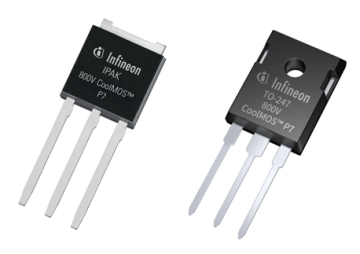
Infineon launches 800V MOSFET product family with superjunction technology
Infineon Technologies (CEO Lee Seung-soo) announced the launch of the 800V CoolMOS™ P7 series. This 800V MOSFET product family applying superjunction technology combines best-in-class performance with excellent ease of use. These new products meet market demands for performance, design convenience, and price-to-performance ratio, making them suitable for low-power SMPS applications. They are primarily used in flyback topology applications found in adapters, LED lighting, audio, industrial, and auxiliary power supply applications.
2016.10.06by 김수지 기자
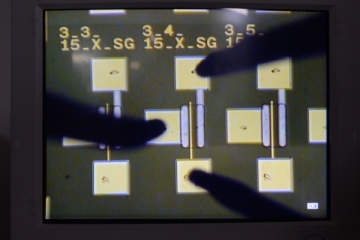
ETRI develops gallium oxide MOSFET capable of withstanding 2300V high voltage.
The Korea Electronics and Telecommunications Research Institute has developed a power semiconductor transistor capable of withstanding 2300V high voltage for the first time in the world using gallium oxide. While conventional power semiconductor devices were manufactured by designing devices on silicon, gallium nitride, or silicon carbide substrates followed by patterning, etching, and deposition processes to create transistors, this technology is differentiated by its use of gallium oxide instead of existing semiconductor materials. Gallium oxide has a wider energy band gap than conventional semiconductor materials, enabling it to maintain semiconductor properties even at high temperatures and voltages, making chip miniaturization and high efficiency possible. This technology is expected to be used in power conversion modules for electronic products requiring high voltage, electric vehicles, wind power generation, and locomotives, enabling it to function as a robust semiconductor capable of withstanding high voltage and power conditions.
2019.05.19by 이수민 기자

Porsche's 800V-based electric vehicle completes final long-distance testing
Porsche has completed a long-distance driving test of its 800V-based electric vehicle, the Taycan. The test, which covered a total driving distance of 3,425 km at an average speed of 200 km/h, was conducted at the Nardius Technical Center in Puglia, Italy, and appears to be a final validation test ahead of its September launch. According to officials, the test was conducted as a continuous long-distance driving evaluation, during which various tests were performed including vehicle temperature monitoring and battery status assessment under rapid charging conditions.
2019.08.25by 명세환 기자

[e4ds Tech Day 2026 ⑨] Sim Sang-gyu, Autocrypt CTO: "In the Physical AI Era, Automotive Security Must Extend Beyond the Vehicle"
At e4ds Tech Day 2026, Sim Sang-gyu, CTO of Autocrypt, explained automotive cybersecurity strategies in the era of Physical AI and SDV (Software-Defined Vehicle). Automobiles are evolving as part of an ecosystem connected to AI, cloud, chargers, IoT, and robots, and he emphasized that the scope of security must expand beyond the vehicle interior to the entire connected environment. In particular, AI model tampering, adversarial attacks, OTA updates, and EV charger hacking were identified as major threats. He explained that response measures require zero trust, AI model integrity protection, intrusion detection, Security by Design and Default, and full lifecycle security management, and that proactive security system establishment beyond regulatory compliance is critical for securing future mobility competitiveness.
2026.10.12by 배종인 기자

Practical HIL Construction Strategy for Automotive and Off-Highway Controller Validation
As vehicle E/E architecture transitions to zonal structures and shifts to software-defined vehicles (SDV), the number of controllers (ECUs) requiring validation and software complexity are surging dramatically. Meanwhile, real vehicle testing cannot provide repeated verification under identical conditions and entails lead time and safety concerns. This white paper explains the principles of HIL (Hardware-in-the-Loop) validation and the structure of the NI platform composed of PXI, SLSC, and VeriStand, and through two actual implementation cases—Camera Record & Replay HIL for In-Cabin Monitoring Controller (ICMU) and Forklift Controller (VCU) HILS—describes how controller-level regression testing becomes possible. Additionally, it explicitly states application boundaries and limitations, such as lack of A2B support.
2026.10.12by 편집부











