



The automotive semiconductor market is rapidly growing in the era of autonomous driving.
 Published2019.09.23 17:31
The automotive semiconductor market is growing at twice the rate of the overall market.
Level 3 autonomous driving is expected to begin in earnest in 2022.
The ultimate goal of automotive electrification is autonomous driving. And the key to autonomous driving lies in automotive semiconductors.

According to the report on ‘Vehicle Semiconductor Technology and Domestic Development Strategy’ by the SoC Platform Center of the Korea Institute of Industrial Technology Evaluation and Planning, the number of semiconductors used in a single car was around 300 in 2010, but it is expected that around 2,000 semiconductors will be needed in 2022 when Level 3 or higher autonomous vehicles are commercialized in earnest.
According to IHS, the automotive semiconductor market reached a total of $32.3 billion in 2018, or approximately $39 trillion in Korean currency. This represents an 18.5% increase from $27.2 billion in 2017.
The automotive semiconductor market is projected to grow at a CAGR of 12.5% over the five years through 2021, reaching a market size of approximately $58.5 billion in 2023. The average growth rate of the automotive semiconductor market is projected to be more than double the overall semiconductor market average (6.1%).
Characteristics and Issues of Automotive Semiconductors
Automotive semiconductors can be broadly divided into three categories. These semiconductors include sensors that detect the surrounding environment, controls that determine necessary actions, and driving semiconductors that execute those actions. Furthermore, with the spotlight on autonomous driving technology, semiconductors for in-vehicle networking (IVN) and in-vehicle infotainment (IVI) are also experiencing rapid growth.
One of the key characteristics of this industry is that integrated device manufacturers (IDMs) account for approximately 95% of the total market. Automotive semiconductors require an average of four years from design to certification and production. Therefore, automakers prefer semiconductor companies with stable financials and proven products following their R&D investments.
Recent issues in the automotive semiconductor industry can be broadly categorized into three. The first is the pace of transition to eco-friendly vehicles. In the short term, the shift toward eco-friendly vehicles is directly linked to increased demand for automotive semiconductors, which is positive. However, with national subsidies for eco-friendly vehicles decreasing globally, ongoing review of demand is necessary.
The second is the competition for leadership in autonomous vehicle technology. Autonomous driving-related ICT companies are entering the automotive semiconductor market by acquiring not only platform companies but also semiconductor companies. Meanwhile, automakers and automotive semiconductor companies are gradually raising the barriers to entry through international standards (ISO 26262, ISO/PAS 19451, AEC-Q100).
The third is the shift in consumption patterns brought about by the sharing economy. While the growth of the sharing economy market will likely lead to a short-term explosion in demand, the long-term spread of car-sharing technology is expected to have a negative impact on new car sales. The decline in vehicle production is directly linked to a decline in vehicle semiconductor production, and the vehicle semiconductor market is also likely to be compressed into the Big 3, much like the memory semiconductor market.
Automotive semiconductor companies are merging and consolidating.
To secure future competitiveness in the automotive industry, collaborations and mergers and acquisitions are taking place among ICT companies, automakers, and automotive semiconductor companies. Furthermore, technology is gradually shifting from individual semiconductors to integrated or connected semiconductors for autonomous driving.
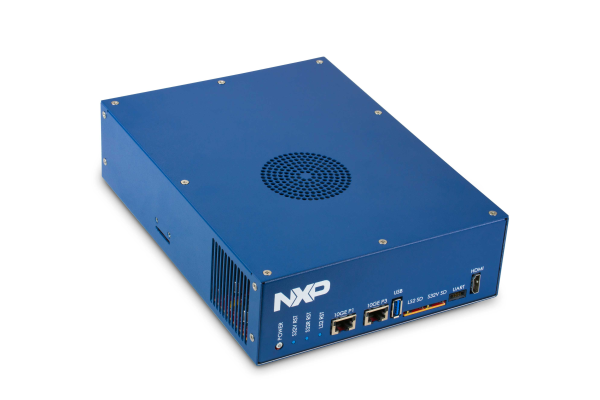
Blue Box (Photo = NXP)
The company making the most notable moves in the automotive semiconductor market is NXP, based in the Netherlands. NXP acquired rival Freescale in March 2015 and OmniPHY, a supplier of automotive Ethernet subsystem technology, in September 2018. NXP is investing further in its automotive semiconductor fab in Nijmegen, the Netherlands, and is also establishing an automotive components development center in China. It is also conducting R&D on autonomous driving technology with leading Chinese ICT companies such as Baidu and Alibaba.
Intel, a traditional powerhouse in the semiconductor market, acquired Mobileye, the world's leading image sensor company, in March 2017. Volkswagen and BMW are developing vision sensors for Level 3 autonomous driving through collaboration with Mobileye.
In addition, Germany's Audi, BMW, and Daimler AG formed a consortium to acquire Nokia's satellite mapping business unit, HERE, in 2015, and are strengthening their autonomous driving and infotainment technologies.
Semiconductors for connected vehicles
Recently, ECUs (Electronic Control Units) have been rapidly increasing in ad-hoc manners as vehicle infotainment and safety driving functions are added. In luxury cars priced over $50,000, more than 100 ECUs are applied, and as the related code exceeds 100 million lines, high cost and stability issues are emerging.
Traditional component suppliers such as Bosch, Continental, and Delphi see integrated ECUs as a future growth engine and are upgrading the algorithms of their current ECUs. Semiconductor companies such as Nvidia, Intel, and Qualcomm are also investing in automotive semiconductors embedded in integrated ECUs, viewing them as a core future business.
The industry is primarily focusing on integrating LiDAR, radar, cameras, and sensor functions, which are considered core components of autonomous driving, into an integrated ECU.
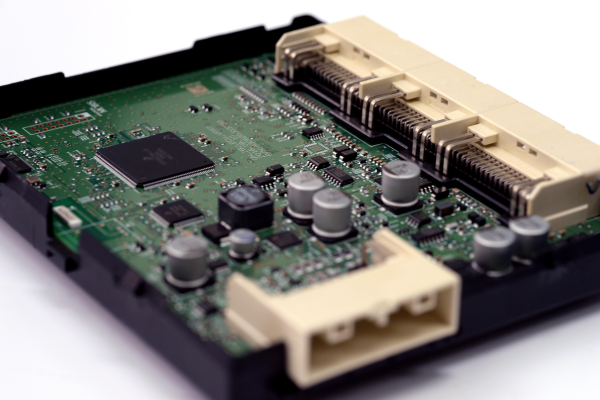
In 2017, Hyundai Mobis developed an integrated body unit (IBU) that integrated four ECUs: the existing BCM (Body Control Module), smart key, TPMS (Tire Pressure Monitoring System), and PAS (Parking Assist System).
Qualcomm announced an integrated ECU based on Qualcomm 820A in the third generation Qualcomm Snapdragon Automotive, and Bosch announced a platform that links the integrated ECU with NVIDIA's autonomous driving AI hardware platform, DRIVE Pegasus.
Additionally, battlefield fabless companies are introducing sensor fusion technology, which combines multiple sensors into one for ADAS connectivity and vehicle safety. Bosch is developing a strategy to develop automotive MEMS sensors into integrated composite sensors and is conducting R&D that integrates pressure, temperature, gravity, acceleration, optical, and frequency sensing.
The path that the Korean automotive semiconductor industry should take
For Korea to have a voice in the automotive semiconductor industry, it needs to objectively understand the rapidly changing technological environment and regulatory barriers, and collaborate among OEMs, Tier 1 and 2 companies, semiconductor companies, and ICT companies to address them.
SMEs make up the majority of the domestic automotive industry ecosystem. However, due to limited R&D capabilities, collaboration with ICT companies and the government is essential to securing core technological competitiveness.
In addition to developing core semiconductor technologies for fusion vehicles that integrate lidar and radar, a strategy of acquiring leading companies or smart businesses that have secured related technologies is also necessary.
Despite boasting world-class automakers, semiconductor manufacturers, and electric vehicle battery companies, including Hyundai Motor Company, Samsung Electronics, SK Hynix, and LG Electronics, Korea's share of semiconductor production for sensors, communications, and control computation—the kinds of semiconductors needed to enable Level 3 and higher autonomous driving—is limited. Therefore, support is needed to foster a foundational automotive semiconductor ecosystem, centered on the smart mobility sector, where small and medium-sized enterprises (SMEs) and fabless startups can easily enter the market.
Comments
Related news
Silicon Labs Strengthens Si479xx Automotive SDR Tuner Family
Silicon Labs has launched a hybrid SDR tuner. The Si479x7 device is an automotive radio tuner supporting the DRM standard, and represents an extended version of Silicon Labs' Global Eagle and Dual Eagle AM/FM receiver and digital radio tuner product families. Silicon Labs has also converted its Si4790x/5x/6x automotive tuner products into hybrid SDR tuners. Silicon Labs' hybrid SDR technology incorporates advanced DSP-based automotive features including MRC, digital AGC, digital radio rapid detection, and dynamic ZIF I/Q. This enables automotive radio manufacturers to support worldwide digital radio standards through a single common radio hardware and software design.
2019.08.07by 이수민 기자

LG Electronics Demonstrates WebOS for Automotive at IAA 2019 Motor Show in Germany
LG Electronics and Microsoft will participate in the Frankfurt Motor Show 2019, which opens on the 12th in Frankfurt, Germany. LG Electronics plans to demonstrate an IVI solution that combines webOS Auto, its vehicle infotainment (IVI) platform, with Microsoft's MCVP. In this demonstration, LG Electronics will transmit information such as usage frequency, usage time, and app version of IVI apps based on webOS Auto to Microsoft's cloud using MCVP. Microsoft will analyze this information with Power BI and showcase a scenario where results can be confirmed on external devices. Through MCVP, customers will be able to conveniently use Microsoft's various business solutions and intelligent services in automobiles.
2019.09.11by 최인영 기자
Power Integrations Unveils Two 200V Diodes for Automotive Audio with AEC-Q101 Certification
Power Integrations' LQ10N200CQ and LQ20N200CQ, which are 200V Qspeed diodes for automotive audio system applications, have obtained AEC-Q101 automotive certification. Using merged PIN technology, they provide a balance between soft switching and low reverse recovery charge, reducing EMI and lowering output noise. Both diodes are supplied in the industry-standard DPAK TO-252 package. They are manufactured at IATF 16949 certified facilities, with pricing at 10,000-unit quantities of $0.60 and $0.74 respectively.
2019.09.23by 이수민 기자

[e4ds Tech Day 2026 ⑨] Sim Sang-gyu, Autocrypt CTO: "In the Physical AI Era, Automotive Security Must Extend Beyond the Vehicle"
At e4ds Tech Day 2026, Sim Sang-gyu, CTO of Autocrypt, explained automotive cybersecurity strategies in the era of Physical AI and SDV (Software-Defined Vehicle). Automobiles are evolving as part of an ecosystem connected to AI, cloud, chargers, IoT, and robots, and he emphasized that the scope of security must expand beyond the vehicle interior to the entire connected environment. In particular, AI model tampering, adversarial attacks, OTA updates, and EV charger hacking were identified as major threats. He explained that response measures require zero trust, AI model integrity protection, intrusion detection, Security by Design and Default, and full lifecycle security management, and that proactive security system establishment beyond regulatory compliance is critical for securing future mobility competitiveness.
2026.10.12by 배종인 기자

Practical HIL Construction Strategy for Automotive and Off-Highway Controller Validation
As vehicle E/E architecture transitions to zonal structures and shifts to software-defined vehicles (SDV), the number of controllers (ECUs) requiring validation and software complexity are surging dramatically. Meanwhile, real vehicle testing cannot provide repeated verification under identical conditions and entails lead time and safety concerns. This white paper explains the principles of HIL (Hardware-in-the-Loop) validation and the structure of the NI platform composed of PXI, SLSC, and VeriStand, and through two actual implementation cases—Camera Record & Replay HIL for In-Cabin Monitoring Controller (ICMU) and Forklift Controller (VCU) HILS—describes how controller-level regression testing becomes possible. Additionally, it explicitly states application boundaries and limitations, such as lack of A2B support.
2026.10.12by 편집부











