


KT Demonstrates 28GHz Band Enterprise 5G Network Technology
 Published2019.10.31 16:18
The world's first 28GHz 5G equipment and terminals
Wireless transmission time unit lowered to 0.125ms
Network technology utilizing the mmWave band frequency, which can be called true 5G, has been introduced for the first time.
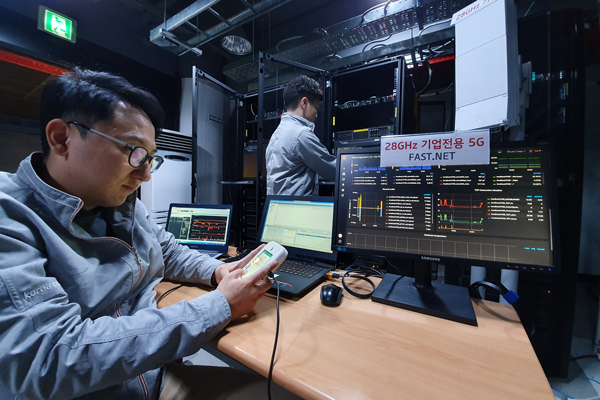
On the 31st, KT demonstrated its enterprise-only 5G network technology, aka FAST.NET, using the 28GHz band frequency at the KT 5G Open Lab in Seocho-gu, Seoul.
5G FAST.NET technology is KT's ultra-low latency infrastructure technology that enables round-trip data transmission from terminals to networks and services with a latency of less than 10ms. It is a core technology for dedicated enterprise 5G networks, which will enable autonomous vehicles and smart factory automation control in the future.
The demonstration demonstrated ultra-low latency data transmission of at least 5ms and an average of 8ms in an actual wireless environment using the world's first 5G base station equipment and terminals supporting the domestic 28GHz band. It was actually tested through linkage with core network equipment based on the 5G standard MEC (Mobile Edge Computing) specification.
.jpg)
Currently, commercial 5G networks operating in the 3.5GHz band experience delays of 10-20ms. FAST.NET leverages ultra-high frequency signals at 28GHz to reduce the wireless transmission time unit from 0.5ms in the existing 3.5GHz band to 0.125ms, a quarter of the original 0.5ms. By further improving delay factors in both wireless and wired transmission sections, the overall delay time was reduced to 5ms.
In July, KT developed the first FAST.NET technology, which reduces data transmission delay to around 10ms by applying URLLC (Ultra Reliable Low Latency Communication) technology, which reduces wireless errors in the 3.5GHz band, minimizes data retransmissions, and eliminates unnecessary transmission procedures between base stations and terminals.
This time, by expanding the application of FAST.NET technology to the 28GHz mmWave system and proactively applying 5G standard MEC technology to the core, the company succeeded in reducing the overall round-trip delay time by half again. In the future, we plan to reduce round-trip delay time to an average of less than 5ms through additional performance improvements to base stations and terminals.
Lee Seon-woo, head of the KT Convergence Technology Institute's Infrastructure Research Center, said, "We will activate enterprise-only 5G services that require high reliability based on ultra-low latency transmission technology," and added, "We will continue to develop the 5G technologies needed for the enterprise-only 5G market and strive to commercialize them quickly."
Comments
Related news

ADI Launches Multi-Channel Mixed-Signal RF Converter Platform
Analog Devices has launched its MxFE RF data converter platform that integrates high-performance analog and digital signal processing capabilities for various wireless equipment such as 4G LTE and 5G mmWave. Through ADI's AD9081/2 MxFE platform, wireless equipment manufacturers can install multi-band RF in the same footprint as single-band RF, enabling them to achieve three times greater call handling capacity compared to conventional 4G LTE base stations. The new MxFE platform supporting 1.2 GHz channel bandwidth enables wireless operators who are adding more antennas to their communication towers to meet the high radio density and data rate requirements of 5G mmWave.
2019.06.11by 이수민 기자
National Instruments, Tesolve, and JonesTech have jointly developed a quad-site mmWave 5G package test solution.
National Instruments (NI), Tessolve, and JonsTech jointly unveiled a quad-site mmWave 5G package test solution. One of the key components of the mmWave 5G package test solution is NI's semiconductor test system. NI recently added multisite mmWave test capabilities for 5G power amplifiers, beamformers, and transceivers. The solution is characterized by modularity featuring reusable software with a modular mmWave radio head and baseband/IF instrumentation, which is also a strength, enabling it to handle additional mmWave frequency bands in the future.
2019.06.13by 이수민 기자
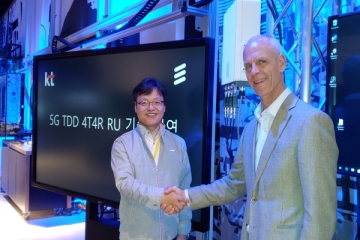
KT Collaborates with Ericsson and Nokia on 5G Equipment Development
KT has agreed to strengthen mutual cooperation with Ericsson and Nokia in 5G equipment development and utilization of the 28 GHz mmWave frequency band. On the 13th, KT conducted a technical demonstration of a 5G TDD (Time Division Duplex) 4T4R RU (Remote Unit) equipment jointly developed with Ericsson at the Ericsson research facility in Kista, Sweden, and announced that it has successfully applied the 4T4R base station to KT's 5G commercial network. Additionally, on the 12th, KT held a meeting at Nokia's headquarters in Espoo, Finland, and agreed to cooperate in the verification of 5G commercialization equipment in the 28 GHz mmWave band and overcoming technical challenges related to mmWave. To this end, both companies plan to establish a joint task force and promote full-scale technical cooperation.
2019.06.15by 이수민 기자
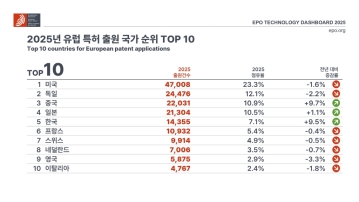
European Patent Applications Surpass 200,000 for the First Time… South Korea Maintains 5th Place, Led by Batteries and Telecommunications
According to the European Patent Office (EPO)'s 'Technology Dashboard 2025', European patent applications last year reached 201,974, surpassing 200,000 for the first time. Korean companies and inventors filed 14,355 applications, representing a 9.5% increase from the previous year and maintaining 5th place by country. Battery, digital communication, and semiconductor technologies led the growth, with Samsung ranking as the top EPO applicant for the second consecutive year and LG reaching 3rd place. The presence of major domestic cities such as Seoul, Suwon, and Yongin was also confirmed. It was also revealed that Korea's European patent strategy is expanding beyond individual technologies to span the entire industry.
2026.03.24by 명세환 기자
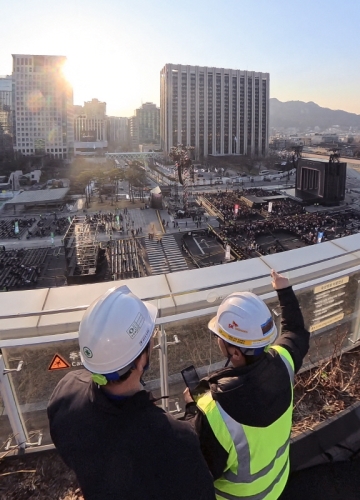
SK Telecom First Applies AI-Based Network Operations at Gwanghwamun K-Pop Concert
SK Telecom announced that it applied an AI-based network operation system for the first time at a large-scale K-pop concert held in the Gwanghwamun area of Seoul on March 21st, managing communication quality throughout the event. Mobile data usage during the three hours before and after the concert reached 12.15TB, approximately doubling compared to the same time slot the previous weekend. SK Telecom monitored traffic using the AI system 'A-One' in five-minute and 50-meter units to respond to potential overload situations, while also operating temporary communication facilities and on-site personnel in parallel. This case is interpreted as confirmation of the practical applicability of AI-based autonomous network operation in an environment where demand from dense events and foreign users increases simultaneously.
2026.03.23by 명세환 기자











