


Release of AI Inference Software Supporting Real-Time Conversation
 Published2019.12.19 09:52
Support for applications such as voice agents, chatbots, and recommendation engines
With the release of AI inference software that supports real-time conversation, NVIDIA is expected to improve inference latency, which has been a stumbling block in human-AI interaction.

▲ NVIDIA has unveiled the latest version of TensorRT, inference software that supports conversational AI. <Photo = NVIDIA>
NVIDIA has unveiled NVIDIA TensorRT 7, the latest version of AI inference software that will be used by developers worldwide to deliver conversational AI applications.
NVIDIA TensorRT 7 is NVIDIA's 7th generation inference software development kit that facilitates interaction between humans and AI, supporting the real-time implementation of applications such as voice agents, chatbots, and recommendation engines.
In addition, it provides the latest deep learning compiler designed to automatically optimize and accelerate transformer-based Recurrent Neural Networks (RNNs) required for implementing AI voice applications.
This enables conversational AI components to run 10 times faster than before when executed on the CPU, while reducing latency to below the 300-millisecond threshold required for real-time interaction..
According to U.S. market research firm Juniper Research, digital voice assistants are estimated to be used on approximately 3.25 billion devices worldwide, and this number is expected to reach 8 billion by 2023, exceeding the total global population.
NVIDIA Founder and CEO Jensen Huang stated during his keynote speech at GTC China, “The world we live in today is a new AI era where machines can understand human language in real time,” adding, “TensorRT 7 provides developers around the world with the tools to build and deploy fast, smart conversational AI services that help facilitate more natural interactions between humans and AI.”
Meanwhile, TensorRT 7 supports the extension of AI models used for predicting time-series sequence data scenarios that utilize recurrent loop structures known as RNNs. In addition to AI voice networks, RNNs are also used for purposes such as planning arrival times for vehicles or satellites, predicting situations to be entered into electronic medical records, predicting financial assets, and detecting fraud.
Comments
Related news
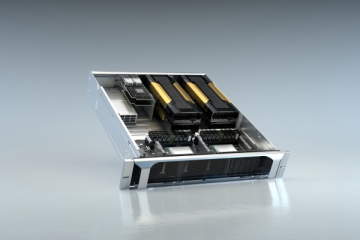
NVIDIA Ranks 1st in 5 AI Inference Benchmark Categories
Nvidia announced on the 7th that it achieved first place in all five new benchmark tests measuring AI inference workload performance in data centers and network edge. In MLPerf Inference 0.5, an independent AI inference benchmark test, Nvidia utilized Nvidia Turing GPU for data centers and Nvidia Jetson Xavier SoC for edge computing. MLPerf's five inference benchmarks, which apply various form factors and four inference scenarios, include existing AI applications such as image classification, object detection, and transformation. Nvidia achieved first place in all five benchmarks under data center scenarios including server and offline, with Turing GPU achieving the highest performance per processor among commercial processors.
2019.11.07by 이수민 기자
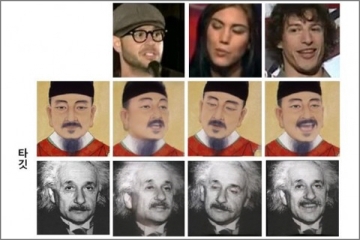
AI Technology Developed to Create Facial Video from Single Photo
Video technology company HyperConnect has developed facial reenactment technology that creates moving facial video from just a single photograph using AI. MarioNETte overcomes the limitation of facial distortion that occurred in the reproduced face by adopting a deep learning model structure that concentrates only on necessary information from the face.
2019.12.06by 최인영 기자

NVIDIA and Didi Chuxing Develop AI Solution for Autonomous Vehicles
Nvidia is collaborating with China's Didi Chuxing to develop autonomous driving and cloud computing solutions. The partnership will utilize Nvidia GPUs for machine learning algorithm training and leverage Nvidia Drive for Level 4 autonomous driving inference. Through this collaboration, both companies aim to enhance environmental perception around vehicles and improve safety in autonomous vehicle development.
2019.12.19by 최인영 기자

[e4ds Tech Day 2026 ⑨] Sim Sang-gyu, Autocrypt CTO: "In the Physical AI Era, Automotive Security Must Extend Beyond the Vehicle"
At e4ds Tech Day 2026, Sim Sang-gyu, CTO of Autocrypt, explained automotive cybersecurity strategies in the era of Physical AI and SDV (Software-Defined Vehicle). Automobiles are evolving as part of an ecosystem connected to AI, cloud, chargers, IoT, and robots, and he emphasized that the scope of security must expand beyond the vehicle interior to the entire connected environment. In particular, AI model tampering, adversarial attacks, OTA updates, and EV charger hacking were identified as major threats. He explained that response measures require zero trust, AI model integrity protection, intrusion detection, Security by Design and Default, and full lifecycle security management, and that proactive security system establishment beyond regulatory compliance is critical for securing future mobility competitiveness.
2026.10.12by 배종인 기자
NVIDIA to Invest $1 Billion in U.S. Science Over Next Five Years
NVIDIA has announced plans to invest $1 billion over the next five years to strengthen U.S. scientific and technological competitiveness. The company will enhance cutting-edge artificial intelligence research and development capabilities in key areas including quantum computing, healthcare, and energy security, while expanding support for higher education research institutions and cloud service providers. NVIDIA is participating as a major industry partner in the White House Office of Science and Technology Policy's Genesis Mission, and is promoting supercomputer construction in collaboration with national laboratories including Argonne and Los Alamos.
2026.10.12by 배종인 기자











