


10 Enterprise Trends of 2020
 Published2020.01.09 16:51
Artificial intelligence, machine learning, deep learning, and digital transformation were cited.
It has been predicted that the technologies leading the enterprise sector in 2020 will be artificial intelligence, machine learning, deep learning, and digital transformation.

MSTR forecasted 10 enterprise trends to watch in 2020.
On the 9th, mobile software company MicroStrategy Korea (MSTR) announced the top 10 enterprise analytics trends to watch in 2020.
Experts identified deep learning, AutoML, semantic graphs, increased data volume, next-generation embedded analytics, data source integration, data-driven upskilling, artificial intelligence, mobile intelligence, and AI-based experience management as enterprise trends for 2020.
Creating a Competitive Advantage Using Deep Learning
Deep learning is expected to create a nexus between knowing and doing. With the practical emergence of deep learning that predicts and understands human behavior, companies have become able to utilize powerful innovative technologies based on intelligence to stay ahead of competitors.
Improving Corporate ROI with Machine Learning
Machine learning is one of the fastest-evolving technologies in recent years, and the demand for machine learning development is also increasing exponentially.
With the rapid growth of machine learning solutions, the demand for machine learning models that are ready to use without expert knowledge continues to increase.
Semantic graphs that deliver business value
Semantic graphs are expected to play a pivotal role in supporting data and analytics in a constantly changing data environment. Organizations that do not use semantic graphs face the risk of lower analytics ROI due to increased costs and complexity.
The growing importance of human insight
As knowledge workers become increasingly familiar with data-driven work, the need to grasp data ethnography, data-related research, and the context of collected data, while simultaneously becoming familiar with materials that cannot provide a complete picture on their own, is expected to grow.
Ethnography refers to the study of various social and cultural phenomena through field research using quantitative and standard investigation techniques.
Accelerating Decision Making with Next-Generation Embedded Analytics
Concise analysis provided in the context of specific applications and interfaces contributes to improving the speed of decision-making. Although curation of concise in-context analysis of embedding types requires a lot of time, next-generation embeddings are expected to gradually grow, eventually driven by technological advancements including no-code and low-code development methods.
Increased integration of data sources
The focus on data diversity will continue. The number of companies with a single platform for data analysis will gradually decrease, and the use of multiple tools for data access will become more common.
Accordingly, the need to integrate data sources is also expected to continue increasing.
Data-driven upkilling
The reality is that enterprise organizations have a high need for data-driven decision-making, but lack human resources.
To solve this problem, efforts to recruit top talent must be made, along with increased investment in training and reskilling for existing employees.
AI Becoming a Reality
CDAOs and CIOs are expected to realize that they can spend 80–90% of their actual time modeling AI use cases in a situation where they have what they want in terms of data.
The Evolution of Mobile Intelligence
Half of organizations will re-evaluate their use of mobile devices and conclude that the technology does not adequately meet employee needs. As a result, executives are expected to review next-generation mobile applications that enable a better work experience and more effective connectivity.
AI-based future experience management
As applications are broken down into headless microservices by business processes, automation and intelligence play a major role in creating mass personalization and efficiency.
The Intelligent Enterprise will leverage context and data to execute the best actions for the next step.
Vijay Anand, Vice President of Product Marketing at MicroStrategy, stated, “Through this report, decision-makers will be able to identify and leverage the latest trends in enterprise analytics, AI, ML, and deep learning. As the report contains insights from the world’s top experts in the analytics industry, organizational leaders will be able to make informed decisions as well as drive conversations within the organization.”
Comments
Related news
.jpg)
What are the top eight enterprise technology trends for 2020?
Enterprise software specialist VMware announced eight key enterprise technology trends to watch in 2020. By keyword, these include hybrid applications, unified edge solutions, specialized hardware remote support, intrinsic security, compact devices, machine learning, cloud segregation, and shared service platforms.
2019.12.26by 최인영 기자

5 Tech Trends That Will Drive CES 2020 in 2020
The US Consumer Technology Association (CTA) announced five major technology trends to watch in 2020 in November, ahead of the opening of CES 2020, the world's largest consumer electronics trade show. The five technology trends selected by the CTA are Digital Therapeutics, Flying Cars, The Future of Food, Facial Recognition, and Robots.
2019.12.31by 이수민 기자

Five Key AI Technology Outlooks to Watch in 2020
IBM Research announced five major AI outlooks for 2020. As automation, natural language processing, and trust drive industry advancement, there is an expanding trend toward transparently and responsibly managing AI data. Accordingly, changes in work methods are expected, and research on eco-friendly technologies and new materials development is anticipated to become more active.
2020.01.02by 최인영 기자

Top 5 Expected Cybersecurity Threats in 2020
AhnLab has forecasted cybersecurity threats expected in 2020 in response to accelerating digital transformation. The five major anticipated threats include the full-scale launch of targeted ransomware attacks, emerging cloud security threats, increased threats to specialized systems and OT security, sophistication of information gathering and theft attacks, and diversification of mobile cyber attack methods.
2020.01.03by 최인영 기자
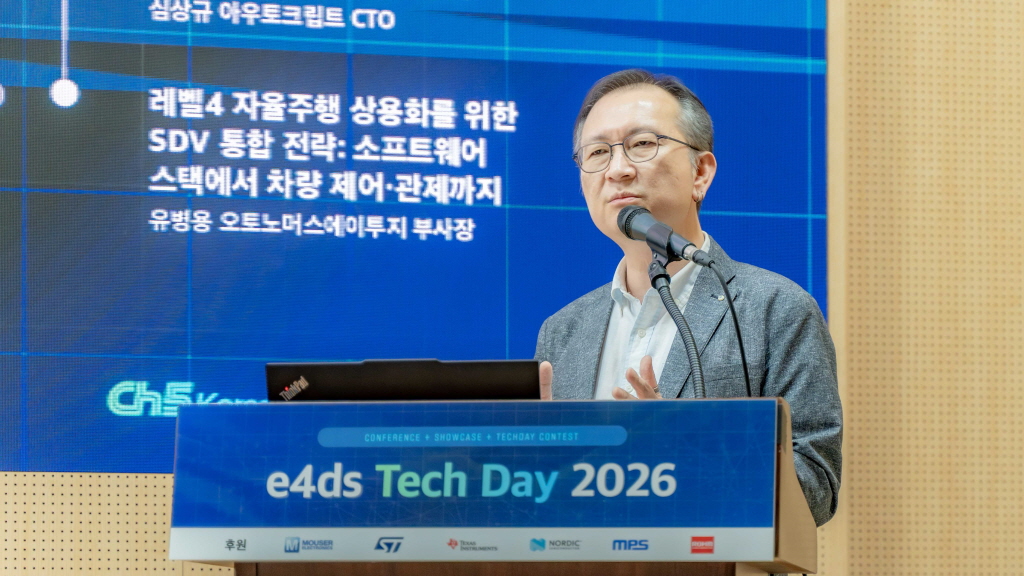
[e4ds Tech Day 2026 ⑨] Sim Sang-gyu, Autocrypt CTO: "In the Physical AI Era, Automotive Security Must Extend Beyond the Vehicle"
At e4ds Tech Day 2026, Sim Sang-gyu, CTO of Autocrypt, explained automotive cybersecurity strategies in the era of Physical AI and SDV (Software-Defined Vehicle). Automobiles are evolving as part of an ecosystem connected to AI, cloud, chargers, IoT, and robots, and he emphasized that the scope of security must expand beyond the vehicle interior to the entire connected environment. In particular, AI model tampering, adversarial attacks, OTA updates, and EV charger hacking were identified as major threats. He explained that response measures require zero trust, AI model integrity protection, intrusion detection, Security by Design and Default, and full lifecycle security management, and that proactive security system establishment beyond regulatory compliance is critical for securing future mobility competitiveness.
2026.10.12by 배종인 기자











