



2020 Manufacturing Digital Transformation Trend Forecast
 Published2020.01.13 10:03
A framework must be established based on needs, values, and solutions.
More companies will transition their ERP and CAD to SaaS.
The industry is rapidly changing, from macroeconomic issues to the emergence of digital-based startups.
Accordingly, on the 13th, PTC announced its outlook on the major digital transformation trends that manufacturing companies should pay attention to to secure competitiveness in 2020.
Outlook 1: Digital strategies focused on business value are effective.
Recently, driven by expectations of the potential and transformational impact of innovative technologies such as IIoT and AI, various proofs of concept (PoC) are being attempted.
According to PTC's Digital Transformation Report, even if companies identify as many as 100 IIoT use cases in their near-term roadmaps, realistically, they should prioritize only four or five.
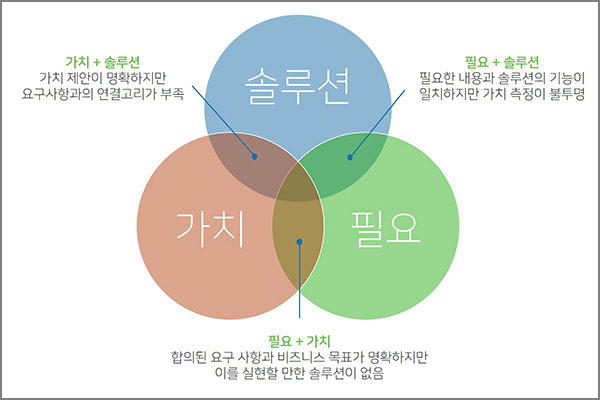
Framework configuration required (Image = PTC)
To avoid excessive PoC, PTC is using a framework structured around needs, values, and solutions instead of a strategy based on technical requirements.It was suggested that we should form an imwork.
In 2020, companies with a value-driven digital transformation (DX) mindset are expected to easily scale DX initiatives across the enterprise and shorten the time to value creation.
In contrast, partnering with digitally native partners with similar trends can simply increase the likelihood of success. According to PTC's State of the IIoT report published last year, 89% of respondents said they would transition use cases into production within a year of purchase.
Outlook 2: Companies must improve internal operational efficiency to address macroeconomic uncertainty.
Even as the U.S. stock market reaches record highs and unemployment reaches record lows, macroeconomic issues like labor shortages and trade wars continue to threaten manufacturing companies. The U.S. manufacturing Purchasing Managers' Index (PMI) has hit its lowest level in a decade since the global financial crisis.
As the economic downturn continues, manufacturing companies will need to cut costs, and technologies like IIoT are expected to play a key role in this process. Because technology solutions that optimize workforce deployment, improve productivity, and enhance operational efficiency in manufacturing are essential.
The World Economic Forum (WEF) analyzed that new efficiencies are still the main driving force behind large companies' technology investments.
Outlook 3: AR Spreads in Operational Use Cases
According to PTC's 2019 customer survey, sales and marketing are the most prominent use cases for augmented reality (AR).
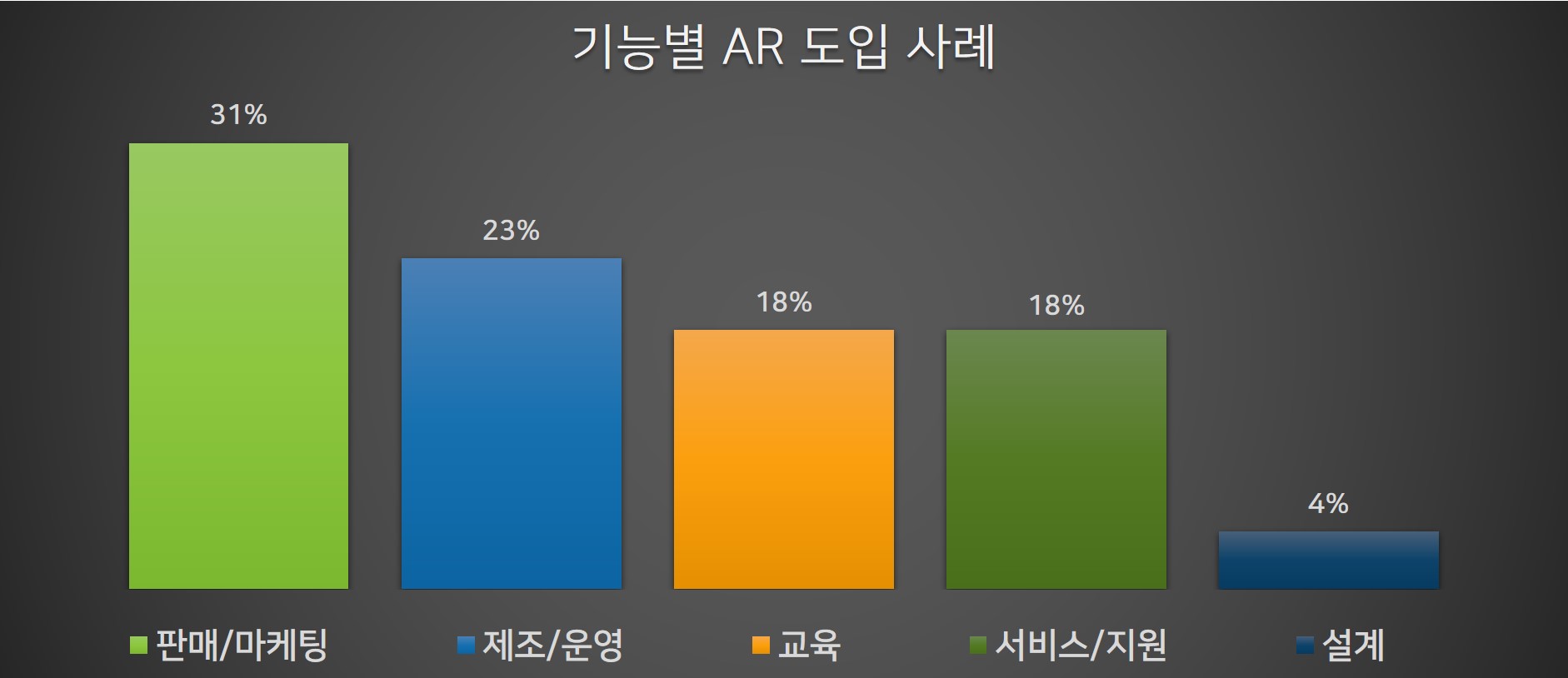
Augmented brand experiences and interactive consumer products have become an entry point for businesses and customers to AR experiences, providing familiarity and immersion, the study found.
Manufacturing companies like Polaris and Fujitsu have leveraged AR as a revenue generator. By leveraging AR, we were able to provide sales representatives and customers with a variety of product optimization methods and features in real time.
As AR hardware technology continues to advance, AR use cases in mission-critical industrial environments are expected to expand further in 2020.
Volvo Group has improved flexibility, agility, and quality by enabling Quality Assurance (QA) operators to implement virtual work instructions on their inspection lines, while GlobalFoundries has used AR to extend the influence of experts, standardize operating procedures, and reduce production bottlenecks.
AR will be applied to industrial processes, connecting diverse workforces and physical environments, and thus play a crucial role in improving key performance indicators (KPIs).
Forecast 4: Cloud Adoption in Industry Will Peak
Manufacturing companies' use of IIoT devices is growing at a record pace.
The IIoT platform is an essential foundational framework for managing the explosive growth of heterogeneous environments. The cloud is accelerating these deployments by providing a scalable form of infrastructure, enabling more effective management of IIoT connectivity between facilities and equipment across the globe.
IDC predicts that by 2023, 70% of manufacturing companies will use cloud-based innovation platforms and marketplaces, and Gartner predicts that the SaaS cloud application services market will reach $113 billion in 2021.
In fact, many companies are rethinking their use of existing on-premises legacy software while simultaneously transitioning to more flexible cloud-based SaaS platforms.
Going forward, more companies are expected to reduce their total cost of ownership (TCO) by converting traditional enterprise software, such as ERP and CAD, to SaaS, while also seeking value differentiation through rapid software updates.
Forecast 5: Digital Partnerships: Key to Effective IIoT Implementation
Two factors that most people overlook as obstacles to successful IIoT projects are "spot solutions" and "do it yourself."
A significant portion of operational technology decisions are made by general managers, assembly line managers, or plant engineers on a process-by-process basis, without regard to company-wide strategy.
These spot solution approaches are technologies that address single use cases and problems, and tend to only consider short-term requirements. Stopgap solutions hinder future expansion because they do not interoperate with other systems across the value chain.
DIY refers to companies that choose to build IIoT capabilities rather than purchase them. A recent survey found that three out of four DIY IoT projects fail to overcome challenges such as cost, time, resources, and scalability.
Effectively implementing IIoT requires digital collaboration to build a technology ecosystem that includes cloud and security infrastructure, solution development technologies, and skilled system integrators.
A Deloitte survey found that manufacturing companies are expanding their partnerships for "digital momentum," achieving five times the benefits of developing new business models and more than double the benefits of enhancing customer value.
Outlook 6: Embrace technologies that contribute to sustainability
As carbon emissions and societal demands for health, wealth distribution, and safety increase, more and more companies will view sustainability as a strategic initiative rather than a traditional cost center.
Government subsidies and regulations have driven change, particularly in the automotive and aerospace industries, but they also serve as competitive advantages. According to the U.S. Environmental Protection Agency, 66% of manufacturing companies consider sustainability essential to their market competitiveness, and more companies are expected to use eco-efficient operations, facilities, and programs as tools to persuade customers and drive recruitment.
Beyond these external factors, sustainability also impacts operational efficiency itself. Applying IIoT to assets across a factory can enable the development of intelligent, optimized operational strategies that significantly reduce energy costs across multiple on-site and remote locations. Generative design and additive manufacturing can create longer-lasting, more efficient products, improving quality and reducing waste.

“Over the next 10 years, transformation will continue in not only the market but also corporate processes and human resource management,” said Park Hye-kyung, CEO of PTC Korea. “Manufacturing companies can create new opportunities by proactively leveraging technology trends and implementing strategic initiatives.”
Comments
Related news

Aviva to supply PLM solution to Hyundai Heavy Industries smart shipyard
Hyundai Heavy Industries and AVEVA have concluded a business agreement to promote digital transformation initiatives. Hyundai Heavy Industries' Shipbuilding Division has selected AVEVA's PLM solution for the implementation of its PLM system.
2019.11.28by 이수민 기자
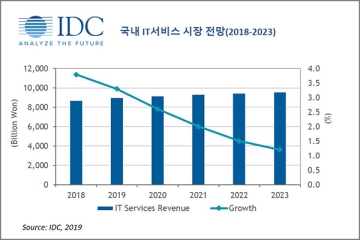
Domestic IT Service Market Growth in 2019 Slows Compared to 2018
Korea's domestic IT service market is expected to grow 3.3% year-over-year in 2019, as digital transformation initiatives based on digital technology expand across enterprises and IT service market structural changes become evident. In the long term, as the trend of declining large-scale projects continues due to reduced individual project sizes in major industries, market growth adjustment patterns are expected to emerge. In the managed services market, while demand for managed cloud services will increase due to expanded cloud adoption, market growth adjustment patterns are anticipated to appear as the transition pace accelerates.
2019.12.23by 이수민 기자

Top 5 Expected Cybersecurity Threats in 2020
AhnLab has forecasted cybersecurity threats expected in 2020 in response to accelerating digital transformation. The five major anticipated threats include the full-scale launch of targeted ransomware attacks, emerging cloud security threats, increased threats to specialized systems and OT security, sophistication of information gathering and theft attacks, and diversification of mobile cyber attack methods.
2020.01.03by 최인영 기자

Korea Instrument, KOLAS Accredited Calibration Agency First to Simultaneously Acquire ISO/IEC 27,001·27,701
Korea Instrument has become the first among KOLAS accredited calibration agencies to simultaneously acquire ISO/IEC 27,001 and ISO/IEC 27,701 certifications. Through its proprietary platforms CWIZ Enterprise and CWIZ Partners, the company has embedded information security and personal data protection requirements across all business processes including customer information, equipment data, and calibration reports, with plans to continuously advance its management system through regular audits and security inspections.
2026.10.12by 배종인 기자
TeamViewer One, IT Incident Automation Workflow and Resolution Center Enhanced
TeamViewer has added IT incident automation capabilities and an advanced Resolution Center to its integrated digital workplace management platform 'TeamViewer ONE'. Recurrent service disruptions, configuration errors, and capacity shortages are automatically handled according to preset policies, and device status verification through script deployment can be managed in a unified interface, significantly reducing repetitive tasks for IT teams.
2026.10.12by 배종인 기자











