This page was machine-translated and may differ from the original. View original
CES 2020 Becomes an "All-Industry" Expo Encompassing the 'Consumer Electronics Industry'

CES 2020, Mobility Still Dominated, But
Rising AI Cases and Increased Participation by Food and Healthcare Companies
Displays Evolve into Foldable, Rollable, and Bendable
CES 2020, where over 4,400 exhibitors showcased over 20,000 new products to over 170,000 attendees across an exhibition area of 2.7 million square meters, concluded its four-day run on the 10th.
For several years now, CES, the consumer electronics show, has been referred to as an automotive show due to the large number of automotive-related companies participating.

As autonomous vehicle and connected car technologies matured to some extent, even a flying car appeared at CES 2020. Hyundai Motor and Uber unveiled the 'S-A1,' a concept personal flying vehicle capable of vertical take-off and landing.
In addition to Hyundai Motor, leading automakers such as BMW, Audi, Ford, Mercedes-Benz, and Toyota showcased their latest mobility technologies, and even Sony unveiled its concept electric vehicle, the 'Vision-S'.
In a survey conducted by the Korea Automobile Manufacturers Association targeting attendees of CES 2020, 58% of respondents selected future automobiles as a field of interest.
However, CES 2020 was not merely a 'Las Vegas Motor Show 2020' where only automotive-related companies stood out. Traditional home appliance companies also showcased appliances incorporating AI, IoT, and 5G, and the increased participation of food and health supplement companies, which previously seemed far removed from home appliances, was notable.
AI is the basics of basics
At CES 2020, there was not a single company that did not emphasize AI, to the extent that it would be impossible to call anything new without it. In February 2018, PwC estimated the global GDP for 2030 at $114 trillion, analyzing that it could improve by up to 14% ($15.7 trillion) if the use of AI increases.
Intel, struggling to shake off AMD's fierce pursuit in the CPU sector, appeared to be focusing more on AI optimization than on advancements in processor performance. At a public event, Intel emphasized how utilizing AI in OTT (Over The Top) services such as Netflix can make streaming much more enjoyable.

Samsung Electronics unveiled 'Ballie,' a spherical robot, for the first time, emphasizing personalized care that combines advanced hardware and AI technology. Equipped with On-Device AI capabilities, Ballie can expand its functions as needed, such as acting as a security robot or a fitness assistant.
LG Electronics partnered with Element AI to announce the four stages of AI development (Efficiency-Personalization-Reasoning-Inquiry) and presented corresponding strategies, while companies such as Brunswick, Doosan, John Deere, and Kyocera showcased their latest AI solutions. Bosch announced plans to provide AI training to approximately 20,000 employees.
The types of exhibited products and fields of participating companies are increasing.
In the past, home appliances were limited to TVs, refrigerators, and washing machines, but recently, the categories have been expanding. LG Electronics responded to diversifying consumer lifestyles by unveiling products such as humidifying air purifiers, wine cellars, and plant cultivators, in addition to its flagship home appliances like OLED TVs.

Samsung Electronics introduced the 'Wine Cube,' 'Beer Cube,' and 'Beauty Cube,' small cube-shaped refrigerators with different storage contents, as well as a 'Shoe Care System' that applies the principles of a clothing sanitizer.
Several companies that seemed far removed from the home appliance industry utilized CES 2020 as a platform for product launches. Impossible Foods introduced 'Impossible Pork,' a plant-based alternative meat that tastes like pork.
John Deere set up an exhibition booth in the Robotics and Machine Intelligence zone, while Bell, Delta Airlines, L'Oréal, NBCUniversal, and P&G each showcased how their businesses are changing through cutting-edge technology.
The Health and Wellness Zone at CES 2020 featured over 135 exhibitors, including Humetrix and InBody, recording a growth rate of nearly 25% compared to CES 2019. The Smart City Zone also expanded by nearly 25% year-on-year. Products that will help revitalize the economy and promote community prosperity were highlighted, with the participation of relevant companies and organizations such as the U.S. Department of Transportation, Hitachi, and Siemens.
Displays Dream of a Rebound with Flexible Technology
In the 2000s, the dominant item at CES was the TV. However, as the popularity of TVs waned with the rise of OTT services in the 2010s, a crisis naturally followed for the display industry. Panel prices are also falling day after day due to the technological advancements of companies in Greater China. The display industry is currently pursuing diversification of suppliers through flexible displays. Consequently, various products utilizing flexible displays flooded the market at CES 2020.

Royole, which unveiled the world's first foldable smartphone 'FlexPai' at CES 2019, showcased various prototypes featuring flexible displays. In addition to incorporating flexible displays into hats, t-shirts, and bags, they also unveiled a circular 'Mirage Smart Speaker' wrapped in a flexible OLED.
Following CES 2019, LG Electronics captivated visitors' attention by displaying about 20 units of the rollable TV 'LG SIGNATURE OLED R,' which rolls up and then unrolls, at the entrance of the rollable exhibition hall. A bendable OLED TV was also unveiled, allowing users to freely adjust the screen curvature.

Lenovo, in collaboration with Intel, unveiled the 'ThinkPad X1 Fold,' a foldable laptop that measures 10 inches when folded and 13.3 inches when unfolded. Motorola attracted attention by unveiling a foldable phone that adopted the design of the 'RAZR,' a flip phone that gained worldwide popularity in the late 2000s.
Products utilizing Micro LED, which is expected to accelerate the development of foldable, rollable, and bendable products, were also showcased. Micro LED is an ultra-small LED with a chip size of 5 to 100 micrometers. Sony and Samsung Electronics each unveiled Micro LED TVs. TCL and LG Electronics showcased TVs utilizing Mini LED, which is a step before Micro LED.
As LG Display CEO Jeong Ho-young stated, using Micro LED in products under 100 inches does not yet guarantee price competitiveness. This is because it is difficult to produce LED chips uniformly at sizes of 100㎛ or smaller, and the process of transferring them to the display panel becomes more complex as the chip size decreases. Lee Jung-hoon, CEO of Seoul Semiconductor, who set up a booth at CES 2020, said, “Most of the technical challenges in Micro LED production will be resolved within a few years, and prices will stabilize.”
Micro LED consumes 30% less power than conventional panels and has a response speed 1,000 times faster, making it suitable for AR/VR content utilization once prices stabilize. Therefore, various products utilizing Micro LED are expected to be released at future CES.
CES has become important not only to consumers but also to developers and executives.
As ICT is utilized across all industries, CES is becoming more than just a venue for introducing new products to consumers. With the diverse range of participating companies, developers and executives from numerous firms are visiting CES to grasp industry trends.
Nichole Jordan, director of the CTA, which hosts CES, stated, “I met with about 40 CEOs and executives during CES 2020, and more than half of them were visiting CES for the first time,” adding, “They attended CES to reimagine their existing businesses and design their future businesses.”
CES 2021 will be held in Las Vegas, USA from January 6 to 9, 2021.
Rising AI Cases and Increased Participation by Food and Healthcare Companies
Displays Evolve into Foldable, Rollable, and Bendable
CES 2020, where over 4,400 exhibitors showcased over 20,000 new products to over 170,000 attendees across an exhibition area of 2.7 million square meters, concluded its four-day run on the 10th.
For several years now, CES, the consumer electronics show, has been referred to as an automotive show due to the large number of automotive-related companies participating.

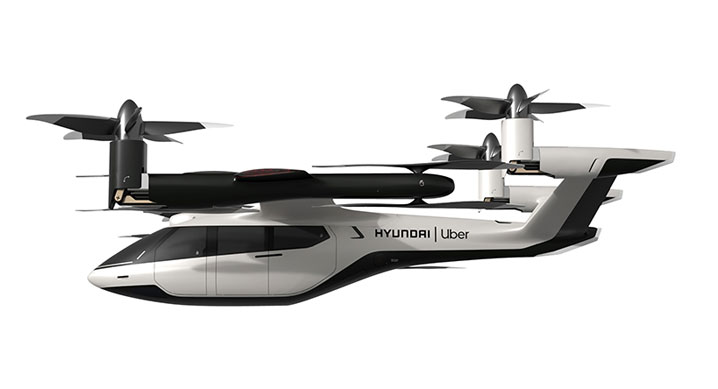
▲ Hyundai Motor's personal aircraft concept 'S-A1' (Image = Hyundai Motor)
As autonomous vehicle and connected car technologies matured to some extent, even a flying car appeared at CES 2020. Hyundai Motor and Uber unveiled the 'S-A1,' a concept personal flying vehicle capable of vertical take-off and landing.
In addition to Hyundai Motor, leading automakers such as BMW, Audi, Ford, Mercedes-Benz, and Toyota showcased their latest mobility technologies, and even Sony unveiled its concept electric vehicle, the 'Vision-S'.
In a survey conducted by the Korea Automobile Manufacturers Association targeting attendees of CES 2020, 58% of respondents selected future automobiles as a field of interest.
However, CES 2020 was not merely a 'Las Vegas Motor Show 2020' where only automotive-related companies stood out. Traditional home appliance companies also showcased appliances incorporating AI, IoT, and 5G, and the increased participation of food and health supplement companies, which previously seemed far removed from home appliances, was notable.
AI is the basics of basics
At CES 2020, there was not a single company that did not emphasize AI, to the extent that it would be impossible to call anything new without it. In February 2018, PwC estimated the global GDP for 2030 at $114 trillion, analyzing that it could improve by up to 14% ($15.7 trillion) if the use of AI increases.
Intel, struggling to shake off AMD's fierce pursuit in the CPU sector, appeared to be focusing more on AI optimization than on advancements in processor performance. At a public event, Intel emphasized how utilizing AI in OTT (Over The Top) services such as Netflix can make streaming much more enjoyable.

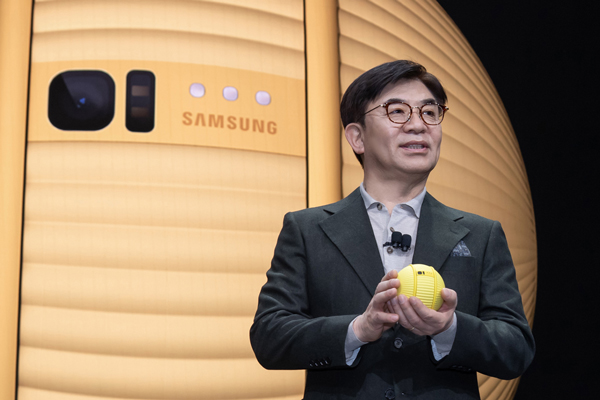
▲ Samsung Electronics' intelligent companion robot 'Bolly' (Photo = Samsung Electronics)
Samsung Electronics unveiled 'Ballie,' a spherical robot, for the first time, emphasizing personalized care that combines advanced hardware and AI technology. Equipped with On-Device AI capabilities, Ballie can expand its functions as needed, such as acting as a security robot or a fitness assistant.
LG Electronics partnered with Element AI to announce the four stages of AI development (Efficiency-Personalization-Reasoning-Inquiry) and presented corresponding strategies, while companies such as Brunswick, Doosan, John Deere, and Kyocera showcased their latest AI solutions. Bosch announced plans to provide AI training to approximately 20,000 employees.
The types of exhibited products and fields of participating companies are increasing.
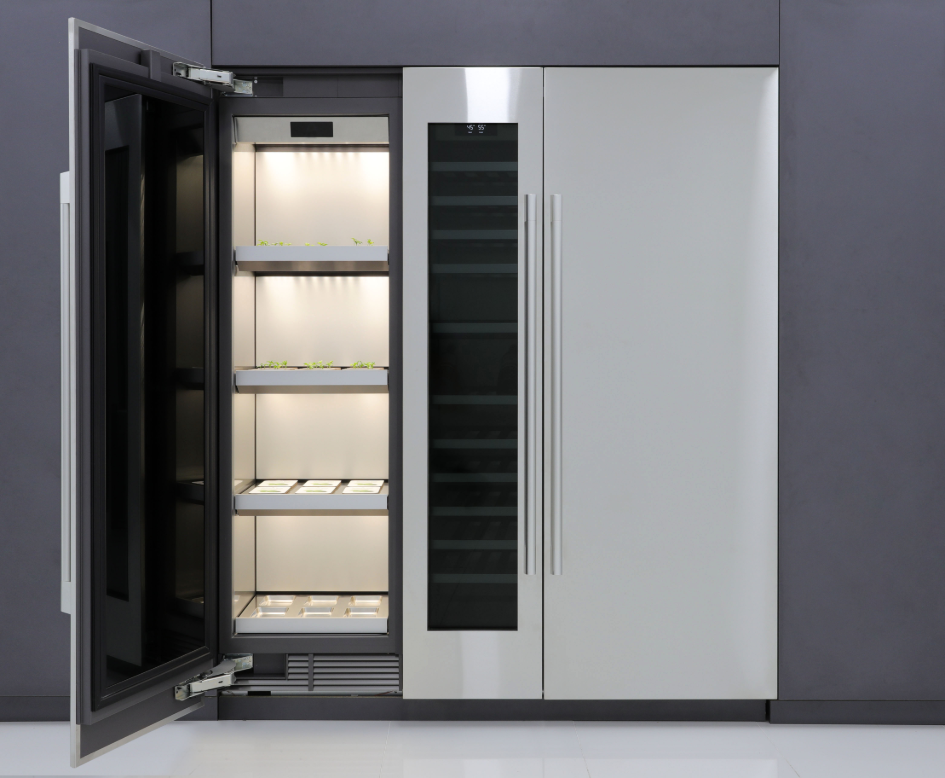
In the past, home appliances were limited to TVs, refrigerators, and washing machines, but recently, the categories have been expanding. LG Electronics responded to diversifying consumer lifestyles by unveiling products such as humidifying air purifiers, wine cellars, and plant cultivators, in addition to its flagship home appliances like OLED TVs.

▲ LG Electronics plant cultivator (Photo = LG Electronics)
Samsung Electronics introduced the 'Wine Cube,' 'Beer Cube,' and 'Beauty Cube,' small cube-shaped refrigerators with different storage contents, as well as a 'Shoe Care System' that applies the principles of a clothing sanitizer.
Several companies that seemed far removed from the home appliance industry utilized CES 2020 as a platform for product launches. Impossible Foods introduced 'Impossible Pork,' a plant-based alternative meat that tastes like pork.
John Deere set up an exhibition booth in the Robotics and Machine Intelligence zone, while Bell, Delta Airlines, L'Oréal, NBCUniversal, and P&G each showcased how their businesses are changing through cutting-edge technology.
The Health and Wellness Zone at CES 2020 featured over 135 exhibitors, including Humetrix and InBody, recording a growth rate of nearly 25% compared to CES 2019. The Smart City Zone also expanded by nearly 25% year-on-year. Products that will help revitalize the economy and promote community prosperity were highlighted, with the participation of relevant companies and organizations such as the U.S. Department of Transportation, Hitachi, and Siemens.
Displays Dream of a Rebound with Flexible Technology
In the 2000s, the dominant item at CES was the TV. However, as the popularity of TVs waned with the rise of OTT services in the 2010s, a crisis naturally followed for the display industry. Panel prices are also falling day after day due to the technological advancements of companies in Greater China. The display industry is currently pursuing diversification of suppliers through flexible displays. Consequently, various products utilizing flexible displays flooded the market at CES 2020.

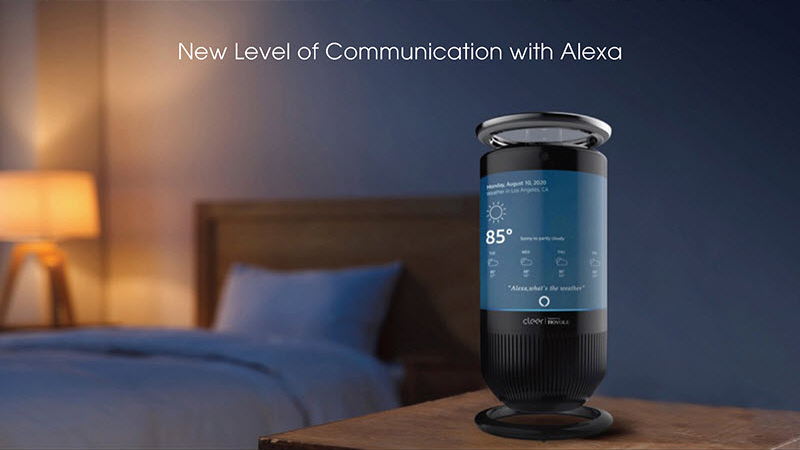
▲ Royole Mirage Smart Speaker (Photo = Royole)
Royole, which unveiled the world's first foldable smartphone 'FlexPai' at CES 2019, showcased various prototypes featuring flexible displays. In addition to incorporating flexible displays into hats, t-shirts, and bags, they also unveiled a circular 'Mirage Smart Speaker' wrapped in a flexible OLED.
Following CES 2019, LG Electronics captivated visitors' attention by displaying about 20 units of the rollable TV 'LG SIGNATURE OLED R,' which rolls up and then unrolls, at the entrance of the rollable exhibition hall. A bendable OLED TV was also unveiled, allowing users to freely adjust the screen curvature.

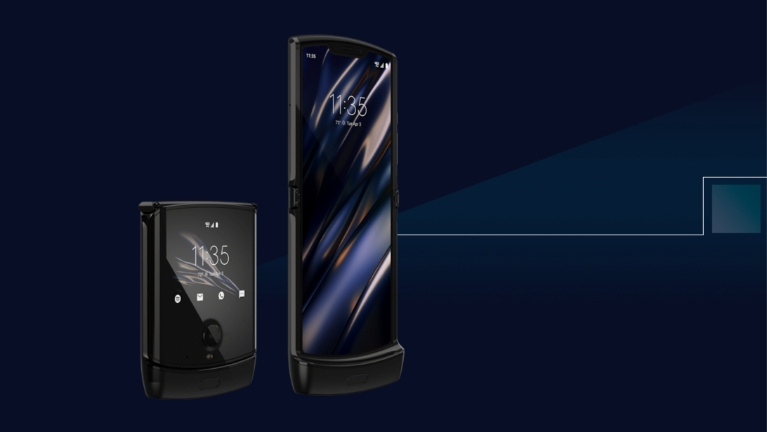
▲ Motorola foldable phone RAZR (Photo = Motorola)
Lenovo, in collaboration with Intel, unveiled the 'ThinkPad X1 Fold,' a foldable laptop that measures 10 inches when folded and 13.3 inches when unfolded. Motorola attracted attention by unveiling a foldable phone that adopted the design of the 'RAZR,' a flip phone that gained worldwide popularity in the late 2000s.
Products utilizing Micro LED, which is expected to accelerate the development of foldable, rollable, and bendable products, were also showcased. Micro LED is an ultra-small LED with a chip size of 5 to 100 micrometers. Sony and Samsung Electronics each unveiled Micro LED TVs. TCL and LG Electronics showcased TVs utilizing Mini LED, which is a step before Micro LED.
As LG Display CEO Jeong Ho-young stated, using Micro LED in products under 100 inches does not yet guarantee price competitiveness. This is because it is difficult to produce LED chips uniformly at sizes of 100㎛ or smaller, and the process of transferring them to the display panel becomes more complex as the chip size decreases. Lee Jung-hoon, CEO of Seoul Semiconductor, who set up a booth at CES 2020, said, “Most of the technical challenges in Micro LED production will be resolved within a few years, and prices will stabilize.”
Micro LED consumes 30% less power than conventional panels and has a response speed 1,000 times faster, making it suitable for AR/VR content utilization once prices stabilize. Therefore, various products utilizing Micro LED are expected to be released at future CES.
CES has become important not only to consumers but also to developers and executives.
As ICT is utilized across all industries, CES is becoming more than just a venue for introducing new products to consumers. With the diverse range of participating companies, developers and executives from numerous firms are visiting CES to grasp industry trends.
Nichole Jordan, director of the CTA, which hosts CES, stated, “I met with about 40 CEOs and executives during CES 2020, and more than half of them were visiting CES for the first time,” adding, “They attended CES to reimagine their existing businesses and design their future businesses.”
CES 2021 will be held in Las Vegas, USA from January 6 to 9, 2021.
본 기사에 대한 정정·반론·추후보도 청구는 보도 청구 안내를, 그간 게재된 보도문은 정정·반론보도 모아보기를 참고해 주세요.