



Vertiv Announces Top 5 Data Center Technology Trends for 2020
 Published2020.01.16 14:16
Quick Installation Capability to Become Equipment Selection Criteria
Data Center Battery Power Could Be Sold to Utilities
Vertiv announced the top 5 data center trends for 2020 on the 16th.
.png)
In recent years, hybrid architecture integrating public and private cloud models and edge assets around the core network has been a frequent topic of conversation among enterprise executives. In 2020, corporate movements are expected to move beyond simple debates about enterprise or cloud deployments.
Hybrid architecture not only enables enterprises to maintain control and management of sensitive data, but also fulfills the requirement to deploy greater capacity and computing capabilities closer to consumers. In this new data ecosystem, as connectivity and availability are conceptualized as an integrated concept, seamless communication from core to cloud to edge is expected to receive greater emphasis in the future.
The following are key contents of the top 5 data center trends for 2020 as forecasted by Vertiv experts.
1. Hybrid Architecture Will Become the Mainstream
Cloud computing will continue to be an important part of IT strategy for most enterprises. However, as enterprises adjust their IT mix and spending to match their application requirements, subtle shifts in strategy will emerge.
As adoption of this hybrid architecture increases, the fact that enterprise data centers will remain robust will become increasingly clear. This will be true even though their role will evolve to reflect the IT mix that best meets enterprises' current needs.
2. Installation Speed Becomes New Competitive Advantage
As technology and systems become increasingly standardized overall, data centers and IT managers will look to other factors as selection criteria for equipment. Cost will continue to be an important criterion, but an increasing number of cases will use rapid installation speed as the basis for decision-making.
When all other factors are similar, the advantage in terms of installation and activation speed can become the selection criterion. This is particularly true as edge computing continues to expand in today's distributed networks, where transmission delays directly mean service quality degradation and revenue loss.
3. Average Rack Density Remains Static?
Average rack density will only reflect marginal increases. However, as workloads increase due to advanced AI-related applications such as machine learning and deep learning, the need for high-performance computing will continue to grow and become more common.
High-performance computing is expected to be activated in defense, advanced analytics, and manufacturing sectors in 2020, and is anticipated to lay the foundation for broader adoption after 2021. So far, the proportion of racks performing high-performance computing has been minimal among total racks.
Nevertheless, new power and cooling-related issues that need to be resolved may arise in this regard. The growing interest in direct liquid cooling methods is evidence that demand for high-performance computing is increasing.
4. Adoption of Advanced Battery Technology Expanding
Lithium-ion accounts for a significant share of the UPS battery market. Market share continues to grow, and it has begun to expand into edge areas where footprint is small and maintenance requirements are minimal.
The next step is to leverage the flexibility of new battery technologies such as lithium-ion and TPPL (Thin Plate Pure Lead) to offset their costs.
In 2020, more enterprises will begin selling energy stored in their data center batteries back to utilities for grid stabilization and peak shaving purposes.
5. Data Center Innovation Technologies Applied Globally
While the epicenter of data center development has been Silicon Valley in the United States, data center innovation is occurring everywhere around the world. In China, a parallel digital ecosystem is emerging. Data centers in Europe, Australia, New Zealand, Singapore, and other Asia-Pacific regions are evolving and developing around practical requirements based on regional issues such as data privacy, control, and sustainability.
Compliance with the European Union's General Data Protection Regulation (GDPR) is driving difficult decisions related to data management globally. These issues and growing attention to environmental impact are leading to new thinking about the value of hybrid architecture and on-premises computing and data storage.
Some data centers in China are supplying 240V DC power to manufacturer-customized servers to improve efficiency and reduce costs. DC power has long been a theoretical goal dreamed of by the U.S. data center industry, and it is not difficult to imagine that models currently adopted in China could also be adopted in other countries and regions.
Comments
Related news
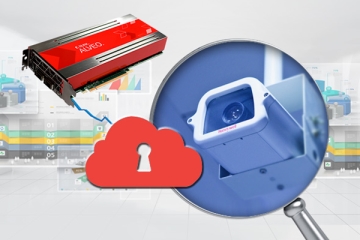
"Analyzing Video with AI Following Voice" Xilinx and SKT Strengthen Cooperation in AI Inference
To realize AI-based physical unauthorized access detection, it is necessary to monitor millions of commercial and residential camera systems in real time. For this, fast and accurate AI accelerators are required. Xilinx announced that its data center accelerator card is used in SK Telecom's unauthorized access detection service 'T-View'. This marks the third instance of SK Telecom using Xilinx's FPGA-based accelerator card in its services, following the ASR-based AI speaker Nugu and call center SST solution. Xilinx's Alveo U250 data center accelerator card is mounted on SK Telecom's AI inference accelerator AIX and runs on SK Telecom's data center servers.
2019.11.01by 이수민 기자
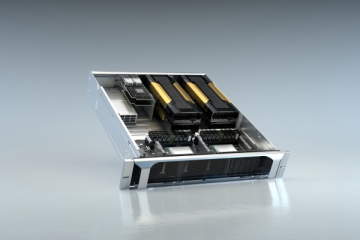
NVIDIA Ranks 1st in 5 AI Inference Benchmark Categories
Nvidia announced on the 7th that it achieved first place in all five new benchmark tests measuring AI inference workload performance in data centers and network edge. In MLPerf Inference 0.5, an independent AI inference benchmark test, Nvidia utilized Nvidia Turing GPU for data centers and Nvidia Jetson Xavier SoC for edge computing. MLPerf's five inference benchmarks, which apply various form factors and four inference scenarios, include existing AI applications such as image classification, object detection, and transformation. Nvidia achieved first place in all five benchmarks under data center scenarios including server and offline, with Turing GPU achieving the highest performance per processor among commercial processors.
2019.11.07by 이수민 기자
.jpg)
MCHP Adaptec Smart Storage Adapter becomes interoperable with MegaRAC SP-X remote monitoring firmware
Microchip Technology announced that by adding this functionality to its Adaptec Smart Storage Adapter products, it now supports full interoperability with American Megatrends' MegaRAC SP-X remote monitoring and diagnostics firmware and the MegaRAC solution development framework. Interoperability between the Adaptec Smart Storage Adapter and MegaRAC SP-X management firmware that enhances embedded BMC (Base Management Controller) provides remote management capabilities such as platform status monitoring, issue alerting, diagnostics and recovery, thereby reducing datacenter operational costs.
2019.11.14by 이수민 기자

[e4ds Tech Day 2026 ⑨] Sim Sang-gyu, Autocrypt CTO: "In the Physical AI Era, Automotive Security Must Extend Beyond the Vehicle"
At e4ds Tech Day 2026, Sim Sang-gyu, CTO of Autocrypt, explained automotive cybersecurity strategies in the era of Physical AI and SDV (Software-Defined Vehicle). Automobiles are evolving as part of an ecosystem connected to AI, cloud, chargers, IoT, and robots, and he emphasized that the scope of security must expand beyond the vehicle interior to the entire connected environment. In particular, AI model tampering, adversarial attacks, OTA updates, and EV charger hacking were identified as major threats. He explained that response measures require zero trust, AI model integrity protection, intrusion detection, Security by Design and Default, and full lifecycle security management, and that proactive security system establishment beyond regulatory compliance is critical for securing future mobility competitiveness.
2026.10.12by 배종인 기자
NVIDIA to Invest $1 Billion in U.S. Science Over Next Five Years
NVIDIA has announced plans to invest $1 billion over the next five years to strengthen U.S. scientific and technological competitiveness. The company will enhance cutting-edge artificial intelligence research and development capabilities in key areas including quantum computing, healthcare, and energy security, while expanding support for higher education research institutions and cloud service providers. NVIDIA is participating as a major industry partner in the White House Office of Science and Technology Policy's Genesis Mission, and is promoting supercomputer construction in collaboration with national laboratories including Argonne and Los Alamos.
2026.10.12by 배종인 기자











