



163.3 billion won to be invested in fostering software talent with the goal of becoming an AI powerhouse
 Published2020.01.20 16:47
Support for elementary, middle, high schools, universities, and online education increased by 23% compared to the previous year.
With the goal of becoming a powerhouse in artificial intelligence, the government is investing a total of 163.3 billion won in the development of software talent and supporting related programs.
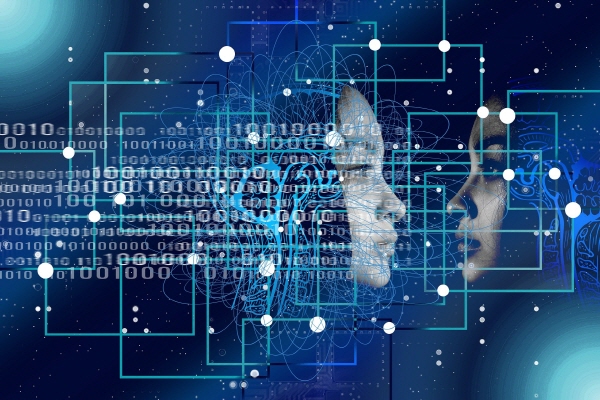
▲ The government supports software education to foster AI talent.
The Ministry of Science and ICT announced that it has finalized the implementation plan for the 'SW Talent Development and Base Expansion Project,' which includes strengthening artificial intelligence capabilities, introducing innovative software education programs, and expanding regional software education, and will begin providing active support starting in January.
The Ministry of Science and ICT will invest a total budget of 163.3 billion won in 2020 to foster software talent. This represents a 23% increase from last year (38.4 billion won in 2019) and is used to educate approximately 140,000 people through elementary, middle, high school, and university curricula, as well as to support programming competitions, hackathons, and online software education.
To foster high-quality, customized practical talents that meet the demands of the industrial field, a total of 80 billion won will be invested to support 40 SW-focused universities, and SW professional and convergence talents will be trained through SW major courses and convergence education.
We will train 500 talented individuals annually through the Innovation Academy, which opened last December to begin full-scale cultivation of high-level talent to lead AI and the Fourth Industrial Revolution. The Innovation Academy is modeled after France's École 42, and we plan to produce 750 graduates by the end of 2020, starting with the first cohort of 250 people this coming February.
Ecole 42 is a self-directed learning software education program operating in 17 cities across 13 countries, including Silicon Valley in the United States, Finland, Spain, and Japan.
In addition, 8.6 billion won will be invested in SW Maestro, a mentoring program composed of top experts, and SW Star Labs, which foster high-level research personnel through research and development of original technologies in the SW field, will be expanded to 36 (29 in 2019).
Elementary, middle, and high school education will be conducted as advanced education including AI, going beyond the existing basic software education, and SW Future Chaeum Centers will be expanded to 10 (currently 5) to support local talent in island and mountainous regions.
We will operate 150 AI education pilot schools nationwide that provide specialized AI and data education, and train 2,500 core teachers equipped with SW and AI education capabilities with the goal of opening advanced SW courses including AI. To this end, training is conducted on AI lesson design, curriculum analysis, and more.
In addition, we will develop practical education programs using SW and AI teaching materials and promote the training of 1,000 SW professional instructors targeting youth, women whose careers have been interrupted, and retired developers.

▲ Supports content development training, which is emerging as a core service of the 5G business.
In particular, to cultivate up to 825 specialized talents in immersive content, which is emerging as a core service following the commercialization of 5th generation (5G) mobile communication, we are providing content development education for graduate students, working professionals, and undergraduate students.
By operating 7 XR Labs, 160 advanced talents with professional expertise at the master's and doctoral levels are trained, and practical training in the form of corporate demand-linked projects is conducted for employees in the content field (600 people), as well as VR simulation content development training for university students in the manufacturing and safety fields (65 people).
Song Kyung-hee, Director General of Software Policy at the Ministry of Science and ICT, stated, “As we prepare for the AI era, the importance of software that enables artificial intelligence is gradually growing,” adding, “We plan to further expand support, including the cultivation of software talent, to leap forward as a leading nation in AI.”
Comments
Related news
“AI, autonomous driving, and 5G are the technologies that excite us the most”
The survey results revealed that the most exciting technology trends for the next decade are AI, autonomous vehicles, biotechnology, IoT, and 5G. When NowandBay conducted a survey of 1,400 adults regarding newsworthy technology trends and technologies that excite them, artificial intelligence received the highest response rate across the board.
2020.01.08by 최인영 기자
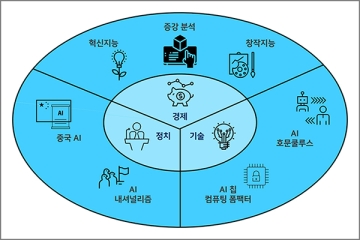
AI Strategy to Drive R&D Innovation Will Determine the Outcome of the Global Hegemony Race
Existing AI was previously regarded merely as a technology that mimics human perception. In the 2020 AI Seven Major Trends Report published by ETRI, it is explained that AI is leading business analysis and R&D innovation that humans have been unable to accomplish, creating economic added value through creative activities once considered the exclusive domain of humans, and functioning as a new driving force in shifts of global hegemony.
2020.01.21by 이수민 기자

3.6 million Korean-style object images released for AI learning
The Korea Information Society Development Institute has released 3.6 million Korean object images for artificial intelligence training, covering historical structures, products, and urban landmarks. The historical structures were designed using the classification system of the Cultural Heritage Administration, while products were collected from online marketplaces and with consideration given to preferences of foreign tourists. The landmarks were selected across 35 cities nationwide, including Jeju Island.
2020.01.21by 최인영 기자

[e4ds Tech Day 2026 ⑨] Sim Sang-gyu, Autocrypt CTO: "In the Physical AI Era, Automotive Security Must Extend Beyond the Vehicle"
At e4ds Tech Day 2026, Sim Sang-gyu, CTO of Autocrypt, explained automotive cybersecurity strategies in the era of Physical AI and SDV (Software-Defined Vehicle). Automobiles are evolving as part of an ecosystem connected to AI, cloud, chargers, IoT, and robots, and he emphasized that the scope of security must expand beyond the vehicle interior to the entire connected environment. In particular, AI model tampering, adversarial attacks, OTA updates, and EV charger hacking were identified as major threats. He explained that response measures require zero trust, AI model integrity protection, intrusion detection, Security by Design and Default, and full lifecycle security management, and that proactive security system establishment beyond regulatory compliance is critical for securing future mobility competitiveness.
2026.10.12by 배종인 기자
NVIDIA to Invest $1 Billion in U.S. Science Over Next Five Years
NVIDIA has announced plans to invest $1 billion over the next five years to strengthen U.S. scientific and technological competitiveness. The company will enhance cutting-edge artificial intelligence research and development capabilities in key areas including quantum computing, healthcare, and energy security, while expanding support for higher education research institutions and cloud service providers. NVIDIA is participating as a major industry partner in the White House Office of Science and Technology Policy's Genesis Mission, and is promoting supercomputer construction in collaboration with national laboratories including Argonne and Los Alamos.
2026.10.12by 배종인 기자











