


AI-powered medical 3D printers can now produce prosthetics.
 Published2020.01.28 17:56
Approval of International Standards for the Development of Customized Medical Equipment
Automatically segment and analyze video precisely using AI
The Electronics and Telecommunications Research Institute (ETRI) announced on the 28th that two new international standards proposed for medical image-based medical 3D printing modeling were finally approved at the WG12 '3D Printing and Scanning' working group meeting under the International Organization for Standardization (ISO/IEC) JTC1 on the 25th of last month.
.png)
The adopted standardization items include the requirements for producing medical 3D printer prostheses based on CT images and orbital images, as well as the segmentation procedures for each human tissue required during the production process.
Medical 3D printing is a technology that uses medical image information from a patient to produce surgical medical devices, implantable medical devices, and pre-simulation devices tailored to the patient.
Until now, preparing medical equipment tailored to a patient's condition required the creation of printed models by hand. This was due to the difficulty of clearly identifying tissue areas in images. The long production time posed significant constraints in urgent situations, and the lack of standards made it difficult to utilize data from other medical professionals.
The research team has begun developing standards for automating the process of creating 3D printing models using deep learning. In particular, it includes AI-based automation of the "segmentation" process, which is crucial for creating specific human tissue models from medical images. Experts from the U.S. FDA, the Radiological Society of North America (RSNA), and DICOM are also expected to participate in the standardization effort.
ETRI stated that it was able to achieve this result through collaboration with Professor Shim Kyu-won of Yonsei University and Professor Hong Helen of Seoul Women's University, led by ETRI Senior Researcher Jeon Jong-hong, starting in 2018.
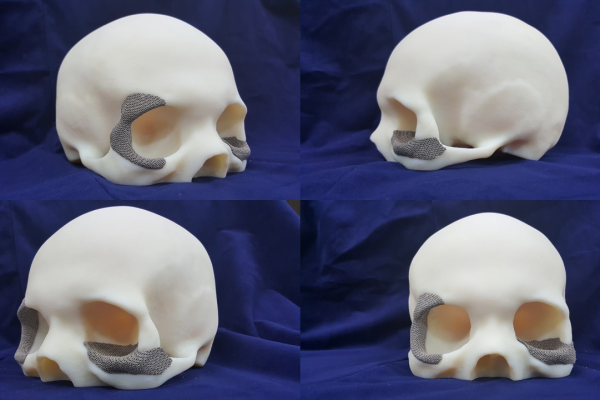
Example of a manufactured and attached device (Photo = ETRI)
The joint research team plans to apply deep learning technology to '3D reconstruction' and '3D format conversion' in the future to create additional international standards to enable precise automatic modeling without distortion or loss.
ETRI explained that through this achievement, it plans to collect additional opinions from industry, academia, and research institutes related to domestic medical AI and medical 3D printing and reflect them in ways to resolve technical issues.
Meanwhile, Working Group (WG) 12, which approved this standardization item, was established by ETRI in August 2018, and is working on international standardization in the medical field in cooperation with domestic and international experts, with ETRI's Dr. Lee Byeong-nam as its chairman.
Comments
Related news
ST Launches STLINK-V3MINI Portable Debug Probe
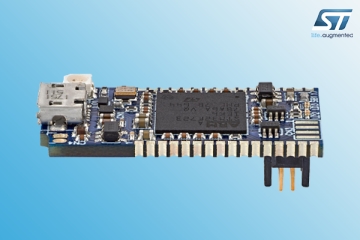
ST Microelectronics has launched the standalone probe STLINK-V3MINI. The STLINK-V3MINI is a portable solution that can be used to upload and debug STM32 MCU-based applications anywhere. With simple drag-and-drop functionality, files can be uploaded directly through the probe, enabling developers to rapidly prototype new ideas and run various demo applications, thereby enhancing developer convenience. Reference files for 3D printing are also provided, allowing users to create customized cases for the probe.
2019.07.25by 이수민 기자
Can You Make Your Own Special Car with a 3D Printer?
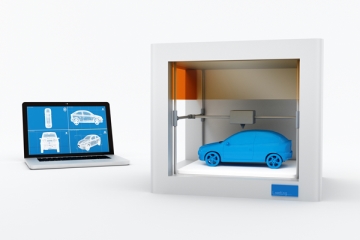
The automobile is one of the objects through which we can glimpse human individuality. When selecting a car, consumers want to reflect their own individuality within a limited range of choices such as manufacturer, model, and color. What makes this wish possible is the 3D printer. In theory, it is possible to manufacture cars using 3D printing technology. However, most automobile industry experts believe that mass-producing customized finished vehicles will be impossible even after another 100 years. Therefore, a different approach is needed to utilize 3D printing in the automobile industry.
2019.09.23by 최인영 기자
Siemens strengthens online additive manufacturing capabilities
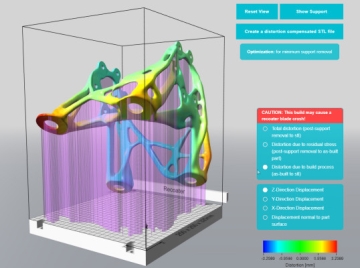
Siemens provides Sunata software, an automated solution that enables design engineers to easily succeed in industrial 3D printing through an acquisition agreement with Atlas 3D. Sunata software is a GPU-accelerated high-performance computing additive manufacturing software solution that reduces downstream 3D printing errors caused by thermal deformation 100 times faster than existing solutions.
2019.11.18by 최인영 기자
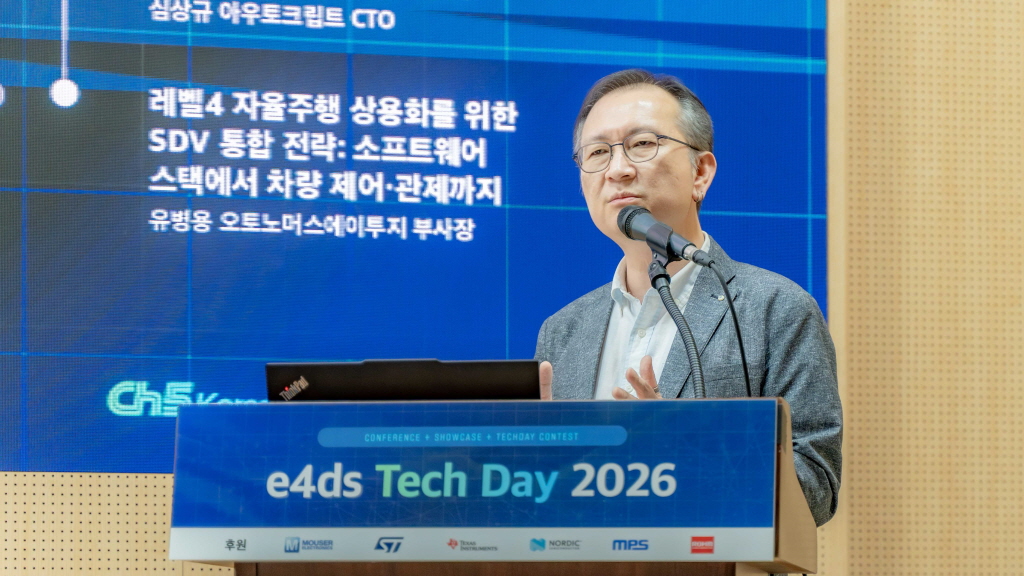
[e4ds Tech Day 2026 ⑨] Sim Sang-gyu, Autocrypt CTO: "In the Physical AI Era, Automotive Security Must Extend Beyond the Vehicle"
At e4ds Tech Day 2026, Sim Sang-gyu, CTO of Autocrypt, explained automotive cybersecurity strategies in the era of Physical AI and SDV (Software-Defined Vehicle). Automobiles are evolving as part of an ecosystem connected to AI, cloud, chargers, IoT, and robots, and he emphasized that the scope of security must expand beyond the vehicle interior to the entire connected environment. In particular, AI model tampering, adversarial attacks, OTA updates, and EV charger hacking were identified as major threats. He explained that response measures require zero trust, AI model integrity protection, intrusion detection, Security by Design and Default, and full lifecycle security management, and that proactive security system establishment beyond regulatory compliance is critical for securing future mobility competitiveness.
2026.10.12by 배종인 기자
NVIDIA to Invest $1 Billion in U.S. Science Over Next Five Years
NVIDIA has announced plans to invest $1 billion over the next five years to strengthen U.S. scientific and technological competitiveness. The company will enhance cutting-edge artificial intelligence research and development capabilities in key areas including quantum computing, healthcare, and energy security, while expanding support for higher education research institutions and cloud service providers. NVIDIA is participating as a major industry partner in the White House Office of Science and Technology Policy's Genesis Mission, and is promoting supercomputer construction in collaboration with national laboratories including Argonne and Los Alamos.
2026.10.12by 배종인 기자











