


PAVs to be commercialized sooner than fully autonomous vehicles
 Published2020.02.18 15:06
PAVs with mature technology expected to appear in 2025
Noise, safety, and the lack of standards remain unresolved issues.
The city center is packed with buildings and roads, and chaotic with moving vehicles and crowds. It is already saturated. Let's lift our heads and expand our field of vision from two dimensions to three. There is a vast expanse of air.
Personal aerial vehicles, or PAVs, are being presented as a future means of transportation to improve mobility efficiency in urban areas that have been degraded by overcrowding.
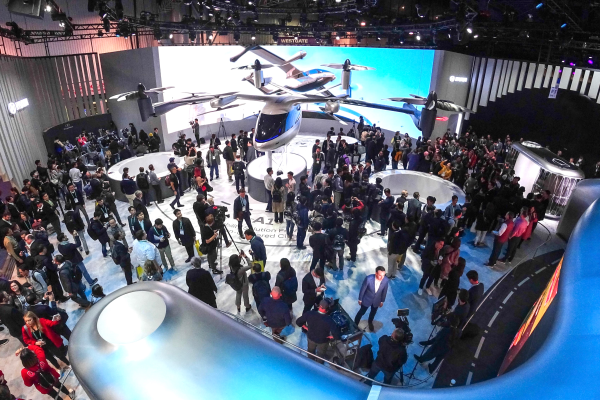
PAVs also stood out at CES 2020, the world's largest IT and consumer electronics trade show held in Las Vegas, USA, last January. Hyundai Motor unveiled the concept PAV 'S-A1', while Bell Flight revealed the 'Bell Nexus 4EX' equipped with four propellers.
The CES of the late 2010s saw such a large turnout from the automotive industry that it could be considered an automotive show rather than a consumer electronics trade show. With the advancement of AI increasing the feasibility of Level 5 autonomous vehicles that require no driver intervention at all, participation from the semiconductor and software industries has also been notable.
That trend reversed at CES 2020. This is because the automotive industry's interest in autonomous vehicles has cooled somewhat as partial autonomous driving capabilities have become commercialized, and the development of Level 5 autonomous vehicles has encountered several challenges. Furthermore, these challenges are lowering the likelihood of commercializing fully autonomous vehicles compared to PAVs.
Challenges Lowering the Likelihood of Commercializing Fully Autonomous Vehicles
The first issue is the stagnation in the development of autonomous driving systems' ability to handle unexpected situations on the road. Sensor technologies, such as cameras, radar, and lidar, that recognize the presence of objects are already sufficiently mature. However, AI technology for predicting and responding to object movements has not.
For AI to perform its role effectively, it must learn as many unexpected situations as possible that occur in diverse road environments. This is a highly time-consuming process, and 3D simulations have limitations. On the other hand, the airspace through which PAVs will traverse is not as unpredictable as roads and contains fewer obstacles. Recent AI technology is sufficient to handle this. Furthermore, the current objective of PAVs is 'driving,' not 'autonomous driving.'
The second factor is the shift in the automotive market paradigm. With the global trend of low growth becoming entrenched and ride-sharing services rising due to the emergence of Uber and Lyft, simply selling cars is no longer sufficient to generate greater value.
The automotive industry attempted to find a breakthrough in autonomous driving to escape the trend of low growth. However, due to sluggish technological development and a lack of relevant policies, it has been difficult to come up with business models, and the semiconductor, software, and even telecommunications industries are eyeing this market. The profit structure is opaque, yet the share to be divided continues to increase.
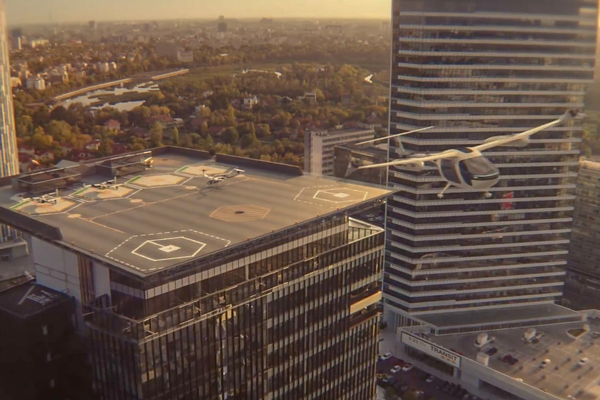
As a category distinct from conventional automobiles, PAVs will generate new revenue for the automotive and aviation industries. Furthermore, with a minimum price of 200 million won per unit, PAVs are highly likely to be introduced for public rather than private use. The PAV unveiled by Hyundai Motor and Bell Flight at CES 2020 is the result of a collaboration with Uber. Additionally, ride-sharing companies such as Uber and Lyft are currently in conflict with taxi industries in various countries. Given the absence of taxis, the airspace where PAVs will operate will become an attractive environment for ride-sharing companies.
The third issue is the ambiguity regarding liability in the event of an accident. Governments and the legal community around the world have yet to determine who should be held responsible when autonomous vehicles cause fatalities. This is an ethical and philosophical problem with no easy answer. There will likely be prolonged difficulties, and even if a decision is reached, numerous objections will be raised.
PAVs that have not adopted autonomous flight are driven by humans, so they are not subject to the issue of liability. If autonomous vehicles solve all of the above problems, PAVs will also benefit by introducing fully autonomous flight capabilities.
Things PAV must overcome
Uber CEO Dara Khosrowshahi stated at the Uber Elevate conference in May 2018, “The only solution that can effectively resolve the problem of traffic congestion in modern cities is to build a three-dimensional transportation system using vertical take-off and landing PAVs,” adding, “We will launch a short-distance PAV taxi service with thousands of vehicles by 2023.”
Tesla CEO Elon Musk called it a "groundbreaking idea," but expressed skepticism, stating that "massive battery energy consumption during takeoff and landing, and unimaginable damage in the event of an accident, would occur." As such, PAVs also face many challenges that need to be addressed.
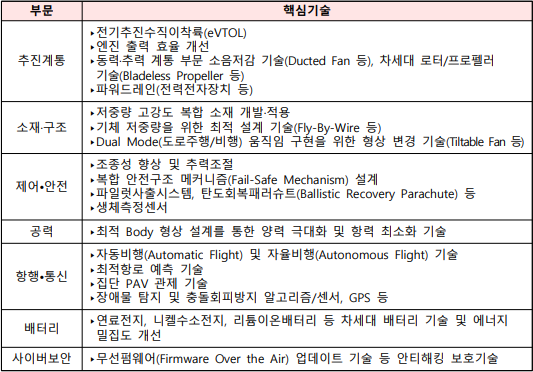
First, the technical specifications of aircraft models vary by manufacturer. As the PAV market has just entered its formative stage, road-legal capability, vertical take-off and landing (VTOL) capabilities, electric propulsion, and the number of rotors differ significantly. This will lead to models of various shapes competing in terms of price, function, and design, naturally establishing technology and product families that are more preferred in the market.
According to the 'Personal Aircraft (PAV) Technology Market Trends and Industry Environment Analysis Report' published by the Korea Aerospace Research Institute in May 2019, there is still a long way to go for any type of PAV to achieve stable integration with existing transportation systems, and while fully autonomous flight that replaces human pilots is difficult to apply in the near future, it is a technology that must eventually be realized to maximize the demand for PAVs.
In addition, it was suggested that technology capable of reducing noise to a level that prevents complaints from residential areas due to PAV flight noise, safety structural mechanisms that ensure neither passengers nor non-passengers are exposed to separate risks, PAV operational infrastructure, and next-generation air traffic control systems are necessary.
According to the report, the PAV-based aerial mobility market is not a story of the distant future. In addition to Uber, which has unveiled an air taxi service, at least 20 companies with technological competitiveness, including Boeing, Airbus, and Lilium, are either about to enter or preparing to enter the service.
Deloitte predicted that passenger transport drone-type PAVs would appear in 2020, general PAVs in 2022, and PAVs with more mature core technologies around 2025, and the BCG Group also predicted that the commercial PAV market would open in the mid-2020s.
Although the commercialization of autonomous vehicles has already become visible, it is expected to take a little more time. Last year, the government announced through the '2030 Future Car Industry Development Strategy,' jointly released by relevant ministries, that it would launch Level 4 autonomous vehicles by 2024 and build major road infrastructure nationwide to support Level 4 autonomous driving by 2027.
Comments
Related news

“AI, autonomous driving, and 5G are the technologies that excite us the most”
The survey results revealed that the most exciting technology trends for the next decade are AI, autonomous vehicles, biotechnology, IoT, and 5G. When NowandBay conducted a survey of 1,400 adults regarding newsworthy technology trends and technologies that excite them, artificial intelligence received the highest response rate across the board.
2020.01.08by 최인영 기자
Niu, Implementation of Urban Autonomous Mobility Network
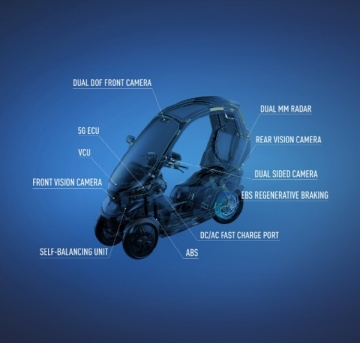
Niu Technologies has implemented an urban autonomous mobility network equipped with 5G connectivity, autonomous driving, and self-balancing capabilities. Through CES 2020, Niu unveiled electric vehicles RQi GT and TQi GT, presenting innovation in traditional commuting methods. To realize a future where vehicles arrive at your doorstep after destination setting when summoned via mobile phone, Niu is advancing platform development based on IoT technology.
2020.01.10by 최인영 기자
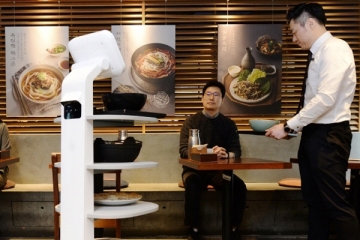
Self-driving robots deliver food from restaurants
LG Electronics and CJ Foodville have launched a service in which robots independently deliver food to customers and retrieve empty dishes. The two companies applied Cloi Servebot, which they showcased at CES 2020, to actual restaurants on January 31st. The robot is equipped with indoor autonomous driving and obstacle avoidance technology, and displays various expressions on its screen to realize a coexistence between people and robots.
2020.02.03by 최인영 기자

Camera for Both Humans and Machines: ST BrightSense 5MP Dual Shutter Image Sensor
Video consumed by humans and imagery analyzed by machines impose different requirements on the sensor in terms of shutter method and wavelength band. Until now, sensors had to be separated or supplemented with companion chips and high-performance processors, and this cost and complexity became a bottleneck in vision system design. The ST BrightSense next-generation 5MP image sensor (VD5943, VD1943, VB5943, VB1943) with 2.25 µm pixels supports both global and rolling shutters, and through on-chip staggered HDR (up to 100 dB), on-chip RGB-IR separation and 5MP NIR smart upscaling, and frame-by-frame context switching, absorbs both requirements internally at the sensor level. This white paper describes the rationale, choices, trade-offs, and results of each design decision based on presentation slides and technical Q&A, and specifies application boundaries. The product is scheduled for mass production in February 2026, and evaluation and sampling are currently available.
2026.10.13by 편집부

AI-based Universal Robots Automation Solution
In manufacturing environments where declining labor populations overlap with frequent production item changes, existing programming-based robot automation requires reconfiguration from weeks to several months each time product models change. This white paper takes this flexibility gap as its starting point and synthesizes, based on webinar presentation materials and technical Q&A, what collaborative robots gain and forfeit compared to industrial robots, why process automation is transitioning from rule-based to learning-based (4th generation) approaches, and how Universal Robots' hardware, software, and partner ecosystem implement this. Additionally, it clarifies the application boundaries and limitations, including that AI Accelerator is still at the development kit stage.
2026.10.13by 편집부











