


MathWorks Supports Automation of FPGA/ASIC-Based Vision System Design with Vision HDL Toolbox R2019
 Published2020.02.27 12:17
Automatic generation of verified code for processing
MathWorks announced on the 27th that it supports native multi-pixel streaming for High Frame Rate (HFR) and high-resolution image processing on FPGAs through the Vision HDL Toolbox included in MATLAB and Simulink Release 2019b.
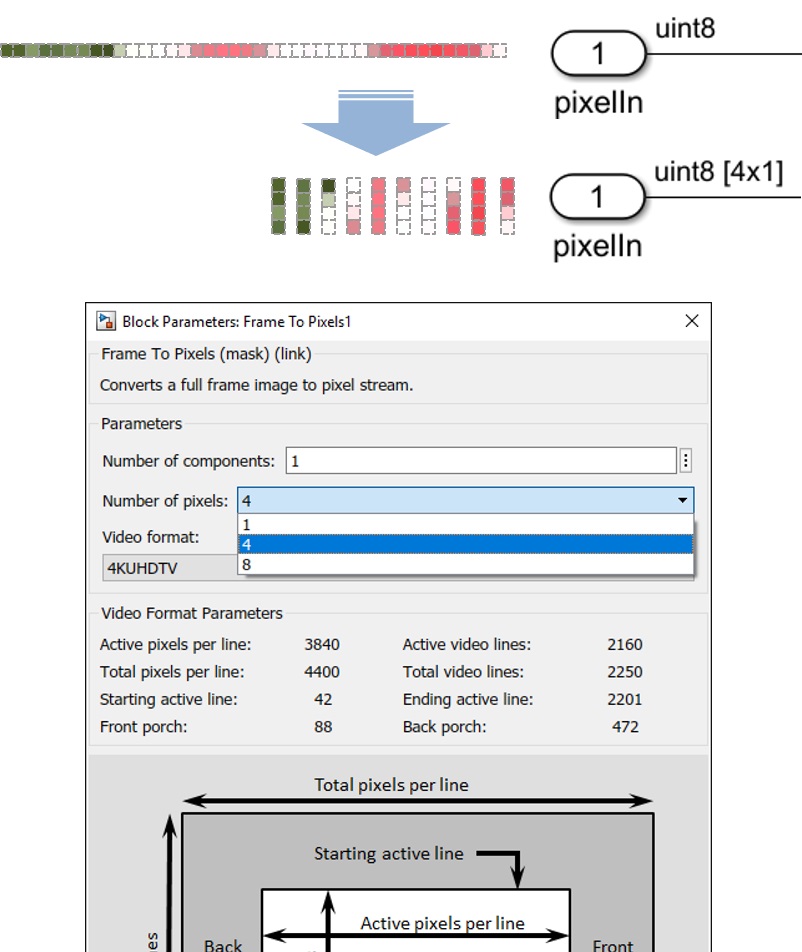
The Vision HDL Toolbox accelerates the task of video, image processing, and FPGA design engineers in exploring or simulating trade-offs between system behavior and implementation when processing 4K or 8K video, or high-resolution video at 240 frames per second or higher.
FPGA design engineers face the challenge of meeting throughput, resource usage, and power consumption targets to implement real-time processing of high-resolution and HFR images in applications such as industrial inspection, medical imaging, information, surveillance, and reconnaissance (ISR).
The Vision HDL Toolbox provides blocks that process 4 or 8 pixels in parallel, and simulates with specified parallel processingAutomatically updates the underlying hardware implementation to perform ration and code generation.
These features enable hardware engineers to collaborate with image and video processing engineers to explore and simulate vision processing hardware behavior at a high level of abstraction.
Furthermore, by adding an HDL coder to this design workflow, it is possible to directly combine with verified high-level models and generate target-independent, optimized VHDL or Verilog code.
Vision HDL Toolbox R2019b is available right now.
Comments
Related news

Lattice Nexus, Low-Power FPGA Platform for Edge AI Unveiled
Lattice Semiconductor announced Nexus, a new low-power FPGA platform, and CrossLink-NX, the first device based on it. The Lattice Nexus platform was designed for embedded developers looking to implement AI applications at the edge, and was developed using Samsung Electronics' 28nm FD-SOI process technology.
2019.12.11by 이수민 기자
.png)
Microchip Begins Early Access to RISC-V Based SoC FPGA
Microchip announced the launch of an early access program for the PolarFire SoC FPGA. By enrolling in this program, developers can begin development using Microchip's Libero SoC 12.3 FPGA design suite and SoftConsole 6.2 IDE for embedded developers. Developers can also debug their embedded applications using Renode, a virtual model of the microprocessor subsystem.
2019.12.11by 이수민 기자
MATLAB and Simulink Support Universal Verification Methodology 'UVM' to Accelerate FPGA and ASIC Verification
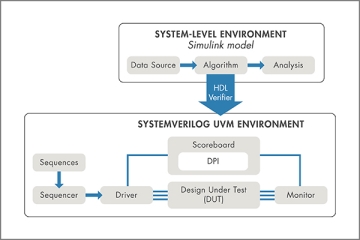
HDL Verifier enables design verification engineers developing FPGA and ASIC designs to directly generate Universal Verification Methodology (UVM) components and testbenches through Simulink, and supports their use in simulators that support UVM, such as Synopsys, Cadence, and Mentor Graphics.
2020.01.15by 이수민 기자

Korea Instrument, KOLAS Accredited Calibration Agency First to Simultaneously Acquire ISO/IEC 27,001·27,701
Korea Instrument has become the first among KOLAS accredited calibration agencies to simultaneously acquire ISO/IEC 27,001 and ISO/IEC 27,701 certifications. Through its proprietary platforms CWIZ Enterprise and CWIZ Partners, the company has embedded information security and personal data protection requirements across all business processes including customer information, equipment data, and calibration reports, with plans to continuously advance its management system through regular audits and security inspections.
2026.10.12by 배종인 기자

TeamViewer One, IT Incident Automation Workflow and Resolution Center Enhanced
TeamViewer has added IT incident automation capabilities and an advanced Resolution Center to its integrated digital workplace management platform 'TeamViewer ONE'. Recurrent service disruptions, configuration errors, and capacity shortages are automatically handled according to preset policies, and device status verification through script deployment can be managed in a unified interface, significantly reducing repetitive tasks for IT teams.
2026.10.12by 배종인 기자











