


IBM, Software Developers Worldwide Take Action on Climate Change
 Published2020.02.27 08:39
David Clark Kurz in partnership with the Linux Foundation
IBM Technology Support from Climate Policy to Artificial Intelligence
Software developers around the world are exploring ways to use open source technologies to combat climate change.

▲ IBM uses open source-based technology to respond to climate change with software developers around the world
IBM and the David Clark Curze Foundation, together with the United Nations Human Rights Council and the Linux Foundation, are hosting the Call for Code Global Challenge.
The competition aims to develop practical and innovative applications that can impact climate change. This includes Red Hat's OpenShift, IBM Cloud, IBM Watson, IBM Blockchain, and The Weather Company's data.
The United Nations, which celebrates its 75th anniversary this year, is conducting various campaigns to solve pressing global issues such as climate change, and IBM is working with major UN organizations and world leaders to participate in this effort.
According to a recent IBM survey of more than 3,000 people around the world, including developers, emergency medical personnel, and social activists, 77% of emergency medical personnel and developers identified climate change as the most urgent issue facing our generation.
79% of respondents agreed that problems caused by climate change can be reduced or solved using advanced technologies, and 87% of respondents said that it is important for companies to take action to address climate change.
Eight in 10 respondents said most people want to do something to combat climate change, but don't know where or how to start.
“With the urgent need to address climate change, IBM is proactively connecting talented developers with relevant experts,” said Bob Lord, senior vice president, IBM Cognitive Applications and Developer Ecosystem. “We are mobilizing the full breadth of IBM technology—from climate policy to our weather forecasting capabilities powered by AI and supercomputers—to find technology solutions that can create a better world for future generations.”

▲ Developing solutions for future generations Artificial intelligence, etc. are used for the purpose.
Meanwhile, last year’s event attracted over 180,000 participants from 165 countries around the world, and more than 5,000 applications focused on natural disaster preparedness and relief were developed. The Prometheo team, consisting of three veterans and emergency medical nurses, won the award for developing a wearable device that monitors the safety of firefighters in real time and checks their health by measuring carbon monoxide, smoke concentration, humidity, and temperature. The solution was developed with the support of IBM’s Code and Response program and recently completed its first wildfire field test.
IBM, the UN Human Rights Council, the David Clark Curze Foundation, and the Linux Foundation are investing $30 million over five years in a massive climate change developer competition.
Comments
Related news

One click enables municipal waste collection
A system has been developed that collects location information of municipal waste collection and transport vehicles through a server and manages regional municipal waste collection schedules with a single click. Sunkyong Ecotech developed a system that continuously monitors waste locations and transmits the locations of abandoned waste to the responsible regional manager through equipment attached to vehicles.
2020.02.24by 최인영 기자
Creating Customized Weather Observation Stations with AI
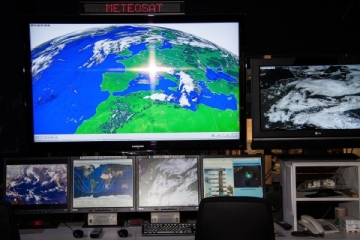
The Korea Institute of Machinery and Materials (KIMM) is hosting a competition to estimate temperatures in specific regions using public data. Participants must develop AI analysis algorithms utilizing public data provided by the Korea Meteorological Administration and temperature data from specific regions provided by KIMM. This competition, held as part of the next-generation public technology discovery network project, awards prize money according to rankings.
2020.02.26by 최인영 기자
KLA Launches Two IC Micro-process Measurement Systems
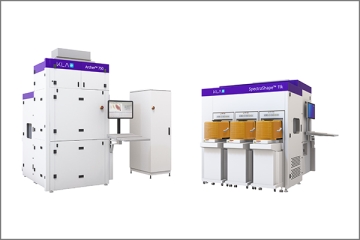
KLA has launched the Archer 750 overlay metrology system and SpectraShape 11k CD and dimensional shape metrology system. The Archer 750 overlay metrology system measures overlay error in the presence of process variation. The SpectraShape 11k CD and dimensional shape metrology system measures wafer topography, structure, and material, enabling process monitoring during production operations.
2020.02.27by 이수민 기자

[e4ds Tech Day 2026 ⑨] Sim Sang-gyu, Autocrypt CTO: "In the Physical AI Era, Automotive Security Must Extend Beyond the Vehicle"
At e4ds Tech Day 2026, Sim Sang-gyu, CTO of Autocrypt, explained automotive cybersecurity strategies in the era of Physical AI and SDV (Software-Defined Vehicle). Automobiles are evolving as part of an ecosystem connected to AI, cloud, chargers, IoT, and robots, and he emphasized that the scope of security must expand beyond the vehicle interior to the entire connected environment. In particular, AI model tampering, adversarial attacks, OTA updates, and EV charger hacking were identified as major threats. He explained that response measures require zero trust, AI model integrity protection, intrusion detection, Security by Design and Default, and full lifecycle security management, and that proactive security system establishment beyond regulatory compliance is critical for securing future mobility competitiveness.
2026.10.12by 배종인 기자
NVIDIA to Invest $1 Billion in U.S. Science Over Next Five Years
NVIDIA has announced plans to invest $1 billion over the next five years to strengthen U.S. scientific and technological competitiveness. The company will enhance cutting-edge artificial intelligence research and development capabilities in key areas including quantum computing, healthcare, and energy security, while expanding support for higher education research institutions and cloud service providers. NVIDIA is participating as a major industry partner in the White House Office of Science and Technology Policy's Genesis Mission, and is promoting supercomputer construction in collaboration with national laboratories including Argonne and Los Alamos.
2026.10.12by 배종인 기자











