



Smart City Technology-Based COVID-19 Epidemiological Investigation System Launched
 Published2020.03.12 09:10
Temporary operation of the COVID-19 epidemiological investigation support system
COVID-19 epidemiological investigations are expected to become much easier.

The Korea Centers for Disease Control and Prevention, the Ministry of Science and ICT, and the Ministry of Land, Infrastructure and Transport announced that they have developed a 'COVID-19 Epidemiological Investigation Support System' based on the smart city technology 'Smart City Data Hub Platform' and will operate it on a temporary basis starting Monday, March 16.
Currently, the KCDC is identifying the location of outbreaks and transmission routes through in-depth epidemiological investigations, including interviews with confirmed COVID-19 patients. However, as the workload of epidemiological investigators surged due to the large-scale outbreak of confirmed cases in the Daegu and Gyeongbuk regions, the need for a computerized support system to rapidly and accurately analyze large-scale data was raised.
The Ministry of Land, Infrastructure and Transport developed a COVID-19 epidemiological investigation support system by utilizing the Smart City Data Hub currently under research and development in Daegu and Siheung, in consultation with the Korea Centers for Disease Control and Prevention, based on joint R&D technology with the Ministry of Science and ICT.
This system supports the response to COVID-19 by allowing the verification of movement routes and other details on a map, limited to patients confirmed by the KCDC, and utilizing related statistical information.
The KCDC plans to pilot the COVID-19 epidemiological investigation support system starting on the 16th, utilize it within the scope of epidemiological investigations specified in the Infectious Disease Prevention and Control Act, and operate it temporarily in consideration of the infectious disease crisis response level.
The Smart City Data Hub platform, which serves as the foundation for the COVID-19 epidemiological investigation support system, is a large-scale urban data analysis tool developed through the 'Smart City Innovation Growth Engine R&D ('18~'22)'. It analyzes various big data from different fields within the city, such as transportation, energy, environment, and safety, in real time to create convergent data and implement smart city services.
The three institutions plan to prioritize the application of this system to the COVID-19 response and strengthen support for infectious disease epidemiological investigations in the future.
Comments
Related news

Development of COVID-19 related apps and web services becomes easier
The Ministry of Science and ICT and NIA are collaborating with PaaS-TA Alliance, a domestic cloud industry consortium, to promote cloud donation to overcome COVID-19. The cloud being provided includes a PaaS-TA based cloud platform that supports the development of apps and web services, and cloud infrastructure capable of elastically responding to network access surges.
2020.03.09by 이수민 기자

CES Asia 2020, scheduled for June, has been postponed due to COVID-19.
CTA announced that it is postponing CES Asia 2020, which was scheduled to be held in Shanghai, China from June 10-12. The rescheduled date has not yet been determined. CTA stated that this decision was made in reflection of feedback from all stakeholders, including exhibitors, buyers, media, and speakers.
2020.03.10by 이수민 기자

Unceasing Punch of COVID-19 "Turned Up the First Half of 2020"
The COVID-19 pandemic is entering a new phase with a sharp surge in confirmed cases worldwide. Various IT technologies and products are being utilized for COVID-19 containment and treatment; however, they are being impacted by restrictions on group activities and personnel movement. Companies now find themselves in a situation where they must advance IT technologies to suit current realities and proactively respond to newly emerging services.
2020.03.10by 이수민 기자
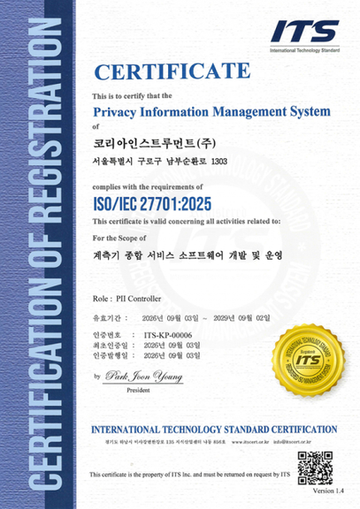
Korea Instrument, KOLAS Accredited Calibration Agency First to Simultaneously Acquire ISO/IEC 27,001·27,701
Korea Instrument has become the first among KOLAS accredited calibration agencies to simultaneously acquire ISO/IEC 27,001 and ISO/IEC 27,701 certifications. Through its proprietary platforms CWIZ Enterprise and CWIZ Partners, the company has embedded information security and personal data protection requirements across all business processes including customer information, equipment data, and calibration reports, with plans to continuously advance its management system through regular audits and security inspections.
2026.10.12by 배종인 기자
TeamViewer One, IT Incident Automation Workflow and Resolution Center Enhanced
TeamViewer has added IT incident automation capabilities and an advanced Resolution Center to its integrated digital workplace management platform 'TeamViewer ONE'. Recurrent service disruptions, configuration errors, and capacity shortages are automatically handled according to preset policies, and device status verification through script deployment can be managed in a unified interface, significantly reducing repetitive tasks for IT teams.
2026.10.12by 배종인 기자











