


Full-scale cultivation of 'DNA' ranging from wearable data-based medical care to mobile licenses
 Published2020.03.12 10:48
7 Regulatory Sandbox Cases Processed Through the 8th Deliberation Committee
In the future, it will be possible to provide hospital visit guidance services based on wearable device information, as well as mobile driver's license verification services and smartphone ordering and payment for alcoholic beverages.
The Ministry of Science and ICT held the 8th New Technology and Service Deliberation Committee meeting on March 12 to foster DNA (Data, Network, AI) fields such as 5G and artificial intelligence, and processed 7 ICT regulatory sandbox projects.
.jpg)
The Ministry of Science and ICT is pursuing a regulatory sandbox for seven projects to foster the DNA sector.
The projects under review include: ▲development of home care algorithms and clinic visit guidance services ▲home care health management services ▲smart ordering and payment services for alcoholic beverages ▲mobile electronic notification of bills from private institutions, etc. ▲mobile driver's license verification services ▲tourism taxi brokerage platform services ▲risk detection services using biosignals, etc.
In February of last year, the Ministry of Science and ICT granted a special exemption for a service in which doctors collect and utilize data from patients wearing a wristband-type electrocardiogram device to guide them to visit the hospital in the event of abnormal signs.
Until now, under the current Medical Act, the provision of services in which a doctor guides a patient to visit a clinic based on specific data through wearable devices according to the patient's condition was prohibited on the grounds that the basis was unclear.
<bHowever, through a proactive legal interpretation by the Ministry of Health and Welfare, guidance on visiting medical institutions has been made possible, allowing the service to be provided in the future even without a special demonstration exemption.
The Ministry of Science and ICT expects that this will enhance convenience for patients who find regular hospital visits inconvenient, while simultaneously expanding opportunities to enter related domestic and international markets, such as the smart medical sector.
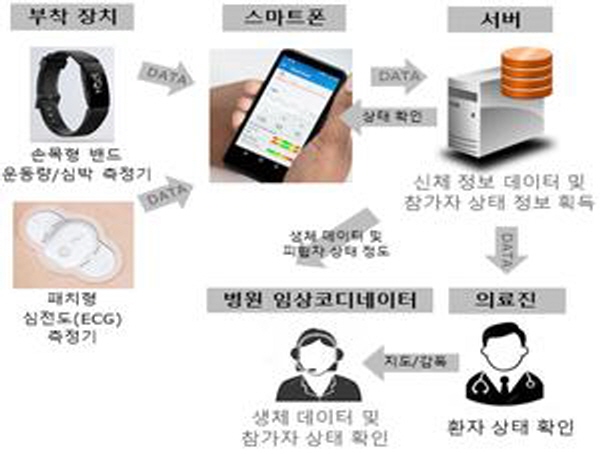
▲ Example of home care algorithm development and clinic visit guidance service <Image=Ministry of Science and ICT>
Minister of Science and ICT Choi Ki-young said, “I hope that through this deliberation, the medical institution visit guidance service will be utilized as a useful tool for responding to infectious diseases,” adding, “The regulatory sandbox is a representative policy of regulatory innovation that the government has focused on promoting. As it was established to provide opportunities for new attempts where new technologies and services do not pose a threat to the lives and safety of the public, it will play a role in suggesting directions for rapid market entry and institutional improvement.”
Meanwhile, at the 8th deliberation committee meeting, three projects in the digital healthcare field, including the development of home care algorithms and hospital visit guidance services, were processed, while four projects, including the expansion of electronic notification to private institutions and mobile driver's license verification services, were deliberated and approved and designated as temporary permits and special demonstration exceptions.
Comments
Related news
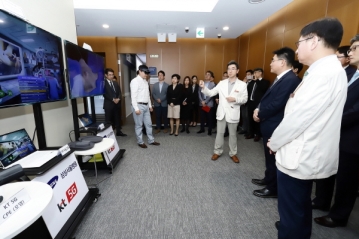
KT Launches World's First 5G Medical Service at Samsung Hospital
KT and Samsung Seoul Hospital are utilizing 5G services in medical procedures for the first time globally. Through enterprise-dedicated 5G, autonomous robots in operating rooms transport supplies and medical waste, while AI services provide patient care in hospital rooms, and 5G sync cameras simultaneously transmit high-definition real-time footage of the surgeon's surgical procedures. Both companies plan to continue their collaboration with the goal of establishing a 5G smart innovative hospital.
2020.01.14by 최인영 기자
SW-led 'digital treatment' to take its first step in 2020
The Software as a Medical Device (SaMD) market continues to show growth as software such as big data, cloud computing, and artificial intelligence are increasingly applied to healthcare. There is a spreading trend of utilizing ICT technology in medical image analysis, post-traumatic stress treatment, and robotic surgery. The healthcare industry represents the sector with the highest CAGR within the overall artificial intelligence market. Korea, having a 5G network infrastructure, possesses significant growth potential in the digital healthcare market.
2020.01.15by 최인영 기자
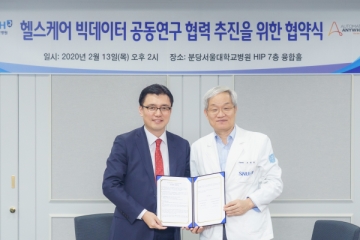
Automation Anywhere and Bundang Seoul National University Hospital Sign MOU for Joint Research on Healthcare Big Data
Automation Anywhere signed a memorandum of understanding (MOU) on joint research in healthcare big data with Bundang Seoul National University Hospital on the 13th. Through this MOU, both organizations agreed to explore and support joint research related to AI and machine learning-based technologies for healthcare big data utilization. Automation Anywhere will provide AI and machine learning-based RPA technology to Bundang Seoul National University Hospital to support the establishment of business processes capable of analyzing medical big data.
2020.02.14by 이수민 기자
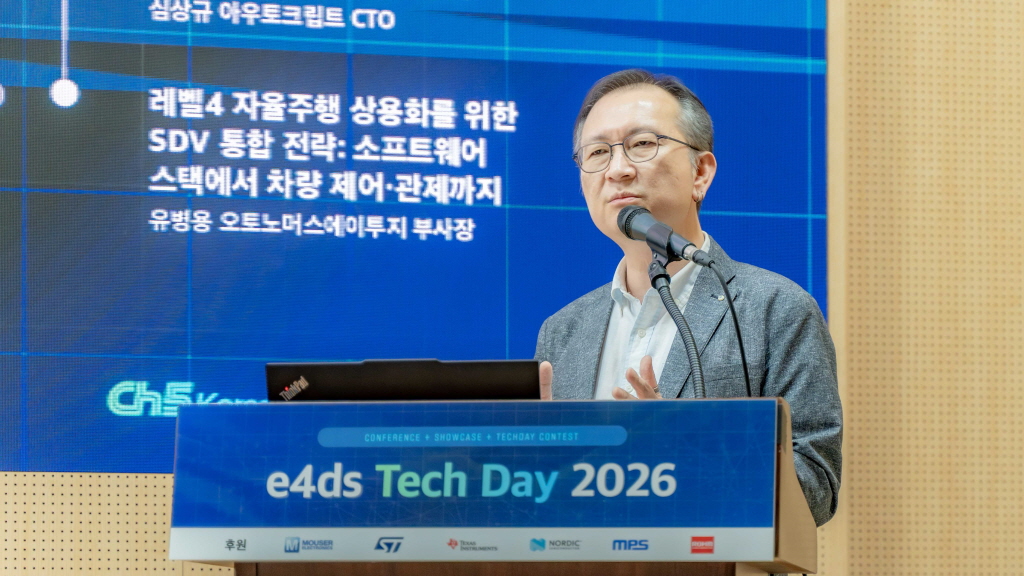
[e4ds Tech Day 2026 ⑨] Sim Sang-gyu, Autocrypt CTO: "In the Physical AI Era, Automotive Security Must Extend Beyond the Vehicle"
At e4ds Tech Day 2026, Sim Sang-gyu, CTO of Autocrypt, explained automotive cybersecurity strategies in the era of Physical AI and SDV (Software-Defined Vehicle). Automobiles are evolving as part of an ecosystem connected to AI, cloud, chargers, IoT, and robots, and he emphasized that the scope of security must expand beyond the vehicle interior to the entire connected environment. In particular, AI model tampering, adversarial attacks, OTA updates, and EV charger hacking were identified as major threats. He explained that response measures require zero trust, AI model integrity protection, intrusion detection, Security by Design and Default, and full lifecycle security management, and that proactive security system establishment beyond regulatory compliance is critical for securing future mobility competitiveness.
2026.10.12by 배종인 기자
NVIDIA to Invest $1 Billion in U.S. Science Over Next Five Years
NVIDIA has announced plans to invest $1 billion over the next five years to strengthen U.S. scientific and technological competitiveness. The company will enhance cutting-edge artificial intelligence research and development capabilities in key areas including quantum computing, healthcare, and energy security, while expanding support for higher education research institutions and cloud service providers. NVIDIA is participating as a major industry partner in the White House Office of Science and Technology Policy's Genesis Mission, and is promoting supercomputer construction in collaboration with national laboratories including Argonne and Los Alamos.
2026.10.12by 배종인 기자











