



Preemptive strike on the global market by expanding investment in DNA and Big 3 sectors
 Published2020.03.12 15:46
Strengthening basic research and future food core technology capabilities
In line with the revision of the three data laws, the Ministry of Science and ICT will strengthen support for the data collection, distribution, and utilization ecosystem, while also working to advance 5G and AI convergence services and future vehicle technologies and secure global competitiveness in the system semiconductor sector.
The Ministry of Science and ICT held the 18th National Science and Technology Advisory Council Steering Committee meeting on March 12th and deliberated and approved the 2021 government research and development investment direction and standards.

▲ The 2021 government research and development investment direction and standards were deliberated and approved.
While maintaining the fundamental investment approach of contributing to economic development, including scientific and technological innovation, and improving the quality of life—the primary goals of government research and development—in this era of a 24 trillion won R&D budget, we will focus on investments that create tangible results for the public and accelerate innovative growth.
To strengthen the research capabilities of innovative entities, the scale of investment in basic research projects, which are national tasks, will be expanded to KRW 2.52 trillion (KRW 2.03 trillion in 2019), and a stable research environment will be created through measures such as strengthening dedicated support programs for new researchers and initial settlement support.
With the goal of strengthening the innovation capacity of public research institutes, investment areas will be determined based on the roles and responsibilities (P&R) of public and private research institutes, and the business and personnel structures will be reorganized around core areas.
National Research Institute · Establish and operate a specialized R&D performance analysis system and establish a support and management system that allows the institution to focus on its unique role, such as feeding the results back into budget allocation and adjustment.
We will reorganize regional R&D projects, currently being promoted in a fragmented manner by each ministry, into a system in which regions take the lead and central government provides support and cooperation, while strengthening support for regional innovation projects planned by the regions themselves.

▲ Accelerating growth in data, networks, artificial intelligence, biohealth, future vehicles, and system semiconductors.
In particular, to expand the foundation for science and technology growth, we will provide customized R&D support for key materials, components, and equipment items, and support technology development for smart, eco-friendly, and convergent industries by key industry sector.
We will accelerate innovative growth centered on innovation infrastructure (DNA) such as data, networks, and artificial intelligence, and the three new industries (Big 3) including biohealth, future vehicles, and system semiconductors.
Furthermore, we will strengthen our global competitiveness in the system semiconductor sector by advancing future vehicle technologies such as eco-friendly and autonomous vehicles, strengthening investments to create future growth opportunities in the biohealth sector, and securing next-generation core technology IP and providing full-cycle support for fabless companies.
We will address the mismatch between supply and demand by fostering talent in the fields of the Fourth Industrial Revolution and innovative growth, including SW, AI, and information security, and revitalize corporate support tailored to the specific characteristics of each technology and stage.
In order to increase the efficiency of R&D investment, we are focusing on innovation in future vehicles, system semiconductors, etc.We will expand the application of R&D PIE to key new growth areas and enhance the linkage between policy, investment, and evaluation.

▲ Expanding connectivity to key innovative growth areas such as future vehicles and system semiconductors.
For large-scale R&D projects with large budgets, we conduct in-depth inspections and continue monitoring while increasing the link between the inspection results and the budget.
The investment direction decided this time will be delivered to 22 ministries, agencies, and offices related to R&D, including the Ministry of Trade, Industry and Energy, the Ministry of SMEs and Startups, and the Ministry of Health and Welfare, by the 15th, and each ministry will use it as a guideline, while the Ministry of Science and ICT plans to use it as a standard for the allocation and adjustment of the 2021 R&D budget.
Comments
Related news
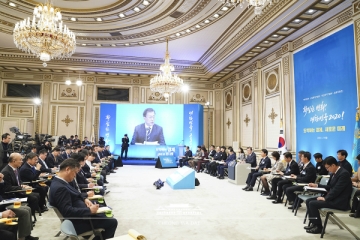
The Ministry of Trade, Industry and Energy is accelerating self-reliance among small and medium-sized businesses and exploring future food sources.
The Ministry of Trade, Industry and Energy is promoting the secure independence of the materials, components, and equipment industry. On the 17th, the Ministry reported its implementation plans for four key strategic themes at the 2020 Government Work Report held at the Cheong Wa Dae Reception Hall, together with the Ministry of Economy and Finance, the Ministry of SMEs and Startups, and the Financial Services Commission. The four key strategic themes are: ▲Realizing the secure independence of materials, components, and equipment, ▲Fostering the new industry of 'post-semiconductor' ▲Making a leap to become a global top-tier hydrogen economy nation ▲Converting to export plus growth.
2020.02.18by 이수민 기자
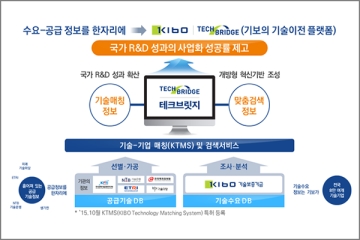
Investment of 252.5 billion won in dedicated technology transfer R&D projects for materials, parts, and equipment sector through 2027
The Small and Medium Business Administration is accelerating dedicated technology transfer R&D projects to support technological independence of small and medium-sized enterprises (SMEs) in the materials, parts, and equipment sector. The project will support 240 tasks with total project costs of 252.5 billion won through 2027, and this year will target 183 public recruitment tasks (RFP) confirmed through expert review from industry, academia, and research institutes among tasks identified through technology demand surveys.
2020.03.04by 최인영 기자

Full-scale cultivation of 'DNA' ranging from wearable data-based medical care to mobile licenses
The Ministry of Science and ICT has promoted regulatory sandboxes for seven projects to foster DNA business development, including home care algorithm development and visit guidance, home care health management, smart ordering and payment for alcoholic beverages, mobile electronic notices for statements from private institutions, mobile driver's license verification, tour taxi intermediary platforms, and risk detection services using biosignals.
2020.03.12by 최인영 기자
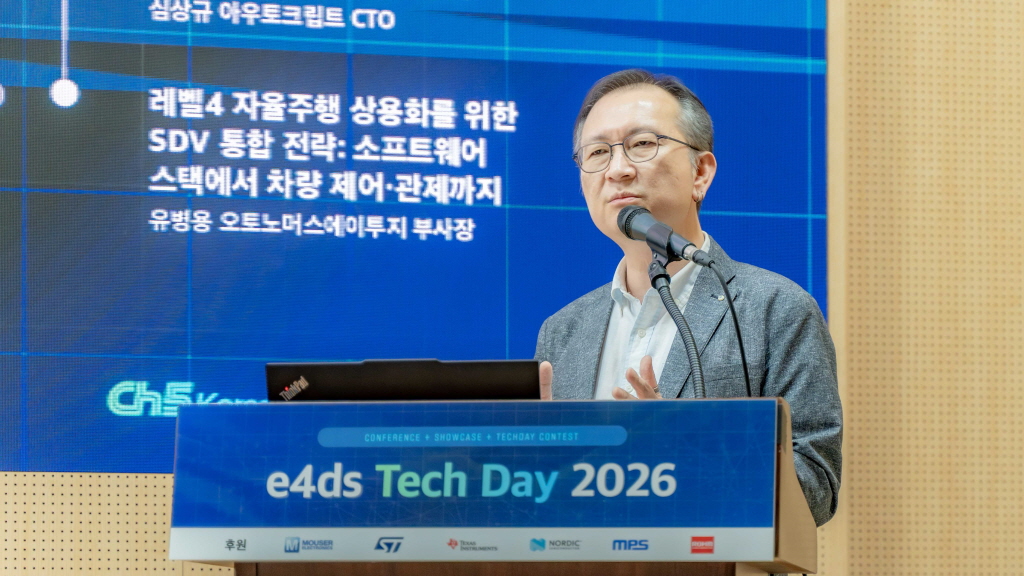
[e4ds Tech Day 2026 ⑨] Sim Sang-gyu, Autocrypt CTO: "In the Physical AI Era, Automotive Security Must Extend Beyond the Vehicle"
At e4ds Tech Day 2026, Sim Sang-gyu, CTO of Autocrypt, explained automotive cybersecurity strategies in the era of Physical AI and SDV (Software-Defined Vehicle). Automobiles are evolving as part of an ecosystem connected to AI, cloud, chargers, IoT, and robots, and he emphasized that the scope of security must expand beyond the vehicle interior to the entire connected environment. In particular, AI model tampering, adversarial attacks, OTA updates, and EV charger hacking were identified as major threats. He explained that response measures require zero trust, AI model integrity protection, intrusion detection, Security by Design and Default, and full lifecycle security management, and that proactive security system establishment beyond regulatory compliance is critical for securing future mobility competitiveness.
2026.10.12by 배종인 기자

Practical HIL Construction Strategy for Automotive and Off-Highway Controller Validation
As vehicle E/E architecture transitions to zonal structures and shifts to software-defined vehicles (SDV), the number of controllers (ECUs) requiring validation and software complexity are surging dramatically. Meanwhile, real vehicle testing cannot provide repeated verification under identical conditions and entails lead time and safety concerns. This white paper explains the principles of HIL (Hardware-in-the-Loop) validation and the structure of the NI platform composed of PXI, SLSC, and VeriStand, and through two actual implementation cases—Camera Record & Replay HIL for In-Cabin Monitoring Controller (ICMU) and Forklift Controller (VCU) HILS—describes how controller-level regression testing becomes possible. Additionally, it explicitly states application boundaries and limitations, such as lack of A2B support.
2026.10.12by 편집부











