



KT measures rooftop 5G base station information using AR.
 Published2020.03.20 08:55
When measuring the information value of a base station at a distance of 30m
Deviation of 1 degree inclination and 7 degrees in direction
KT announced on the 19th that it has developed "Base Station Twin," a solution that uses augmented reality (AR) technology to measure the construction information of remote 5G base stations (antennas). Now, engineers can determine the angle of a base station without having to climb to the rooftop.
.jpg)
Base station twin is a technology that analyzes the AR screen (image) of a 5G base station and the 'Inertial Measurement Unit (IMU)' sensor values installed on a smartphone with a 'Pose Estimation Server' to derive the inclination angle, direction angle, and installed height values of the base station installed in the field.
In order for telecommunication companies to provide wireless services to customers without interruption, construction information such as the angle and height of base stations must be managed considering the surrounding environment. This is because if the location or direction of the base station changes due to external factors, the wireless communication service radius may overlap with or narrow to that of the adjacent base station, resulting in a shadow area.
Currently, engineers directly access the equipment to measure base station construction information. This method is time-consuming and, due to the nature of base stations being installed in high locations such as building rooftops, carries the disadvantage of requiring work in hazardous environments.
Base Station Twin also has the ability to automatically update 5G base station construction information extracted in real time to a data storage server. Engineers can handle everything from measurements to documentation on-site, without having to return to the office.
KT announced that, as a result of the base station twin field verification, when engineers measured the construction information values of base stations located more than 30 meters away, the inclination angle only had an average deviation of 1 degree and the direction angle only had an average deviation of about 7 degrees.
He also explained that while it takes about 10 minutes for an engineer to climb to the roof of a building and measure the construction information of a 5G base station with a compass and angle gauge, it is possible to measure and store all values in an average of 3 minutes using the base station twin.
Meanwhile, this technology was developed through collaboration between domestic small and medium-sized enterprise ‘VIRNECT’ and KT.
Comments
Related news
CEVA's 'Sensing Q' Platform, Accelerating Context-Aware IoT Development, Scheduled for Release in Q2 of This Year
Context awareness technology is becoming an essential feature in devices such as smartphones, notebooks, AR/VR headsets, robots, hearables, and wearables. CEVA announced that it will launch SensingQ, an integrated hardware IP and software platform that enables IoT devices to be context-aware, in the second quarter of this year.
2020.01.15by 이수민 기자
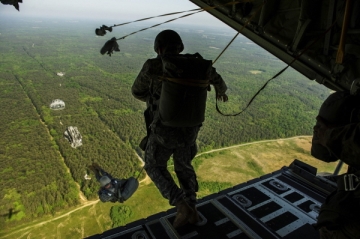
Actively utilize ICT technologies such as robots, drones, and VR in national defense.
Fourteen government ministries, including the Ministry of Science and Technology, the Ministry of Industry and Trade, and the Defense Acquisition Program Administration, will invest a total of 177.2 billion won this year to actively apply core fourth industrial revolution technologies such as robots, drones, 3D printing, AR, VR, and MR to the defense sector. Following the development of wearable robots and reconnaissance drones, as well as intelligence-gathering gliders, the government will conduct defense demonstrations and expand pilot programs for civilian applications, while simultaneously strengthening support for small and medium-sized enterprises.
2020.03.04by 최인영 기자
.jpg)
Latest Version of Simcenter STAR CCM+ Released with Improved Simulation Time and Accuracy
Siemens Digital Industries Software has released the latest version of Simcenter STAR CCM+ software with improved simulation time and accuracy. It includes model-based adaptive mesh refinement solutions, parallel polyhedral mesher, automatic combined solver control capabilities, and collaborative VR functionality within the CFD code.
2020.03.09by 최인영 기자
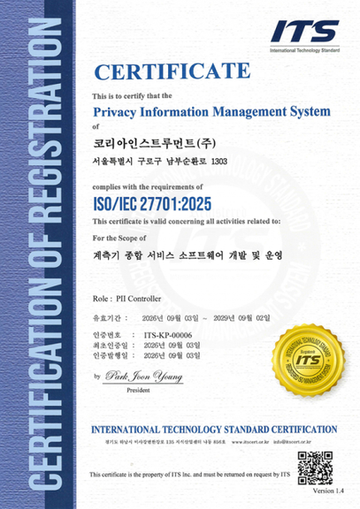
Korea Instrument, KOLAS Accredited Calibration Agency First to Simultaneously Acquire ISO/IEC 27,001·27,701
Korea Instrument has become the first among KOLAS accredited calibration agencies to simultaneously acquire ISO/IEC 27,001 and ISO/IEC 27,701 certifications. Through its proprietary platforms CWIZ Enterprise and CWIZ Partners, the company has embedded information security and personal data protection requirements across all business processes including customer information, equipment data, and calibration reports, with plans to continuously advance its management system through regular audits and security inspections.
2026.10.12by 배종인 기자
TeamViewer One, IT Incident Automation Workflow and Resolution Center Enhanced
TeamViewer has added IT incident automation capabilities and an advanced Resolution Center to its integrated digital workplace management platform 'TeamViewer ONE'. Recurrent service disruptions, configuration errors, and capacity shortages are automatically handled according to preset policies, and device status verification through script deployment can be managed in a unified interface, significantly reducing repetitive tasks for IT teams.
2026.10.12by 배종인 기자











