


How can we achieve domestic production of smart sensors for the air industry?
 Published2020.04.27 17:03
Domestic companies account for only 10% of the domestic sensor market.
Establishing a domestic sensor quality assurance evaluation agency is necessary.
As the COVID-19 pandemic has caused global economic and industrial downturns, one area has unexpectedly improved: air quality. In March, NASA analyzed satellite imagery and reported that nitrogen dioxide concentrations in China had decreased by at least 10-30% since the COVID-19 outbreak compared to other years.
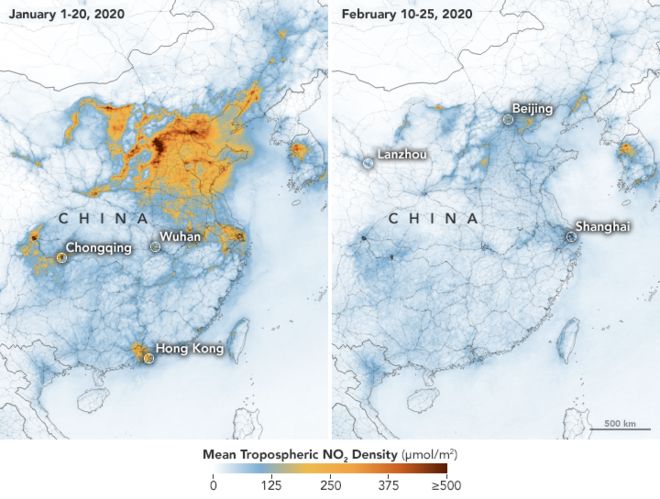
Last November, the National Institute of Environmental Research released a report stating that 32% of the ultrafine dust polluting South Korea's skies comes from China. As China's air quality improved, so did ours. While this is certainly good news, air quality will likely deteriorate again once the COVID-19 situation subsides.
In the April 2020 issue of the KEIT PD Issue Report, Byun Ki-young, Smart Electronics PD at the Korea Evaluation Institute of Industrial Technology (KEIT), and Shin Gyu-sik, Manager at the Electronics and Telecommunications Research Institute (KETI), discussed how to solve the challenges facing the domestic smart sensor industry for the air industry through a report titled “Smart Sensor Technology Leading the Air Industry.”
The air industry encompasses products, systems, and services that identify the causes of air pollution, measure pollution levels, purify indoor and outdoor air, and evaluate the results. Smart sensors for the air industry are small, connected components and modules that detect changes in the atmosphere or indoor environment.
Smart sensors for the air industry are used in environmental fields for purposes such as air pollution, automobile exhaust, soil diagnosis, and water quality management, and small, high-performance electronic sensors are widely used.
The environmental sensor market accounts for approximately 15% of the overall sensor market. In particular, the market size of gas sensors for measuring air pollutants is estimated to grow from $3.6 billion in 2017 to $24 billion in 2022 and exceed $30 billion in 2027.
The domestic sensor market is projected to grow at an average annual rate of 10.9%, from approximately $5.4 billion in 2012 to $9.9 billion in 2020. However, domestic companies' share of the domestic market stood at a mere 11.2% as of 2017. In particular, the share of domestic companies' production in the global market is very low at 2.1% as of 2017.
To raise this to a meaningful level, development must be directed toward complementing the problems of existing air industry sensors.
Limitations of existing air industry sensors
The authors divided the field of smart sensors for the air industry into four major categories: ▲fine dust concentration and component analysis ▲harmful gas analysis ▲real-time floating microorganism detection ▲daily radiation detection, and analyzed the technological status and issues.

It's difficult to check in real time [Photo = Pixabay]
First, in the field of fine dust concentration and composition analysis, it was analyzed that existing large and expensive particle analysis equipment makes it difficult to establish a dense monitoring network, making it difficult to monitor the rapidly changing fine dust distribution in real time. Most commercially available fine dust sensors currently utilize light scattering techniques, limiting their use to estimating fine dust mass concentration.
These sensors have very low reliability, with a 40-90% error rate compared to actual fine dust concentrations, according to Ministry of Environment verification. They are also unable to measure various characteristics of fine dust, such as water concentration, mass concentration, size distribution, and chemical composition. Therefore, the authors advised that a solution that can measure the characteristics of these fine dust particles in real time on site is needed.
Types of harmful gases that have a negative impact on the human body include sulfur oxides (SOx), nitrogen oxides (NOx), oxidants, hydrocarbons, volatile organic compounds (VOCs), fluorine compounds, carbon monoxide, carbon dioxide, and ammonia.
Current indoor air quality measurements are basically conducted for six items (fine dust, CO2, HCHO, CO, total suspended bacteria, temperature and humidity) of indoor environment standards for multi-use facilities, and data is collected through on-site measurements and laboratory analysis by current measurement agencies.
Accordingly, the authors predicted that it is time for a continuous monitoring and management system for target facilities using new sensor modules and measuring devices to reduce the burden of time and economic costs and increase the efficiency of certification management.
In the field of real-time floating microorganism detection, the authors report that although our government has mandated total floating bacteria concentrations in major facilities, this is of little effectiveness. The concentration of bacteria changes continuously in real time over time, depending on the patient's condition, and humidity, but there is no equipment that can measure this.
The existing bacteria collection equipment, air samplers, have a significantly low microbial collection rate, and the bacterial culture rate varies greatly depending on the medium and type of bacteria, making detection rates a major problem.
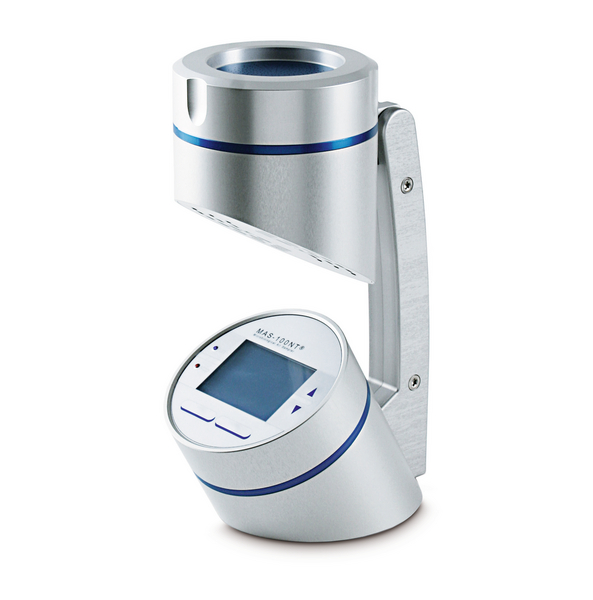
Additionally, existing measuring equipment is manual and post-processing analysis equipment that requires 48 hours or 3 weeks to obtain detection results. Therefore, it is necessary to develop a solution that can compensate for this by providing a high capture rate and quick results.
In the field of detection of daily life radiation, the authors report that it is difficult to provide accurate information on the radioactive elements to which one is exposed because the current commercialized measuring devices do not distinguish between radioactive isotopes within the radiation measurement energy range and detect them in an integrated manner.
Commercialized radon measurement equipment is affected by temperature and humidity, which causes inconvenience in controlling these factors during the preprocessing stage and issues such as replacement of consumables.
To provide visual and psychological comfort to indoor residents through reliable measurements of environmentally variable radiation exposure, high sensitivity and precision measurements capable of isotope differentiation are essential. To achieve this, the authors stated, multi-channel differentiation of radiation measurement energy ranges is necessary, along with improved measurement sensitivity for each channel.
To reduce dependence on foreign countries for key components
In the domestic sensor market, all key component technologies are occupied by foreign products, and domestic companies use a method of importing and assembling key components.
Additionally, there is a phenomenon in which large companies, which are in demand, are reluctant to use domestically produced sensors because they do not trust their reliability and performance. To overcome this, the authors suggested that it is necessary to establish an evaluation agency that can evaluate the performance and provide quality assurance for domestically produced sensors.
The authors pointed out that while the development of sensor technology, which is the core of environmental measurement equipment, is important, the biggest obstacle in sensor development is the lack of government policy support, which increases the burden of research and development costs on developers.
Sensor development is a precision, fundamental technology utilizing advanced technologies. It has ripple effects not only on the environment but across all industries, and requires systematic government support and long-term program development. Therefore, he added, it's crucial to recognize that it can contribute not only to domestic but also export industries.
Comments
Related news
CEVA Unveils Sensor Hub DSP Architecture 'SensePro'
CEVA unveiled SensesPro, a sensor hub DSP architecture designed to handle a broad range of sensor processing and sensor fusion workloads for context-aware devices. SensesPro serves as a specialized processor capable of effectively handling the proliferation of various sensor types.
2020.04.13by 이수민 기자
Teledyne Unveils LWIR Camera for Non-Contact Fever Diagnosis
Teledyne DALSA has announced the Caliber GXM, a new long-wavelength infrared (LWIR) camera series. The Caliber GXM series is equipped with a microbolometer sensor featuring a 17μm pixel pitch manufactured at Teledyne DALSA's own foundry, providing high sensitivity in the long-wavelength infrared range.
2020.04.21by 이수민 기자
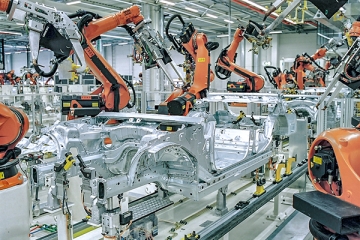
Smart IoT sensors that “predict and judge” are the key to advanced manufacturing
Smart factories can identify correlations between phenomena and issues occurring at production sites using smart sensors and resolve equipment failures and quality defects. If various sensors and devices are wirelessly integrated to autonomously gather information, and the production system evolves into an AI-based system that analyzes and leverages the collected information, enterprises can establish flexible production systems capable of responding in real time to changes in market conditions and customer demands.
2020.04.21by 이수민 기자
Intel Unveils Next-Generation 'Core Ultra Series 3' and vPro Platform for Enterprise PCs
Intel has officially unveiled the "Intel Core Ultra Series 3" for next-generation enterprise PCs and the latest vPro platform, addressing a wide range of demands from enterprise notebooks to high-performance workstations.
2026.03.26by 배종인 기자
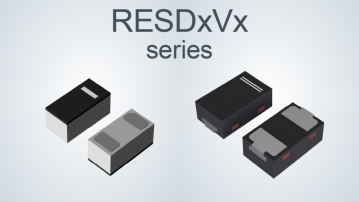
ROHM Launches ESD Protection Diode Compatible with High-Speed Interfaces of 10Gbps or Higher
Semiconductor specialist ROHM has developed the 'RESDxVx series' of ESD (electrostatic discharge) protection diodes capable of responding to next-generation high-speed data communication environments exceeding 10Gbps, simultaneously enhancing both signal quality maintenance required in high-speed interfaces and IC protection performance.
2026.03.26by 배종인 기자











