



Promoting the deployment of 1,500 robots in manufacturing and service industries
 Published2020.05.03 11:21
Deployment of 1,500 robots in manufacturing and service industries
11.6 billion won invested in localization of core components and software
1,500 robots will be deployed this year alone, mainly in the manufacturing and four major service sectors.
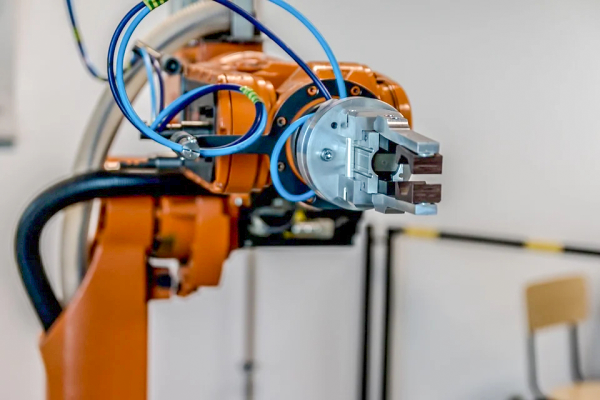
The Ministry of Trade, Industry and Energy announced the '2020 Intelligent Robot Implementation Plan' on the 4th. This implementation plan is the first annual plan established to implement the '3rd Intelligent Robot Basic Plan (2019~2023)' announced last August.
The Ministry of Trade, Industry and Energy and related ministries plan to invest 127.1 billion won this year alone to implement the tasks of the 3rd Basic Plan, including ▲ expanding the supply of manufacturing robots centered on the three major manufacturing sectors, ▲ intensively fostering the four major service robot sectors, and ▲ strengthening the fundamental strength of the robot industry ecosystem.
First, we will promote the distribution of 500 manufacturing robots by targeting vulnerable industries (basic industries, textiles, and food and beverages), where robot adoption is lower than in other industries, as new sources of demand.
To apply and demonstrate the 14 standard models of robot-utilizing processes developed in 2019, support will be provided to over 90 demand companies for the supply of 500 manufacturing robots, including collaborative robots, workplace safety certification, and training for employees, and 23 additional standard models of robot-utilizing processes will be developed.
In addition, financial support programs such as lease and rental services and preferential loan interest rates are promoted to create an environment where companies can voluntarily expand the adoption of robots.
In addition, 1,000 units will be distributed, focusing on four promising service sectors with high growth potential (care, wearables, medical, and logistics).
In addition to launching the development of new service robots such as clothing robots, spinal surgery robots, and parking robots (5.9 billion won), support will be provided for the distribution of 700 care robots, 90 wearable robots, 10 medical robots, and 200 logistics robots.
In particular, to address regulations that hinder the widespread adoption of service robots, we plan to operate a 'Robot Regulation Innovation Support Center' and establish a roadmap for promoting regulatory improvements in the robotics sector.
Finally, it supports the localization of core robot components and software, demonstration linked to demand centers, and the convergence of 5G, AI, and robots.
3 major core components (smart gripper, intelligent controller, autonomous driving sensor; 2.4 billion Development of the four major software (grasping technology SW, robot SW platform, image information processing SW, HRI technology; 1.8 billion won) will commence.
In addition, the plan is to promote a robot component demonstration project (1.2 billion won) to verify domestic robot components by applying them to robots of robot manufacturing companies, and to provide new support for the development and demonstration of collaborative intelligence modules (2.4 billion won) and the establishment of a 5G-based manufacturing robot demonstration infrastructure (3.8 billion won).
Comments
Related news

Actively utilize ICT technologies such as robots, drones, and VR in national defense.
Fourteen government ministries, including the Ministry of Science and Technology, the Ministry of Industry and Trade, and the Defense Acquisition Program Administration, will invest a total of 177.2 billion won this year to actively apply core fourth industrial revolution technologies such as robots, drones, 3D printing, AR, VR, and MR to the defense sector. Following the development of wearable robots and reconnaissance drones, as well as intelligence-gathering gliders, the government will conduct defense demonstrations and expand pilot programs for civilian applications, while simultaneously strengthening support for small and medium-sized enterprises.
2020.03.04by 최인영 기자
Sundance Launches ROS-Enabled Platform Based on Xilinx SoCs
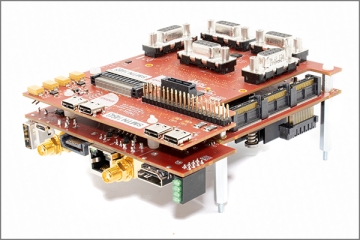
Sundance Multiprocessor Technology, a Xilinx Alliance Partner, has launched the VCS-1 platform. The VCS-1 is a commercial product solution based on a Zynq MPSoC solution incorporating GitHub open-source and the industry-standard PC/104 form factor, capable of controlling and processing all ROS-supported robots.
2020.03.16by 이수민 기자
OnRobot Launches EOAT “Soft Gripper” That Even Picks Up Strawberries
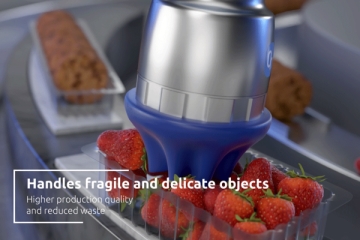
OnRobot's soft gripper is composed of three replaceable silicone mold cups and four fingers, and can delicately and precisely grasp objects weighing 2.2 kg or less. Additionally, it provides a grip range of 10-118mm in size depending on the cup used.
2020.04.08by 이수민 기자
[e4ds Tech Day 2026 ⑨] Sim Sang-gyu, Autocrypt CTO: "In the Physical AI Era, Automotive Security Must Extend Beyond the Vehicle"
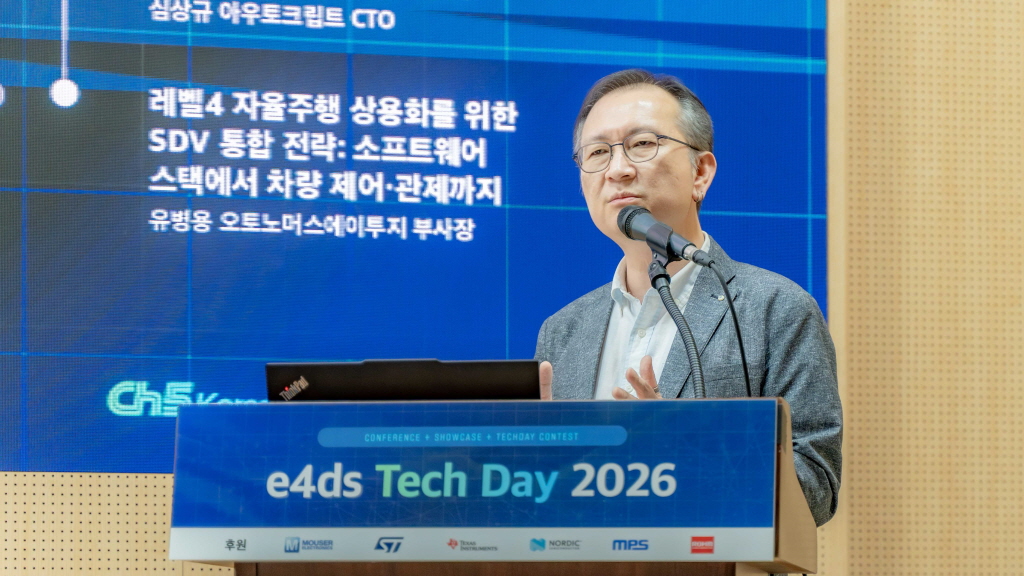
At e4ds Tech Day 2026, Sim Sang-gyu, CTO of Autocrypt, explained automotive cybersecurity strategies in the era of Physical AI and SDV (Software-Defined Vehicle). Automobiles are evolving as part of an ecosystem connected to AI, cloud, chargers, IoT, and robots, and he emphasized that the scope of security must expand beyond the vehicle interior to the entire connected environment. In particular, AI model tampering, adversarial attacks, OTA updates, and EV charger hacking were identified as major threats. He explained that response measures require zero trust, AI model integrity protection, intrusion detection, Security by Design and Default, and full lifecycle security management, and that proactive security system establishment beyond regulatory compliance is critical for securing future mobility competitiveness.
2026.10.12by 배종인 기자
NVIDIA to Invest $1 Billion in U.S. Science Over Next Five Years
NVIDIA has announced plans to invest $1 billion over the next five years to strengthen U.S. scientific and technological competitiveness. The company will enhance cutting-edge artificial intelligence research and development capabilities in key areas including quantum computing, healthcare, and energy security, while expanding support for higher education research institutions and cloud service providers. NVIDIA is participating as a major industry partner in the White House Office of Science and Technology Policy's Genesis Mission, and is promoting supercomputer construction in collaboration with national laboratories including Argonne and Los Alamos.
2026.10.12by 배종인 기자











