


Data Utilization and Sharing Trust Determine Corporate Performance
 Published2020.05.11 09:38
Targeting Approximately 13,500 C-Level Executives Worldwide
Korean Leading Companies 87% Plan Large-Scale AI Investment
Companies that prioritize trust when utilizing customer data are showing greater potential for market success.

On the 11th, IBM announced through its 'IBM C-suite Study' conducted with approximately 13,500 C-level executives worldwide, including Korea, that when companies receive high trust from customers, employees, and ecosystem partners regarding data, they can establish more solid market competitiveness.
This research, conducted under the theme 'Build Your Trust Advantage,' revealed correlations between companies that place importance on trust in data utilization and sharing and those that do not, demonstrating differences in performance outcomes.
The leading 'innovation group' that creates value from data and builds competitive advantage represented 9% of all global respondents. This group demonstrated clear understanding that transparency, reciprocity, and accountability are key elements in building trust in data utilization and processing.
Additionally, they are securing customer trust through data and fostering a data-driven decision-making culture. Along with this, they are actively sharing data with ecosystem partners while pursuing strategies to realize revenue from data. As a result, companies in this group showed up to 165% higher revenue growth rates and 163% higher profitability compared to other companies.
The report presented the following guidelines on how companies can establish trust-based competitive advantage.
First, they must strengthen customer relationships by demonstrating transparency through reliable personal information management and data disclosure regarding products, services, and workflows. Additionally, they should build trust in data and AI models across the organization and form a data-driven decision-making culture.
Finally, they must learn how to share data while maintaining competitive advantage in business platforms. Rather than limiting efforts to data collection, they should explore optimal monetization strategies, including creating ecosystems that generate new value.
Domestic Innovation Group Lacking Creative Data Utilization
In a survey with participation from C-level executives of domestic companies with over 200 employees, 15% of respondents were found to belong to the 'innovation group,' revealing that Korean corporate executives have higher awareness of the importance of data and trust compared to global counterparts.
In particular, 87% of Korea's innovation group indicated they are planning large-scale investments in AI and machine learning over the next 2-3 years. This shows that leading companies view AI and machine learning as core means for maximizing data value, compared to the lagging group where only 43% indicated investment plans. This rate is also higher than the global innovation group, which expressed investment plans at 72%.
Regarding governance for collecting, utilizing, and sharing data, 87% of Korea's innovation group answered they are maintaining it well, showing higher confidence compared to the global innovation group, where 69% responded positively.
In particular, Korean C-level executives identified personal information protection as the top priority needed for companies to gain competitiveness within the next 2-3 years, showing much greater awareness of personal information protection issues than global companies.
However, Korea's innovation group showed insufficient data utilization compared to global innovation groups in addressing previously undiscovered customer requirements (Korea 63%, worldwide 71%), developing new business models (Korea 57%, worldwide 70%), or entering new markets (Korea 60%, worldwide 66%).
Comments
Related news

Secondary Opening of Public Data to Prepare for the Prolonged COVID-19 Pandemic
The Korea Information Society Development Institute announced that it will additionally open data to overcome COVID-19 as issue data through the public data portal in collaboration with the Ministry of the Interior and Safety, Ministry of Health and Welfare, Ministry of Foreign Affairs, Ministry of Education, and Rural Development Administration. This opening is in preparation for the prolonged COVID-19 situation and represents additional data opening following the first phase of data disclosure, which includes screening clinic and safe hospital data, and public mask sales data.
2020.04.28by 이수민 기자
Concrete service models to grow Korea's drone industry to be developed
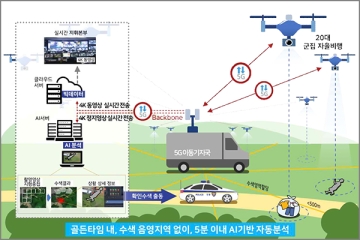
An ETRI-led consortium has been selected as a DNA+Drone technology development project operator. The DNA+Drone technology development project is an initiative aimed at creating new drone service models by incorporating data, 5G, and AI technologies into drones, in response to the evolving drone industry that is expanding from drone manufacturing to application services.
2020.04.29by 이수민 기자
Intel Lays Foundation for Confidential Computing with Azure DCsv2-Series
Microsoft Azure DCsv2-series has been launched, featuring a TEE built on Intel SGX. Built on Intel's Trusted Foundation, the Azure DCsv2-series provides confidential computing capabilities, protecting the confidentiality and integrity of customer data and code while being processed in the public cloud.
2020.04.29by 이수민 기자

[e4ds Tech Day 2026 ⑨] Sim Sang-gyu, Autocrypt CTO: "In the Physical AI Era, Automotive Security Must Extend Beyond the Vehicle"
At e4ds Tech Day 2026, Sim Sang-gyu, CTO of Autocrypt, explained automotive cybersecurity strategies in the era of Physical AI and SDV (Software-Defined Vehicle). Automobiles are evolving as part of an ecosystem connected to AI, cloud, chargers, IoT, and robots, and he emphasized that the scope of security must expand beyond the vehicle interior to the entire connected environment. In particular, AI model tampering, adversarial attacks, OTA updates, and EV charger hacking were identified as major threats. He explained that response measures require zero trust, AI model integrity protection, intrusion detection, Security by Design and Default, and full lifecycle security management, and that proactive security system establishment beyond regulatory compliance is critical for securing future mobility competitiveness.
2026.10.12by 배종인 기자

NVIDIA to Invest $1 Billion in U.S. Science Over Next Five Years
NVIDIA has announced plans to invest $1 billion over the next five years to strengthen U.S. scientific and technological competitiveness. The company will enhance cutting-edge artificial intelligence research and development capabilities in key areas including quantum computing, healthcare, and energy security, while expanding support for higher education research institutions and cloud service providers. NVIDIA is participating as a major industry partner in the White House Office of Science and Technology Policy's Genesis Mission, and is promoting supercomputer construction in collaboration with national laboratories including Argonne and Los Alamos.
2026.10.12by 배종인 기자











