



IBM Unveils IT Operations Automation AI Solution 'Watson AIOps'
 Published2020.05.15 09:32
Operational resilience and cost reduction through IT infrastructure automation
Runs on all clouds based on OpenShift
IDC predicted that by 2024, companies empowered by AI will be able to respond to customers, competitors, regulators, and partners 50% faster than those that are not.
IBM is introducing 'IBM Watson AIOps,' which uses AI to automate the process of autonomously detecting, diagnosing, and responding to IT infrastructure anomalies in real time.
With IBM Watson AIOps, enterprises can implement infrastructure-level automation. CIOs can predict and envision future outcomes more accurately to focus resources on creating greater value and build highly responsive, intelligent networks that can be sustained for longer.
This solution is based on the latest release of Red Hat OpenShift and can run in hybrid cloud environments. It also integrates with distributed work environments such as Slack and Box, and can be used in conjunction with existing IT monitoring solutions such as Mattermost and ServiceNow.
IBM also announced the 'Accelerator for Application Modernization with AI' as a component of the 'IBM Cloud Modernization' service. This feature is designed to help enterprises support application modernization.
The suite of tools provided by the AI-driven application modernization accelerator reduces the time required for analyzing and recommending various architectures and microservice options, and leverages continuous learning and explainable AI models to adapt to software engineering practices preferred by enterprise customers and support evolving modern technologies and platforms.

Han Seon-ho, Managing Director of IBM Korea’s Data & AI Business, explained, “For AI to succeed in a business environment, three conditions—language, automation, and trust—are necessary,” adding, “Due to the increased demand for remote work caused by the COVID-19 crisis, the demand for AI automation is rising at an unprecedented pace.”
In addition to operational automation solutions, IBM has updated several new features related to IT operations.
First, IBM added 'IBM Planning Analytics,' which automates business planning, budgeting, and forecasting, and 'IBM InfoSphere Master Data Connect,' which allows access to MDM deployed in on-premises environments with DataOps capabilities, to 'IBM Cloud Pak for Data.'
And in 'IBM Cloud Pak for Automation', the ease of automation solutionsWe have added a 'digital worker' feature to support job creation. The digital worker automates repetitive tasks and can collaborate with people.
Finally, IBM Watson Assistant now provides a pre-built user interface, eliminating the need for separate development work for deployment, and incorporates user experience-based best practices into its design. It also newly supports integration with leading customer service platforms, allowing companies to preserve their existing investments while enabling users to easily utilize live agents.
In addition, an 'autolearning' feature will be launched this summer, which learns from past customer behavior to provide the most relevant and optimal answer when a new question regarding the same topic is asked.
Comments
Related news
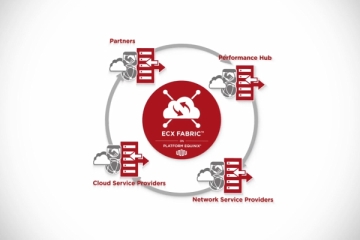
Equinix Launches SDN-Based Cloud Interconnection Service
Equinix has launched ECX Fabric in the domestic market. Equinix Fabric is an on-demand software-defined networking (SDN)-based interconnection service. Through a self-service portal user interface or API, enterprises can directly connect from Platform Equinix to ECX Fabric with cloud providers such as AWS, Microsoft Azure, Oracle Cloud Infrastructure, and Google Cloud.
2020.04.23by 이수민 기자
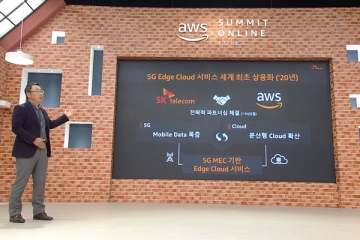
SKT to commercialize 5G edge cloud service within the year
SK Telecom announced that it plans to introduce a 5G MEC-based edge cloud service in collaboration with AWS by the end of this year. The 5G edge cloud is a distributed cloud service that reduces the physical latency and distance required for data processing by installing cloud data centers at telephone exchanges and base stations to handle the rapidly growing mobile data at the network edge.
2020.05.14by 이수민 기자
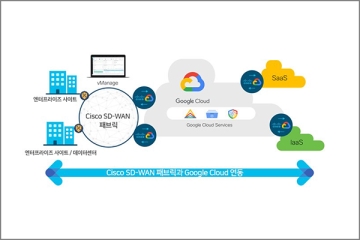
Cisco and Google to Develop App-Centric Multicloud Fabric
Cisco Systems and Google Cloud are jointly developing the industry's first application-centric multi-cloud networking fabric, "Cisco SD-WAN Cloud Hub for Google Cloud." The two companies plan to provide agility, scalability, and flexibility to enterprises adopting hybrid and multi-cloud strategies through the Cisco SD-WAN Cloud Hub.
2020.05.12by 이수민 기자

[e4ds Tech Day 2026 ⑨] Sim Sang-gyu, Autocrypt CTO: "In the Physical AI Era, Automotive Security Must Extend Beyond the Vehicle"
At e4ds Tech Day 2026, Sim Sang-gyu, CTO of Autocrypt, explained automotive cybersecurity strategies in the era of Physical AI and SDV (Software-Defined Vehicle). Automobiles are evolving as part of an ecosystem connected to AI, cloud, chargers, IoT, and robots, and he emphasized that the scope of security must expand beyond the vehicle interior to the entire connected environment. In particular, AI model tampering, adversarial attacks, OTA updates, and EV charger hacking were identified as major threats. He explained that response measures require zero trust, AI model integrity protection, intrusion detection, Security by Design and Default, and full lifecycle security management, and that proactive security system establishment beyond regulatory compliance is critical for securing future mobility competitiveness.
2026.10.12by 배종인 기자
NVIDIA to Invest $1 Billion in U.S. Science Over Next Five Years
NVIDIA has announced plans to invest $1 billion over the next five years to strengthen U.S. scientific and technological competitiveness. The company will enhance cutting-edge artificial intelligence research and development capabilities in key areas including quantum computing, healthcare, and energy security, while expanding support for higher education research institutions and cloud service providers. NVIDIA is participating as a major industry partner in the White House Office of Science and Technology Policy's Genesis Mission, and is promoting supercomputer construction in collaboration with national laboratories including Argonne and Los Alamos.
2026.10.12by 배종인 기자











