



Samsung Electronics Launches 100-Megapixel Image Sensor with PDAF Support
 Published2020.05.19 14:17
Equipped with two photodiodes per pixel
Outputs 100 million pixel images with dual pixel technology
On the 19th, Samsung Electronics launched the 'ISOCELL GN1', a 50-megapixel mobile image sensor based on 1.2μm pixels that supports ultra-high-speed autofocus.
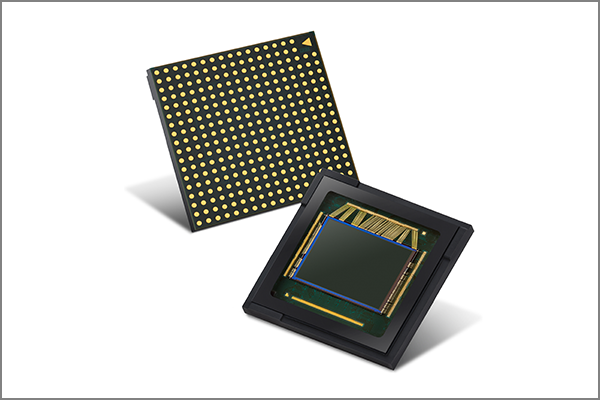
The ISOCELL GN1 simultaneously applies 'Dual Pixel' technology, which places two photodiodes in one pixel, and 'Tetracell' technology, which combines four adjacent pixels into one.
Just as humans use both eyes to focus on a subject, the ISOCELL GN1 is equipped with Phase Detection Auto-Focus (PDAF) technology that calculates the phase difference between the images detected by two photodiodes located on the left and right of each pixel to accurately and quickly focus on a subject.
Since each pixel has two photodiodes, in the case of 50 million pixels, an image of 100 million pixels can be output using the light received by 100 million photodiodes.
Additionally, it can receive more light with a pixel area of 1.2μm. In dark environments, the Tetracell technology combines four pixels into one, quadrupling the sensitivity and enabling 12.5-megapixel image capture.
Samsung Electronics also installed image sensor technologies such as 'Smart-ISO', which automatically adjusts the ISO value according to the light, 'Real-time HDR', which automatically optimizes brightness and contrast when taking images, and 'Electronic Image Stabilization (EIS)'.
The ISOCELL GN1 is in mass production starting this month.
According to Techno System Research (TSR), Samsung Electronics held a 17.9% market share in the image sensor market last year, ranking second only to Japan's Sony at 49.1%. Park Yong-in, head of the sensor team at the LSI Business Unit, stated his ambition, "We will develop a 600 million-pixel image sensor that surpasses the human eye."
Comments
Related news
"Combining 9 pixels into one to capture": Samsung Electronics unveils 108-megapixel image sensor HM1
The ISOCELL Bright HM1 mounted on the Galaxy S20 Ultra is a product that implements 108 million small pixels measuring 0.8㎛ in a 1/1.33-inch format. It features Nona-binning functionality that allows nine adjacent pixels to operate as a single pixel, providing excellent sensitivity—the degree to which the image sensor responds to light.
2020.02.12by 이수민 기자
ST Launches Ultra-Compact, High-Performance Global Shutter Image Sensor
ST has launched a high-speed image sensor with a global shutter mode that is primarily used for distortion-free image capture when moving objects or near-infrared illumination is required. It enables low pixel-to-pixel crosstalk across all wavelengths, including near-infrared, delivering sharp images with high contrast, making it suitable for smart computer vision applications such as AR, VR and SLAM, 3D scanning.
2020.03.30by 최인영 기자

MagnaChip Sells Foundry Business to Private Equity Fund Involved SK Hynix
Magnachip has concluded a contract to sell its foundry business division and Cheongju plant to an SPC funded by Saemaul Geumgo Central Association and SK Hynix. Through this sale, Magnachip has decided to focus on its display solution business and power solution business.
2020.04.01by 이수민 기자

Intel Unveils Next-Generation 'Core Ultra Series 3' and vPro Platform for Enterprise PCs
Intel has officially unveiled the "Intel Core Ultra Series 3" for next-generation enterprise PCs and the latest vPro platform, addressing a wide range of demands from enterprise notebooks to high-performance workstations.
2026.03.26by 배종인 기자

ROHM Launches ESD Protection Diode Compatible with High-Speed Interfaces of 10Gbps or Higher
Semiconductor specialist ROHM has developed the 'RESDxVx series' of ESD (electrostatic discharge) protection diodes capable of responding to next-generation high-speed data communication environments exceeding 10Gbps, simultaneously enhancing both signal quality maintenance required in high-speed interfaces and IC protection performance.
2026.03.26by 배종인 기자











