


The final plenary session of the 20th National Assembly concludes: "How were the major ICT bills handled?"
 Published2020.05.21 16:45
Corporate responsibility for personal information leaks has been strengthened.
The "Nth Method" passed, abolishing the superior status of public certificates.
The 20th National Assembly held its final plenary session on the 20th and passed a large number of pending bills.
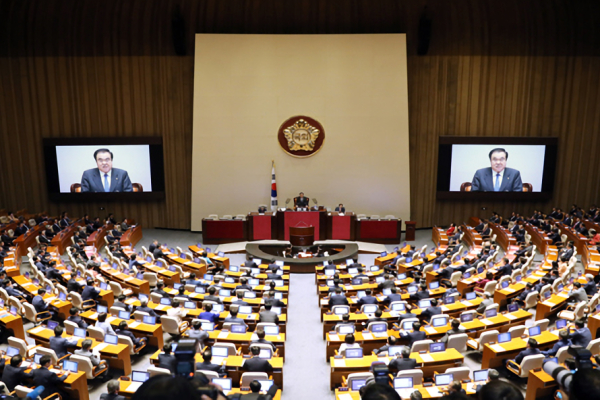
Amidst the COVID-19 pandemic, which has rapidly changed the global political landscape and lifestyles, along with the Nth Room incident and other factors, the debate in the ICT sector has become more heated than ever. We looked into the bills that have been passed.
◇ Allowing AI experts and outstanding teachers to hold concurrent positions
An amendment to comprehensively revise the current "Basic Act on National Information Technology" into the "Basic Act on Intelligent Information Technology" has been passed. The main goal of this amendment is to establish an AI ecosystem under legal and institutional support.
The amendment, which includes the establishment of a comprehensive plan for an intelligent information society, stipulates data policies such as activating data distribution and fostering specialized companies, as well as measures to advance intelligent information technology, such as training specialized personnel and promoting standardization.
In particular, it contains special provisions allowing university professors and researchers to take a leave of absence or hold concurrent positions, so as to attract private sector experts in the field of intelligent information technology, such as AI, as professors. This provides a legal basis for resolving the shortage of AI experts and excellent teachers that has been continuously raised in academia and industry.
Additionally, it contains measures to prevent adverse effects resulting from the use and spread of new technologies and respond to social changes, such as establishing national AI ethics guidelines, establishing a basis for protective measures to ensure technological safety, and establishing measures for jobs, education, and welfare.
Strengthening corporate responsibility for personal information leaks
The 'Partial Amendment to the Act on Promotion of Information and Communications Network Utilization and Information Protection, etc.' was also passed. This revision is expected to secure the safety and reliability of information and communications networks, provide a safe convergence service environment for citizens and businesses, and thereby strengthen the competitiveness of convergence industries.
The amendment △established a legal basis for responding to cyber-intrusion incidents targeting information and communications networks using so-called "backdoors," △expanded the scope of application of the law to prevent security incidents and minimize damage to ICT convergence devices, products, and services, and recommended compliance with minimum security standards.
In addition, we have established a basis for requesting the reflection of information protection guidelines in the standards of individual laws for each industry, established a system for analyzing the causes of convergent security accidents, and introduced a security certification system for IoT products, etc., thereby encouraging companies to voluntarily improve their security levels and guaranteeing users' right to choose.
◇Abolish the dominant position of public certificates and promote the development of diverse electronic signatures.
The 'Complete Amendment to the Electronic Signature Act', which abolishes the superior legal effect of public electronic signatures, also known as public certificates, was also passed.
The main contents of the amendment to the Electronic Signature Act are: △ promoting competition among various electronic signature methods by abolishing the superior legal effect of certified electronic signatures; △ introducing an evaluation and recognition system for electronic signature certification work; and △ strengthening protection measures for electronic signature users.
The industry expects that this revision will promote market competition in electronic signatures, spur the development and use of various electronic signatures based on new technologies such as blockchain and biometric authentication, and increase the convenience of electronic signature use for the public.
◇Introducing regulatory exceptions for new technology verification within research and development special zones.
The 'Special Act on the Promotion of Research and Development Special Zones', which includes provisions allowing regulatory exceptions for the verification of new technologies within research and development special zones,;This was decided.
A legal basis has been established for individual researchers within research and development special zones to receive special exemptions for demonstration in all fields when they encounter regulatory difficulties in demonstrating new technologies during the research and development process.
The demonstration exception is a regulatory sandbox system that allows temporary demonstration through regulatory relaxation even if there is no basis for approval under current laws.
The target is the five existing special zones (Daedeok, Gwangju, Daegu, Busan, and Jeonbuk) and the six small and medium-sized special zones designated last year (Gimhae, Ansan, Jinju, Changwon, Cheongju, and Pohang).
In addition, the 'Complete Amendment to the Act on the Creation of a Safe Laboratory Environment' also passed the plenary session of the National Assembly.
◇ Amendment to the Telecommunications Business Act passes amid controversy.
The amendment to the Telecommunications Business Act, which includes the "Nth Room Prevention Act," which imposes on Internet companies the obligation to manage and supervise digital sex crimes, also passed the plenary session of the National Assembly.
The industry expressed regret, saying that the prevention law does not apply to Telegram, the origin of the incident, and that there are concerns that it could infringe on users' fundamental rights such as communication secrecy, privacy, and freedom of expression.
The amendment also includes a provision to abolish the requirement for mobile carriers to obtain government approval when introducing new rate plans and replace it with a reporting system.
Regarding concerns about a rate increase due to the transition to a reporting system, the Ministry of Science and ICT explained, “It is a reserved reporting system that will be reviewed for 15 days and rejected if there is a concern about a rate increase.”
The amendment to the Framework Act on Broadcasting and Communications Development that would designate private data centers as national disaster management facilities was put on hold by the National Assembly's Legislation and Judiciary Committee due to concerns that it could lead to duplicative regulations.
Comments
Related news

Promoting the activation of 10-gigabit internet in preparation for the post-COVID era
In the wake of COVID-19, attention is being drawn not only to the creation of work environments for remote work but also to services aimed at improving the efficiency of video conferencing and remote lecture systems. The Ministry of Science and ICT and the Korea Information Society Development Institute selected two final project operators—SK Broadband Consortium and KT Consortium—as the final project implementation organizations for the 10 Gigabit Internet Activation Promotion Project in 2020.
2020.04.10by 이수민 기자

Four Consortia Launch Full-Scale Developing Domestic AI Semiconductors
To secure AI semiconductor technological capabilities, the Ministry of Science and ICT selected 28 organizations to conduct new projects in the AI semiconductor design sector of the Next-Generation Intelligent Semiconductor Technology Development project in 2020. SK Telecom, Telechips, and NextChip will participate as consortium lead organizations in the server, mobile, and edge sectors respectively, and are expected to play roles including SoC fabrication and demonstration by integrating field-specific development results.
2020.04.24by 이수민 기자
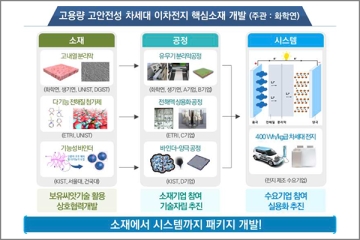
Nine industry-academia-research research groups launch efforts to localize materials technology.
The Ministry of Science and ICT has confirmed the projects and organizations for the Materials Innovation Leading Project. The selected nine industry-academic-research convergence research groups will develop technologies commonly required for the top 100 critical items where technology acquisition at the government level has become urgent following Japan's export restrictions on Korea. A total of 206.6 billion won will be invested in the project over five years.
2020.05.18by 이수민 기자

[e4ds Tech Day 2026 ⑨] Sim Sang-gyu, Autocrypt CTO: "In the Physical AI Era, Automotive Security Must Extend Beyond the Vehicle"
At e4ds Tech Day 2026, Sim Sang-gyu, CTO of Autocrypt, explained automotive cybersecurity strategies in the era of Physical AI and SDV (Software-Defined Vehicle). Automobiles are evolving as part of an ecosystem connected to AI, cloud, chargers, IoT, and robots, and he emphasized that the scope of security must expand beyond the vehicle interior to the entire connected environment. In particular, AI model tampering, adversarial attacks, OTA updates, and EV charger hacking were identified as major threats. He explained that response measures require zero trust, AI model integrity protection, intrusion detection, Security by Design and Default, and full lifecycle security management, and that proactive security system establishment beyond regulatory compliance is critical for securing future mobility competitiveness.
2026.10.12by 배종인 기자

NVIDIA to Invest $1 Billion in U.S. Science Over Next Five Years
NVIDIA has announced plans to invest $1 billion over the next five years to strengthen U.S. scientific and technological competitiveness. The company will enhance cutting-edge artificial intelligence research and development capabilities in key areas including quantum computing, healthcare, and energy security, while expanding support for higher education research institutions and cloud service providers. NVIDIA is participating as a major industry partner in the White House Office of Science and Technology Policy's Genesis Mission, and is promoting supercomputer construction in collaboration with national laboratories including Argonne and Los Alamos.
2026.10.12by 배종인 기자











