



Xilinx Unveils Two Video Transcoding Reference Servers
 Published2020.06.18 17:31
Xilinx to Reduce Video Service Provider Bandwidth
Two Transcoding Reference Appliances Unveiled
As remote work culture spreads due to the COVID-19 pandemic, the demand for OTT services is also increasing explosively.
These service providers want to seamlessly deliver high-quality video to numerous consumers while simultaneously reducing related costs.
On the 18th, Xilinx unveiled two Real-Time Video Server Appliance Reference Architectures through an online press conference.
.jpg)
Appliance Reference Architecture Revealed [Photo = Xilinx]
Aaron Behman, Director of Video Product Marketing at Xilinx Data Center Group, who hosted the meeting, said, “With video content delivery accounting for 90% of global network traffic these days, bandwidth costs are the biggest expense video service providers have to pay.”
The two real-time video server appliance reference architectures unveiled by Xilinx on this day are transcoding editions that improve the quality of transmitted and received video and optimize the bitrate, enabling many consumers to enjoy high-quality live streaming in real time.
First reference applyThe HPE ProLiant DL380/385 server, equipped with eight Xilinx Alveo U50 data center accelerator cards, optimizes bitrate to deliver high-quality video content to consumers. The DL380/385 server is currently available for purchase.
The second reference appliance is the Wistron Transformer G2E server, equipped with eight Alveo U30 data center accelerator cards, which enables high density with low power consumption to provide simultaneous streaming services to a larger number of consumers. The G2E server is currently available for purchase in the Asia-Pacific region. Hypertek's appliances targeting the global market and Supermicro's servers targeting the Europe, Middle East, and Africa region are scheduled for release this summer.
Director Berman explained, “Xilinx is distributing standalone containers supporting HEVC and containers supporting AVC and H.264 on its website for bitrate-optimized servers,” adding, “Solutions supporting HEVC and AVC are also provided for high-density servers.”
In addition, the two reference appliances integrated FFmpeg, one of the interface frameworks widely used in the field of transcoding and encoding.
Director Berman stated, “Xilinx supports testing all the solutions discussed today on the Nimbix cloud,” adding, “We are working to establish authorized resellers supporting Korea and Japan, and are currently providing solutions through Wistron.”
Meanwhile, the Alveo U30 data center accelerator card unveiled by Xilinx on this day serves as a high-density processing and machine learning platform and is scheduled to be integrated into upcoming reference appliances supporting video analytics and machine learning.
Comments
Related news

Microchip Unveils Embedded FPGA Vision Solutions SDK
Microchip is adding the VectorBlox Accelerator SDK to its 'Smart Embedded Vision Initiative,' which provides intelligent machine vision system design solutions based on the PolarFire FPGA. The VectorBlox Accelerator SDK is designed to enable software developers without FPGA design experience to program low-power, flexible overlay-based neural network applications in C/C++ utilizing the PolarFire FPGA.
2020.05.19by 이수민 기자
Xilinx Boosts Machine Learning Performance in Radiation-Tolerant Space FPGAs
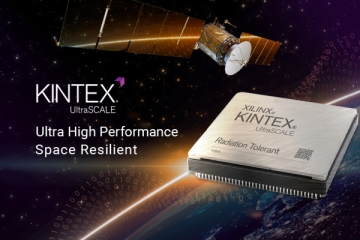
Xilinx has launched the Kintex UltraScale XQRKU060, a 20nm space-grade FPGA with radiation-tolerant (RT) capabilities. The XQRKU060 enables real-time satellite updates through in-orbit reconfiguration capabilities, along with real-time onboard processing and machine learning acceleration features, allowing it to perform on-demand video and on-demand computing to handle complex algorithms.
2020.05.22by 이수민 기자

Nokia Unveils New Portfolio Strengthening 400G Ethernet
Nokia has announced its WaveFabric Elements portfolio, comprising photonic chips, devices, and subsystems, including PSE-V, its fifth-generation coherent DSP product line. Focused on end-to-end 400G applications, this portfolio combines digital signal processing equipment and optical technology to meet the unique technical requirements and cost considerations demanded by data centers, rail, long-haul, and submarine networks.
2020.06.01by 이수민 기자

Intel Unveils Next-Generation 'Core Ultra Series 3' and vPro Platform for Enterprise PCs
Intel has officially unveiled the "Intel Core Ultra Series 3" for next-generation enterprise PCs and the latest vPro platform, addressing a wide range of demands from enterprise notebooks to high-performance workstations.
2026.03.26by 배종인 기자

ROHM Launches ESD Protection Diode Compatible with High-Speed Interfaces of 10Gbps or Higher
Semiconductor specialist ROHM has developed the 'RESDxVx series' of ESD (electrostatic discharge) protection diodes capable of responding to next-generation high-speed data communication environments exceeding 10Gbps, simultaneously enhancing both signal quality maintenance required in high-speed interfaces and IC protection performance.
2026.03.26by 배종인 기자











