


"HW Engineers Need Integrated PCB Design Technology"
 Published2020.07.09 16:00
Need a solution to integrate, search and track parts data
There is no place without electronics anymore.
Smartphones have become an essential part of human life, with new models being released almost every day, and with the advancement of IoT technology, advanced sensor-equipped detection devices are now being installed in places where electronic products did not exist in the past.
The Apple Watch, a leading wearable device, shipped more than all Swiss watch brands combined last year. The European Union (EU) is encouraging the production of electric vehicles in order to eliminate internal combustion engine vehicles from the market around 2040.
As demand for electronic products increases, so does the supply. Manufacturers are trying to add features to their electronic products that differentiate them from their competitors in order to gain an advantage in the market.
The need to bring electronic products powered by more complex algorithms to market faster than competitors puts pressure on hardware engineers who develop such products.
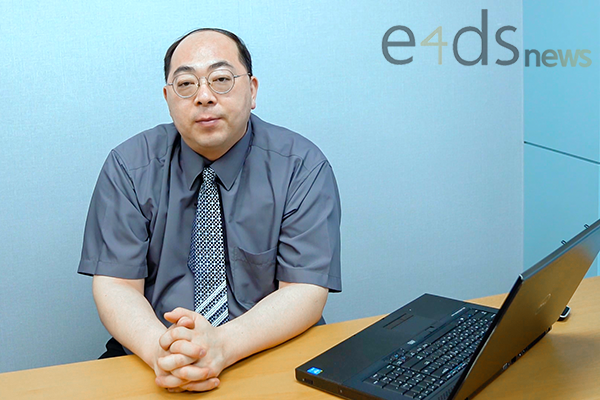
We met with Director Sunghoon Kim of EDNC, a provider of semiconductor design, analysis, and verification automation solutions, and asked him about the challenges hardware engineers face and the skills and tools they need to overcome them.
Q. What do you think are the challenges hardware engineers are facing today?
A. Electronic products are used in all fields these days. Every year, numerous manufacturers announce new products at exhibitions and other events, trying to appeal to consumers with as many features as possible. Therefore, engineers face the challenge of implementing new features despite the limited development schedule.
Q. So what do you think is the most necessary skill for hardware engineers today?
A. In a company, many people in each field carry out development. Therefore, I think that flexibility is necessary and not being obsessed with one's own field. I think that even electronic engineers should be able to understand simple mechanical drawings, and even engineers who can only draw circuit diagrams should be able to edit PCBs.
Q. What kind of program is 'PADS Professional' from Mentor and Siemens Business among the PCB design programs provided by E&C?
A. Previously, choosing a PCB design program was a continuous compromise between performance and price. An ECAD program that could satisfy both schedule and performance was expensive. In addition, engineers had to implement the functions that were lacking manually. PADS Professional was created based on Xpedition technology from Mentor, a Siemens business, and has performance that satisfies engineers at large companies, engineers who have to do various tasks alone, and students who dream of becoming hardware engineers.
Q. What are the unique features of PADS Professional?
A. You can see it as data integration and automation. PADS Professional is an advanced system that consistently integrates parts and BOM data and enables search and tracking. I think that people design, but programs create data. Data created manually through programs are bound to have human errors. Designs created through the automation function of high-performance programs do not have such mistakes.
Q. Due to the tight development schedule, collaboration between mechanical and electronic engineers is bound to increase. Is it possible for engineers from different job functions to collaborate with each other using PADS Professional?
A. Mentor, Siemens Business provides 'ECAD/MCAD Collaboration' as a solution for collaboration between MCAD engineers and ECAD engineers. This solution provides an environment where mechanical engineers and electronic engineers can simultaneously develop in a single data environment.
Q. I am curious about the support measures that Mentor, Siemens Business, and EDN provide to engineers in relation to PADS Professional.
A. Mentor, Siemens Business is supporting PADS Professional for students for free for one year and is also operating an online on-demand training course. Considering the recent COVID-19 situation, the related education market has shrunk, so we are providing an online on-demand training course for one month free of charge. We are also preparing regular training and Korean-language textbooks to help engineers better utilize PADS Professional.
Q. Besides PADS Professional, if there are any mentor solutions that can be helpful to hardware engineers, please introduce them.
A. I have seen many cases where the perfection of PCB design does not lead to product performance. It is difficult to conduct hardware verification every time, and it is difficult to guarantee that problems will be found. Therefore, using HyperLynx, an analysis and verification solution from Mentor, a Siemens business, and PADS Professional together, you can achieve PCB design that achieves satisfactory performance through digital prototyping verification.
Comments
Related news
ROHM Releases Solution Circuit Verification Web Simulation Tool
Rohm has developed the Rohm Solution Simulator, a web-based simulation tool that enables comprehensive verification of SiC power devices, driver ICs, and power supply ICs within solution circuits. The simulator was developed based on SystemVision Cloud from Mentor Siemens' business. Users with an SVC account can verify simulation data executed through the Rohm Solution Simulator by reflecting it in their own SVC environment.
2020.02.28by 이수민 기자
KETI Hosts Online Matchmaking Event for "Technology Transfer Untact"
KETI will hold the 38th Digital Technology Innovation Matchmaking event on the 15th. This event is the first online technology transfer briefing session attempted by a public research institute in response to the recent increase in non-contact necessity, and was organized around strategic patent technologies that KETI filed in 2019.
2020.05.12by 이수민 기자
Things to Know Before Buying a Switch Mode Power Supply
SMPS switches at a frequency that is fixed, variable, or synchronized to an external clock. The physical size of the device varies depending on the switching frequency value, and accordingly, the cost of capacitors and inductors in the power supply also varies. Recently, there is a trend toward shifting to higher switching frequency values for more compact and cost-effective circuit design.
2020.06.23by 이수민 기자
Intel Unveils Next-Generation 'Core Ultra Series 3' and vPro Platform for Enterprise PCs
Intel has officially unveiled the "Intel Core Ultra Series 3" for next-generation enterprise PCs and the latest vPro platform, addressing a wide range of demands from enterprise notebooks to high-performance workstations.
2026.03.26by 배종인 기자
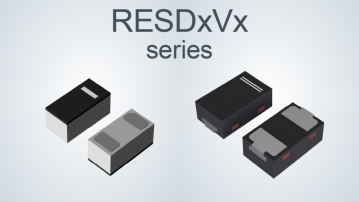
ROHM Launches ESD Protection Diode Compatible with High-Speed Interfaces of 10Gbps or Higher
Semiconductor specialist ROHM has developed the 'RESDxVx series' of ESD (electrostatic discharge) protection diodes capable of responding to next-generation high-speed data communication environments exceeding 10Gbps, simultaneously enhancing both signal quality maintenance required in high-speed interfaces and IC protection performance.
2026.03.26by 배종인 기자











