



ETRI publishes "Report on Medical AI Technology and Standards for Infectious Disease Response."
 Published2020.07.15 15:54
Analysis of Medical AI Technology Standards Trends
With the global spread of COVID-19 and heightened interest in disaster response, a report comprehensively analyzing trends in AI technologies and standards required for infectious disease response has been released.
The Electronics and Telecommunications Research Institute (ETRI) announced on the 15th that it had published a report titled “Technical Standard Trends in Medical Artificial Intelligence for Responding to Infectious Disease Disasters.”
The report analyzed AI use cases throughout the entire infectious disease disaster cycle and described possible response measures in the event of future infectious disease disasters.
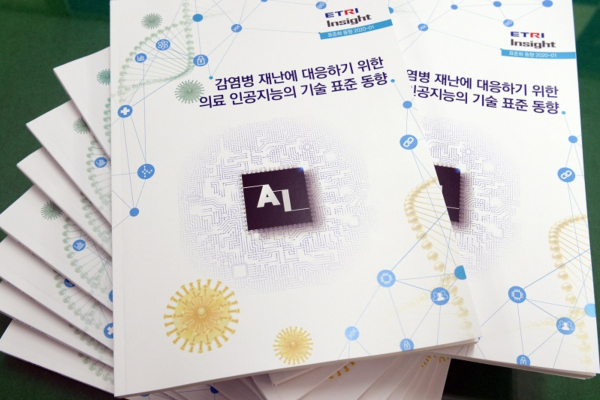
ETRI published the standard report [Photo = ETRI]
The report divided the infectious disease disaster stage into four stages: ▲prediction and prevention ▲emergency operation and response ▲prevention of infection spread ▲treatment and new drug development.
Among these, the six most widely utilized application areas of AI technology were identified as: automatic diagnosis assistance, patient monitoring and prognosis prediction, self-diagnosis testing and voice recognition, disease and disaster prediction, contact tracing and monitoring, and new drug development.
The report analyzed the application of AI technology standards and the status of research and development in each field and also presented future utilization plans.
We also analyzed the trends in AI technology standardization required for infectious disease disaster response, such as ITU-T/WHO, DICOM, and HL7/FHIR, as well as related standardization trends in the US and China, as well as trends in open data and open science utilizing AI technology.r />
ETRI stated, "This report, created in collaboration with domestic and international medical AI experts, is expected to be of great help in establishing a foundation and strategy for infectious disease disaster response that actively utilizes AI technology and ICT."
Going forward, ETRI's Standards Research Center plans to develop international standards for AI technologies needed for more specific infectious disease disaster response based on this report.
This report will be distributed to government ministries and related organizations at home and abroad, and can also be viewed on the ETRI website .
Comments
Related news
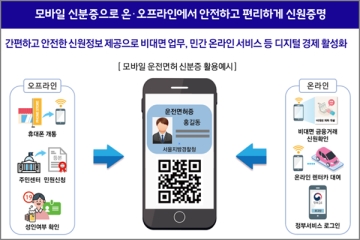
The government is accelerating the digital transformation amid the spread of contactless culture due to COVID-19.
The Digital Government Innovation and Development Plan for the Post-Corona Era has been announced. This plan takes into account the spread of contactless culture across society due to COVID-19, and centers on key objectives including expansion of contactless services, customized service innovation, data utilization and public-private cooperation, and reinforcement of digital infrastructure.
2020.06.23by 이수민 기자

What IoT Devices Need to Prepare for the Post-Corona Era
The world before COVID-19 will not return. Non-contact and remote-based IoT devices will continue to be necessary as long as humanity exists. To develop effective IoT devices even in the post-COVID era, device connectivity and security, data integration and management, and the construction of scalable infrastructure must be considered.
2020.06.30by 이수민 기자
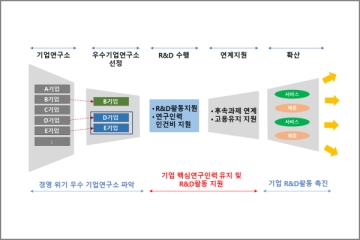
Ministry of Science and ICT overcomes COVID-19 by maintaining R&D personnel at SMEs
The Ministry of Science and ICT will implement the 2020 Employment Crisis Company In-house Research Institute R&D Specialized Workforce Utilization Support Project to assist small and medium-sized enterprises facing difficulties due to COVID-19 in their R&D activities. Through this project, the Ministry of Science and ICT will support 400 basic research projects with annual funding of 50 million won each, targeting small and medium-sized enterprises facing management crises, to maintain R&D investment and retain key personnel.
2020.07.09by 이수민 기자

[e4ds Tech Day 2026 ⑨] Sim Sang-gyu, Autocrypt CTO: "In the Physical AI Era, Automotive Security Must Extend Beyond the Vehicle"
At e4ds Tech Day 2026, Sim Sang-gyu, CTO of Autocrypt, explained automotive cybersecurity strategies in the era of Physical AI and SDV (Software-Defined Vehicle). Automobiles are evolving as part of an ecosystem connected to AI, cloud, chargers, IoT, and robots, and he emphasized that the scope of security must expand beyond the vehicle interior to the entire connected environment. In particular, AI model tampering, adversarial attacks, OTA updates, and EV charger hacking were identified as major threats. He explained that response measures require zero trust, AI model integrity protection, intrusion detection, Security by Design and Default, and full lifecycle security management, and that proactive security system establishment beyond regulatory compliance is critical for securing future mobility competitiveness.
2026.10.12by 배종인 기자

NVIDIA to Invest $1 Billion in U.S. Science Over Next Five Years
NVIDIA has announced plans to invest $1 billion over the next five years to strengthen U.S. scientific and technological competitiveness. The company will enhance cutting-edge artificial intelligence research and development capabilities in key areas including quantum computing, healthcare, and energy security, while expanding support for higher education research institutions and cloud service providers. NVIDIA is participating as a major industry partner in the White House Office of Science and Technology Policy's Genesis Mission, and is promoting supercomputer construction in collaboration with national laboratories including Argonne and Los Alamos.
2026.10.12by 배종인 기자











