



Samsung Electronics Unveils '6G White Paper' Featuring Next-Generation Mobile Communication Technology
 Published2020.07.16 12:15
6G must be 50 times faster than 5G and wireless latency must be reduced to one-tenth.
XR, holograms, and digital cloning are expected to be core services.
With the government planning to build a nationwide 5G network by 2022, Samsung Electronics released a '6G White Paper' containing next-generation mobile communication technology on the 14th.
This white paper covers the major trends that will drive the development of 6G technology, along with the vision, services and requirements, candidate technologies needed to implement them, and the standardization schedule for 6G.
Samsung Electronics is accelerating the development of 6G technology, centering on the Samsung Research Next-Generation Communication Research Center established last May.
Choi Seong-hyun, head of Samsung Research’s Next-Generation Communication Research Center, said, “Although 5G is currently in the early stages of commercialization, considering that a generation of mobile communication technology is 10 years, it is by no means too early to prepare for 6G.”
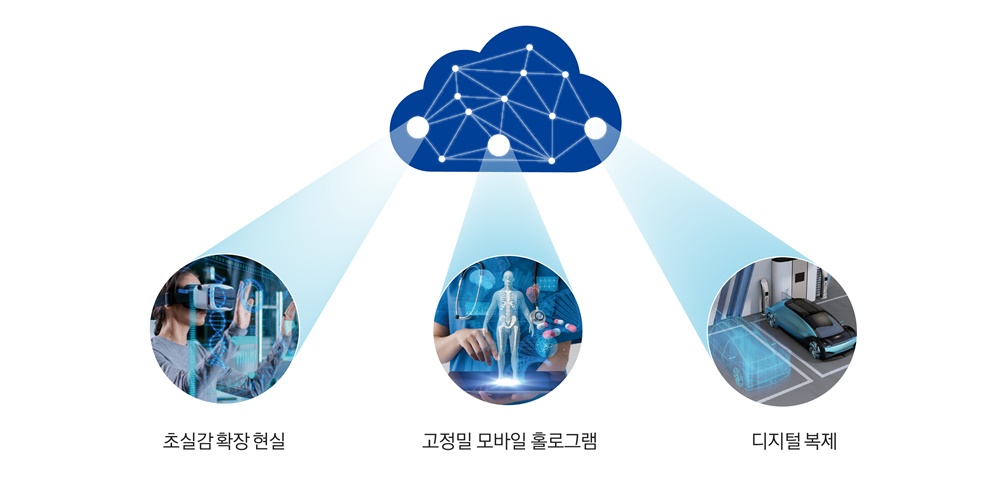
The white paper predicted that 6G would enter commercialization as early as 2028 and full-scale service would be available by 2030, and that not only people but also machines would become major users.
Key services that can be implemented in the 6G era include Truly Immersive XR and high-precision models.High-Fidelity Mobile Holograms and Digital Replicas are expected.
Samsung Research’s Next Generation Communication Research Center has specified the requirements for implementing 6G services into three categories: performance, structure, and reliability.
First, regarding performance, it was stated that it must achieve a maximum speed of 1,000 Gbps (gigabits per second) and wireless latency of 100 μsec (microseconds). This means that the maximum transmission speed is 50 times faster than 5G, and wireless latency is reduced to one-tenth.
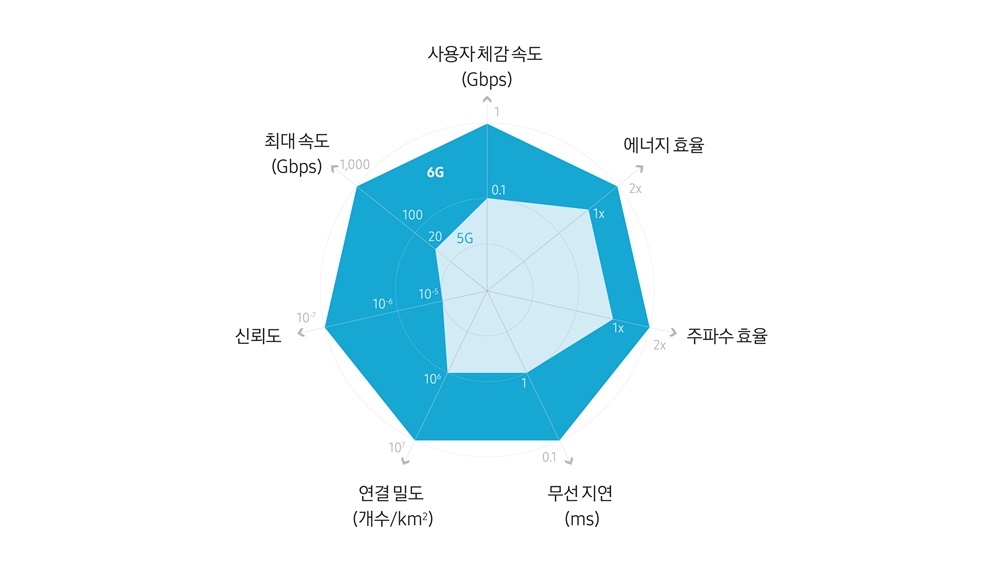
6G requires a structure that can resolve issues arising from the limited computing power of terminals, apply AI from the early stages of technology development, and flexibly utilize new network components. Reliability must also be ensured to prevent security and privacy issues that may arise from the use of AI technology and user information.
Samsung Electronics also presented candidate technologies that require research to meet 6G requirements. There are a total of eight fields, including technology for utilizing the terahertz (THz) frequency band, antenna technology for improving high-frequency band coverage, duplex technology, network topology technology such as flexible network configuration and satellite utilization, frequency sharing technology to increase frequency utilization efficiency, and AI-applied communication technology.
The full text of the Samsung Electronics 6G white paper is available for download on the Samsung Research website.
Comments
Related news
They say the 28GHz band 5G mobile phone launch period will be shortened... "Will it be effective?"
The pre-launch electromagnetic wave measurement time for 28GHz 5G mobile phones will be shortened to LTE mobile phone levels. Accordingly, the Ministry of Science and ICT expected that new product launches of 28GHz and 3.5GHz 5G mobile phones would accelerate. However, is this really the case? At least within this year, no mobile phones are expected to benefit from this simplification. This is because 28GHz infrastructure has not yet been established.
2020.07.14by 이수민 기자
KT Successfully Implements Network Slicing Technology on Enterprise 5G Network
KT announced that it has completed the development of 5G enterprise network slicing technology and finished technical verification for commercial service launch. 5G enterprise network slicing is a solution that separates a single physical 5G network into multiple independent virtual networks and provides them according to specific needs, with the key aspect being the application of network slicing, a core 5G technology, to the core network.
2020.07.15by 강정규 기자
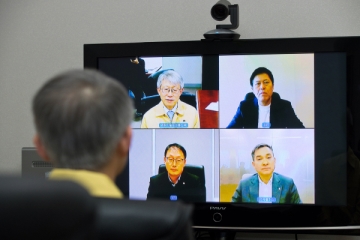
25 trillion won will be invested in building a nationwide 5G network by the first half of 2022.
Minister Choi Ki-young of the Ministry of Science and ICT and representatives of the three telecommunications companies held an emergency meeting at the Government Seoul Building to discuss the construction of nationwide 5G networks by 2022. Through the meeting, the three telecommunications companies and SK Broadband agreed to invest approximately 24.5 trillion to 25.7 trillion won in wired and wireless communication infrastructure by 2022.
2020.07.15by 이수민 기자
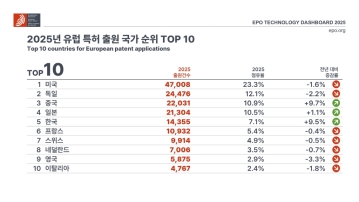
European Patent Applications Surpass 200,000 for the First Time… South Korea Maintains 5th Place, Led by Batteries and Telecommunications
According to the European Patent Office (EPO)'s 'Technology Dashboard 2025', European patent applications last year reached 201,974, surpassing 200,000 for the first time. Korean companies and inventors filed 14,355 applications, representing a 9.5% increase from the previous year and maintaining 5th place by country. Battery, digital communication, and semiconductor technologies led the growth, with Samsung ranking as the top EPO applicant for the second consecutive year and LG reaching 3rd place. The presence of major domestic cities such as Seoul, Suwon, and Yongin was also confirmed. It was also revealed that Korea's European patent strategy is expanding beyond individual technologies to span the entire industry.
2026.03.24by 명세환 기자
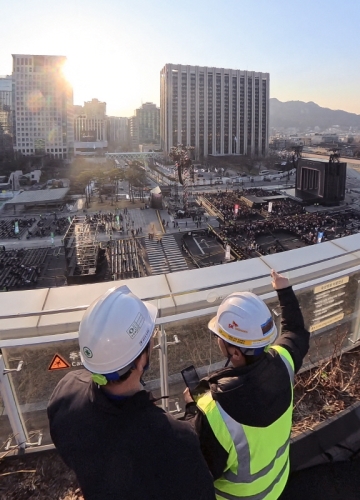
SK Telecom First Applies AI-Based Network Operations at Gwanghwamun K-Pop Concert
SK Telecom announced that it applied an AI-based network operation system for the first time at a large-scale K-pop concert held in the Gwanghwamun area of Seoul on March 21st, managing communication quality throughout the event. Mobile data usage during the three hours before and after the concert reached 12.15TB, approximately doubling compared to the same time slot the previous weekend. SK Telecom monitored traffic using the AI system 'A-One' in five-minute and 50-meter units to respond to potential overload situations, while also operating temporary communication facilities and on-site personnel in parallel. This case is interpreted as confirmation of the practical applicability of AI-based autonomous network operation in an environment where demand from dense events and foreign users increases simultaneously.
2026.03.23by 명세환 기자











