



Samsung Electronics' Q2 earnings: DRAM is a bright spot, NAND is a slogan, thanks to COVID-19.
 Published2020.07.30 10:54
Operating profit remains higher than the same period last year despite COVID-19.
Foundry sales reach record highs, accelerating the adoption of finer processes.
Samsung Electronics announced its second quarter 2020 earnings on the 30th, with consolidated sales of 52.97 trillion won and operating profit of 8.15 trillion won.
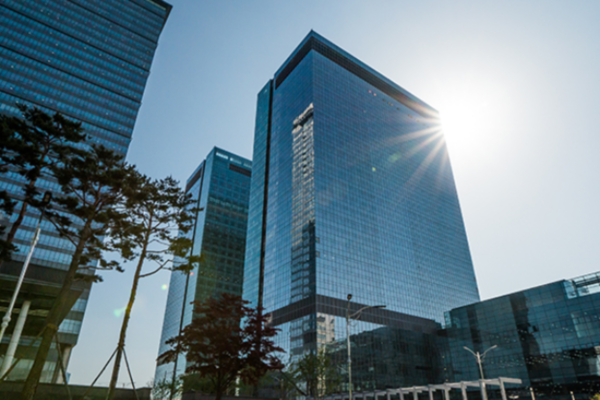
In the second quarter, memory sales increased due to increased demand from data centers and PCs, but overall sales decreased by 4.3% compared to the previous quarter and 5.6% compared to the same period last year due to a decrease in sales of set products such as smartphones due to the impact of COVID-19.
Despite the COVID-19 pandemic, operating profit increased by KRW 1.7 trillion quarter-on-quarter to KRW 8.15 trillion, driven by improved memory profitability, one-time gains in the display business, and the peak season for home appliances. The operating profit margin also improved significantly to 15.4%. Compared to the same period last year, both profit and margin improved, driven by improved memory profitability and the robust performance of the set business.
For the set business, we achieved better results than initially anticipated, thanks to a faster-than-expected recovery in demand, efficient responses utilizing global supply chain management (SCM), and cost-cutting efforts.
The semiconductor division recorded sales of 18.23 trillion won and operating profit of 5.43 trillion won.
The memory business saw improved performance due to rising demand from data centers and PCs. However, NAND bit growth has lagged behind market growth due to weak mobile demand and temporary capacity shortages in some applications. Samsung Electronics announced plans to fully adopt 1z nanometer and EUV technologies in its DRAM process and rapidly transition to the 6th generation NAND process.
The System LSI business saw a decline in performance due to slowing mobile demand, but the foundry division reported record-high sales, driven by a partial recovery in customer demand. The company announced plans to expand sales in the second half of the year, focusing on 5G SoCs and high-resolution image sensors driven by the growing number of 5G subscribers and the increasing adoption of high-spec cameras.
The display panel division recorded sales of KRW 6.72 trillion and operating profit of KRW 0.3 trillion.
For small and medium-sized panels, profits increased compared to the previous quarter due to one-time profits despite a decrease in smartphone demand, while for large panels, losses narrowed slightly due to increased monitor sales despite a decrease in TV demand.
The IM division recorded sales of KRW 20.75 trillion and operating profit of KRW 1.95 trillion.
In the smartphone business, sales and revenue declined quarter-on-quarter due to the decline in demand caused by COVID-19, but profitability was maintained through cost efficiency measures, including reduced marketing expenses. The company announced plans to continue its efforts to improve profitability in the second half of the year by launching new Galaxy Note and Fold models and expanding sales of mid- to low-priced models.
The network business saw domestic and international 5G-related investments delayed compared to plans due to the impact of COVID-19. The company announced plans to expand new orders in the second half of the year to secure a foundation for future growth.
The CE division recorded sales of KRW 10.17 trillion and operating profit of KRW 0.73 trillion.
Profits improved compared to the previous quarter due to improved product mix through expanded sales of air conditioners, dryers, and premium TVs such as QLED, as well as operational efficiency improvements. The company announced that in the second half of the year, it plans to improve its online sales infrastructure and strengthen collaboration with specialized online distribution channels.
Harman, Samsung Electronics' automotive electronics division, recorded sales of 1.54 trillion won and an operating loss of 90 billion won. Despite some recovery in consumer product demand, the operating loss persisted amid the global automotive industry downturn. The company stated that it expects improved performance in the second half of the year, driven by improved automotive conditions and increased sales of consumer audio products.
Regarding the second quarter's welcome trend, the dollar's strength against the Korean won had a positive impact, particularly on the components business. However, the negative impact on the set business, stemming from the significant depreciation of some major growth market currencies against the Korean won, more than offset this, minimizing the impact on overall operating profit.
A gradual recovery in set demand is expected in the second half of the year, but risks such as COVID-19-related uncertainties and intensifying industry competition are also anticipated. Currently, set demand is high, and Samsung Electronics announced that it is concentrating its global supply chain management capabilities to ensure uninterrupted supply.
Comments
Related news
"5G Subscribers Steadily Increased Despite COVID-19": South Korea's Three Major Telecom Companies Announce Q1 2020 Earnings
The three domestic telecom companies have all released their performance results for the first quarter of 2020. KT recorded revenue of 5.8317 trillion won and operating profit of 383.1 billion won for the first quarter of 2020. SK Telecom followed with revenue of 4.4504 trillion won and operating profit of 302 billion won, while LG U+ recorded revenue of 3.2866 trillion won and operating profit of 219.8 billion won.
2020.05.15by 이수민 기자
SK Hynix's Q2 Earnings Higher Than Q1: "SSDs Account for Over 50% of NAND Business for the First Time"
SK Hynix announced that it recorded revenue of 8.6065 trillion won, operating profit of 1.9467 trillion won, and net profit of 1.2643 trillion won in the second quarter of this year. Despite uncertainties in the business environment due to COVID-19, a favorable pricing environment was created by strong server memory demand, and second quarter revenue and operating profit increased by 20% and 143%, respectively, compared to the previous quarter, accompanied by cost reductions including improved yields of main products.
2020.07.24by 이수민 기자
LG Innotek Announces New Investment in Semiconductor Substrates for Communications
LG Innotek announced that it recorded sales of 1.5399 trillion won and operating profit of 42.9 billion won in the second quarter of this year based on K-IFRS standards. This represents a 1.2% increase in sales and a 128.7% increase in operating profit compared to the same period last year. Compared to the previous quarter, sales decreased by 23.4% and operating profit declined by 68.9%. LG Innotek attributed the performance to semiconductor and display substrates as well as smartphone camera modules.
2020.07.23by 강정규 기자
ESP32 Development Environment Selection and GPS Application Implementation
The ESP32 is a microcontroller that integrates Wi-Fi, Bluetooth, 12-bit ADC, capacitive touch, PWM, DAC, and UART in a single SoC. However, the abundance of features does not by itself solve the designer's problems. The real challenges lie in selecting the appropriate development environment, determining which pins can be used and which must be avoided, and converting raw data from modules into usable information. This document addresses ESP32 peripheral constraints (ADC2 and Wi-Fi coexistence limitation, UART1 occupancy, ADC non-linear regions), the trade-offs between Arduino IDE and ESP-IDF, and the process from connecting NEO-6M/NEO-M8N GPS modules to UART2, parsing NMEA sentences, and visualizing routes in Google Earth, all organized based on documented references.
2026.10.12by 편집부

[e4ds Tech Day 2026 ⑨] Sim Sang-gyu, Autocrypt CTO: "In the Physical AI Era, Automotive Security Must Extend Beyond the Vehicle"
At e4ds Tech Day 2026, Sim Sang-gyu, CTO of Autocrypt, explained automotive cybersecurity strategies in the era of Physical AI and SDV (Software-Defined Vehicle). Automobiles are evolving as part of an ecosystem connected to AI, cloud, chargers, IoT, and robots, and he emphasized that the scope of security must expand beyond the vehicle interior to the entire connected environment. In particular, AI model tampering, adversarial attacks, OTA updates, and EV charger hacking were identified as major threats. He explained that response measures require zero trust, AI model integrity protection, intrusion detection, Security by Design and Default, and full lifecycle security management, and that proactive security system establishment beyond regulatory compliance is critical for securing future mobility competitiveness.
2026.10.12by 배종인 기자











