



Accelerating support for the medical device licensing process of AI medical software 'Dr. Answer'
 Published2020.08.01 14:31
Dr. Answer Capable of Predicting and Diagnosing 8 Major Diseases
Clinical trials are underway at 37 medical institutions in Korea.
The emergence of AI doctors in Korea that treat patients based on medical big data is expected to accelerate.
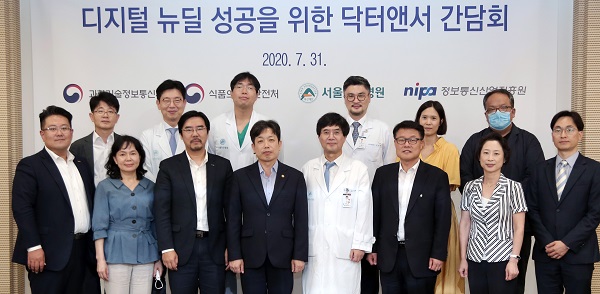
[Photo = Asan Medical Center]
On the 31st, the Ministry of Science and ICT held a meeting at Seoul Asan Medical Center to discuss cooperation measures to support the medical device licensing of 'Doctor Answer,' an AI medical software developed with domestic technology.
The meeting was attended by Vice Minister Jang Seok-young of the Ministry of Science and ICT and Deputy Minister Yang Jin-young of the Ministry of Food and Drug Safety, as well as officials from medical institutions and companies participating in the development of Doctor Answer.
Attendees listened to explanations regarding the development and clinical trial status of Dr. Answer, as well as demonstrations and applications for specific diseases, and discussed ways to expedite medical device approval for Dr. Answer.
Doctor Answer is AI medical software being developed with the participation of a total of 1,962 people, including 26 domestic medical institutions and 22 ICT companies, centered around Asan Medical Center. The Ministry of Science and ICT and the project team invested a total of 48.8 billion won (36.4 billion won from government, 12.4 billion won from private sector) in the development of Dr. Answer over the past three years (2018–2020).
Doctor Answer consists of 21 AI software programs capable of supporting the prediction and diagnosis of diseases in clinical settings for eight major diseases (breast cancer, colorectal cancer, prostate cancer, cardiovascular and cerebrovascular diseases, heart disease, dementia, epilepsy, and rare genetic diseases in children), and is currently conducting clinical trials at 37 medical institutions in Korea.
Among the 21 software products, 11 were classified as medical devices by the Ministry of Food and Drug Safety. Of these, 4 types, including cerebral hemorrhage diagnosis (cerebral hemorrhage diagnosis, coronary artery calcification score diagnosis, colon polyp analysis based on endoscopic image analysis, and automatic numerical segmentation of brain images), have already received medical device approval from the Ministry. Seven types, including early dementia diagnosis, are currently undergoing approval review, 5 are classified as non-medical devices, and prototypes of the remaining 5 are under development.
In addition, to lay the foundation for Dr. Answer's entry into the global market, cross-validation for local application is being pursued at six hospitals under the Saudi Arabian Ministry of Defense Health and Human Health (MNG-HA).
Yang Jin-young, Deputy Minister of Food and Drug Safety, stated, “In 2017, the Ministry of Food and Drug Safety established the world’s first guidelines for the review of medical devices incorporating AI technology,” adding, “We will support Dr. Answer so that it can quickly obtain medical device approval.”
Jang Seok-young, the Second Vice Minister of Science and ICT, stated, “Dr. Answer plays a key role in the Digital New Deal project,” adding, “We will support Dr. Answer so that it can provide high-quality medical services both domestically and internationally.”
Comments
Related news
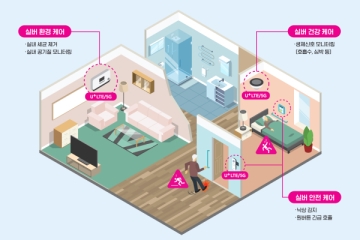
IoT-based plasma air sterilizers to be installed in nursing facilities
LG U+ has signed a business agreement with SafetyLab and Dow Korea regarding a healthcare pilot project utilizing a plasma air sterilizer. Through this collaboration, the three companies plan to establish a silver healthcare solution that controls and manages devices needed in facilities serving the elderly, such as nursing homes, by leveraging IoT technology.
2020.03.30by 이수민 기자
.jpg)
Ministry of Science and ICT Launches Integrated Data Map Service for Data Platforms in 10 Fields
The Ministry of Science and ICT and the Korea Information Society Development Institute will implement an integrated data map service for a big data platform that enables unified search of data across 10 sectors including finance, environment, culture, transportation, healthcare, distribution, telecommunications, small and medium enterprises, regional economy, and forestry starting on the 31st. The general public will now be able to conveniently access analytical data related to specialized fields and social issues.
2020.03.30by 최인영 기자
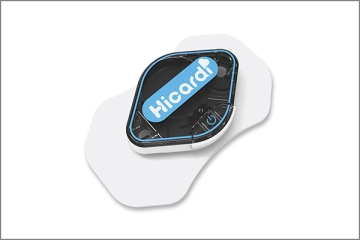
Nordic to Supply Bluetooth 5.2/LE SoCs to Korean Healthcare Companies
Mezhu, a digital healthcare solution manufacturer, has adopted Nordic's nRF52832 Bluetooth 5.2/LE multiprotocol SoC for wireless connectivity in its 'Hycardia Wearable ECG Monitoring System'. The Nordic SoC wirelessly transmits data to users' Bluetooth 4.0 or higher smartphones, and cardiac status data can be monitored through the Hycardia app available on iOS and Android platforms.
2020.07.24by 이수민 기자
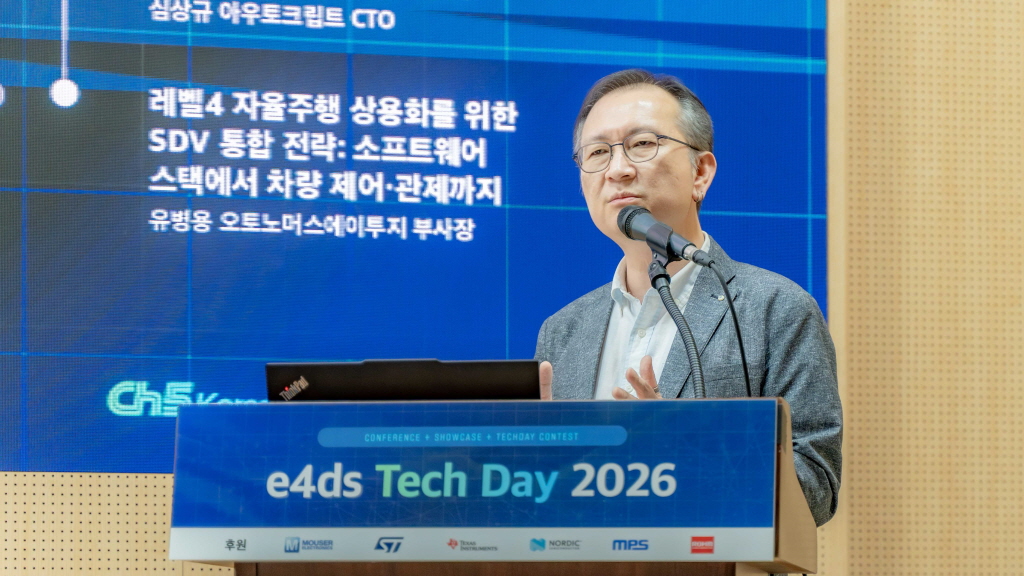
[e4ds Tech Day 2026 ⑨] Sim Sang-gyu, Autocrypt CTO: "In the Physical AI Era, Automotive Security Must Extend Beyond the Vehicle"
At e4ds Tech Day 2026, Sim Sang-gyu, CTO of Autocrypt, explained automotive cybersecurity strategies in the era of Physical AI and SDV (Software-Defined Vehicle). Automobiles are evolving as part of an ecosystem connected to AI, cloud, chargers, IoT, and robots, and he emphasized that the scope of security must expand beyond the vehicle interior to the entire connected environment. In particular, AI model tampering, adversarial attacks, OTA updates, and EV charger hacking were identified as major threats. He explained that response measures require zero trust, AI model integrity protection, intrusion detection, Security by Design and Default, and full lifecycle security management, and that proactive security system establishment beyond regulatory compliance is critical for securing future mobility competitiveness.
2026.10.12by 배종인 기자
NVIDIA to Invest $1 Billion in U.S. Science Over Next Five Years
NVIDIA has announced plans to invest $1 billion over the next five years to strengthen U.S. scientific and technological competitiveness. The company will enhance cutting-edge artificial intelligence research and development capabilities in key areas including quantum computing, healthcare, and energy security, while expanding support for higher education research institutions and cloud service providers. NVIDIA is participating as a major industry partner in the White House Office of Science and Technology Policy's Genesis Mission, and is promoting supercomputer construction in collaboration with national laboratories including Argonne and Los Alamos.
2026.10.12by 배종인 기자











