



Can renewable energy become a stable power source?
 Published2020.08.04 09:31
Pilot operation for utilization from August 4 to September 12
Plan to concentrate discharge during peak hours of 3-6 PM
To efficiently utilize renewable energy, which has unstable power production, the use of an energy storage system (ESS) is essential. However, according to the ESS Fire Accident Investigation Team, there have been 28 ESS fire accidents in Korea, raising concerns about safety.
The Ministry of Trade, Industry and Energy announced on the 3rd that it will conduct a 'pilot operation of solar power-linked ESS power supply utilization' from the 4th of this month to the 12th of next month to explore ways to utilize solar power-linked ESS as a power supply resource.
This pilot operation is being jointly conducted by the Ministry of Trade, Industry and Energy and power-related organizations (Korea Electric Power Corporation, Korea Power Exchange, Korea Energy Agency, and Korea Electric Safety Corporation) to test the possibility of utilizing power supply and demand and fire safety through adjusting the charge and discharge times of solar-linked ESS following the improvement of the renewable energy-linked ESS operation system in July.
The period is six weeks starting in August, when electricity demand is expected to be high during the summer power supply and demand countermeasure period (July 6-September 18).
The target was selected from 15 sites, taking into consideration battery and power conversion system (PCS) manufacturers, facility capacity, etc., with a focus on sites with personnel on-site who can observe facility conditions through prior consultation with relevant industries.
The operating plan is to adjust the charging and discharging times to enable concentrated discharging during peak summer hours (15:00-18:00) rather than the current method of charging at a set time (10:00-16:00) and then discharging at the operator's discretion, and to evaluate operational reliability, safety, and output limit performance.
During the trial operation period, charging and discharging times are as follows: from 9:00 AM to 3:00 PM from Tuesday to Saturday, charging is done and then discharging is done from 3:00 PM or 4:00 PM to 8:00 PM on the same day. However, on Sundays when power demand is low, only a portion of the ESS capacity is charged, additional charging is done on Monday morning, and discharging is done in the afternoon when demand is high.
104px;" />
[Table = Ministry of Trade, Industry and Energy]
On Sundays, 70% of the ESS capacity is charged between 8:00 and 14:00 and then not discharged. On Mondays, an additional 30% is charged between 8:00 and 14:00 and then discharged between 14:00 and 18:00.
Meanwhile, in order to utilize it as a safe power supply resource, the Ministry of Trade, Industry and Energy and power-related organizations monitor risk factors such as ESS temperature rise that may occur due to changes in charging and discharging times and confirm ESS fire safety.
In particular, power generation companies participating in the pilot program must monitor the operating status of their ESSs and report daily to the Ministry of Trade, Industry and Energy's central situation room. The plan is to focus on ensuring facility safety by thoroughly implementing fire prevention measures in advance.
After the pilot operation, the Ministry of Trade, Industry and Energy plans to develop specific measures to utilize solar-linked ESS as a power supply resource, such as adjusting charging and discharging times according to seasonal demand characteristics, and to continuously increase its utilization.
The Ministry of Trade, Industry and Energy stated that in the case of solar-powered ESS, charging was done at set times (10:00 to 16:00), but discharging was done at the discretion of the business operator. However, the Ministry of Trade, Industry and Energy predicted that the use of ESS will become more active as this pilot operation will focus on discharging during peak power hours.
In addition, it was announced that it is expected that the fire safety and control performance of ESS will be improved based on the methods accumulated through this pilot operation, which will also help enhance industrial competitiveness.
Comments
Related news
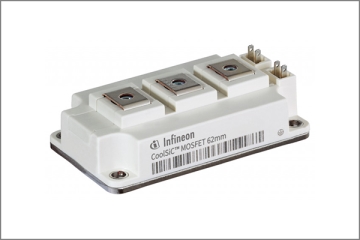
Infineon Announces Industry-Standard 62mm Package SiC MOSFETs
Infineon has added a 62mm industry-standard package to its CoolSiC MOSFET 1200V module product family. Unlike conventional 62mm IGBT modules manufactured from silicon, the CoolSiC 62mm modules made from silicon carbide can be used in applications such as photovoltaic, server, energy storage, EV charging, traction, commercial induction cooking, and power conversion systems.
2020.07.16by 명세환 기자
.jpg)
Flyback Switcher IC with Integrated 750V MOSFET Released
Power Integrations has launched the InnoSwitch3-AQ, an AEC-Q100 certified flyback switcher IC that integrates a 750V MOSFET and features secondary-side sensing. The new IC is suitable for electric vehicle applications such as traction inverters, onboard chargers, energy management DC/DC bus converters, and battery management systems.
2020.07.17by 명세환 기자

Mouser Supplies Littlehuge Products for Building Automation Solutions
Mouser Electronics supplies Little Fuse's building automation solutions. Little Fuse's intelligent technology supports the development of a wide range of IoT devices that enable key applications such as sensors, security, and energy efficiency.
2020.07.28by 강정규 기자
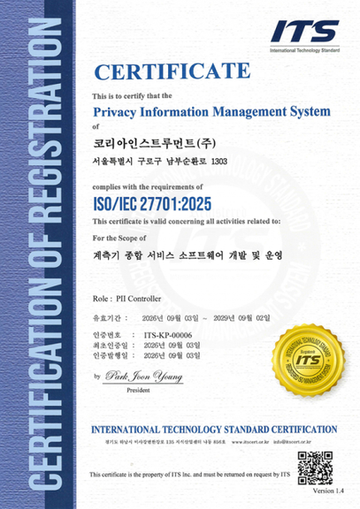
Korea Instrument, KOLAS Accredited Calibration Agency First to Simultaneously Acquire ISO/IEC 27,001·27,701
Korea Instrument has become the first among KOLAS accredited calibration agencies to simultaneously acquire ISO/IEC 27,001 and ISO/IEC 27,701 certifications. Through its proprietary platforms CWIZ Enterprise and CWIZ Partners, the company has embedded information security and personal data protection requirements across all business processes including customer information, equipment data, and calibration reports, with plans to continuously advance its management system through regular audits and security inspections.
2026.10.12by 배종인 기자

TeamViewer One, IT Incident Automation Workflow and Resolution Center Enhanced
TeamViewer has added IT incident automation capabilities and an advanced Resolution Center to its integrated digital workplace management platform 'TeamViewer ONE'. Recurrent service disruptions, configuration errors, and capacity shortages are automatically handled according to preset policies, and device status verification through script deployment can be managed in a unified interface, significantly reducing repetitive tasks for IT teams.
2026.10.12by 배종인 기자











