


First Quality Assessment Results Released Since 5G Commercialization: "We Still Can't Stand Alone Without LTE"
 Published2020.08.05 16:21
Coverage maps provided by the three major mobile carriers are no exaggeration.
5G quality is improving, but more investment is needed.
For the first time since commercialization, the results of 5G quality evaluation have been released. Although 5G is faster than LTE, it appears that further investment in infrastructure and technology is needed to reach the touted figures from its initial introduction.
The Ministry of Science and ICT and the National Information Society Agency (NIA) announced the results of the 5G communication service quality evaluation for the first half of 2020 on the 5th.
The first half of the year's 5G service quality evaluation was conducted in Seoul and six metropolitan cities, including ▲ a survey of the current status of 5G coverage, ▲ an inspection of the accuracy of coverage information disclosed by the three mobile carriers on their websites, and ▲ a communication quality evaluation.
In order to measure the quality that users actually experience in their daily lives, a measurement sample was selected focusing on major multi-use facilities (approximately 11,000), and the measurement time and route were determined to reflect the users' behavior.
The evaluation targets were divided into △outdoor (administrative districts), △multi-use facilities, and △transportation infrastructure, and a total of 286 samples were inspected and evaluated, including 169 for coverage inspection and 117 for quality evaluation.
In addition to the government evaluation, which directly measures quality, the government also conducted a continuous user evaluation, in which users measure communication quality with their own terminals.
◇ 5G Coverage Status in Seoul and Six Metropolitan Cities
5G availability in outdoor, multi-use facilities, and transportation infrastructure is in the 70% range.
In the case of outdoor areas (administrative districts), according to the coverage map provided by the three mobile carriers on their websites as of July of this year, Seoul Metropolitan City has established coverage in an average area of approximately 425.53㎢ across the three carriers, and 5G is provided in most areas excluding forests.
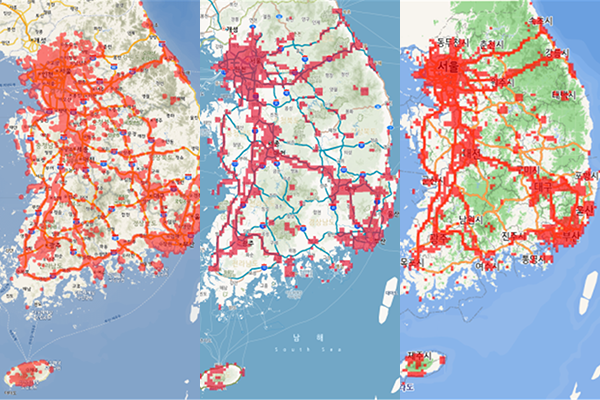
It appears that there was no overstatement [Image = 3 mobile carriers]
In the case of the six metropolitan cities, 5G coverage was established over an area of approximately 931.67㎢, and 5G services are provided in downtown and major areas.
By telecommunications company, in Seoul, the difference between the three companies was not significant: KT (433.96㎢), SKT (425.85㎢), and LGU+ (416.78㎢). In the six metropolitan cities, the difference was LGU+ (993.87㎢), KT (912.66㎢), and SKT (888.47㎢).
The results of the inspection showed that the coverage information disclosed by the telecommunications company was not exaggerated.
In the case of multi-use facilities, 5G connectivity was available in an average of approximately 1,275 facilities across the three major carriers, including large retail stores, department stores, passenger terminals, large hospitals, and exhibition halls. A sample inspection revealed that the average percentage of these facilities with a radio signal strength (-105 dBm or higher) sufficient for smooth 5G use was 67.93%.
By carrier, SKT offered 5G service at 1,606 facilities, with an average availability rate of 79.14% based on a sample inspection. LG U+ offered 5G service at 1,282 facilities, with an availability rate of 60.08%. KT offered 5G service at 938 facilities, with an availability rate of 64.56%.
Among the transportation infrastructure, 5G has been installed in 313 out of 649 underground stations, excluding above-ground stations where services are provided based on outdoor base stations. As a result of inspection of major routes, the average availability rate was 76.33%. By telecommunications company, SKT built 349 units, availability rate 79.87%, KT built 299 units, availability rate 79.08%, LGU+ built 291 units, availability rate 70.04%.
5G infrastructure has been installed on approximately 22.33 sections of 32 major highways with high traffic volume, and inspections of major routes showed an average availability rate of 78.21%. By telecommunications company, LGU+ has 23 units built, with an availability rate of 69.82%, SKT has 22 units built, with an availability rate of 86.49%, and KT has 22 units built, with an availability rate of 78.33%.
In the case of high-speed railways, the results of inspection of major routes (KTX: Busan → Seoul (upbound), SRT: Suseo → Mokpo (downbound)) showed that KTX had an average availability rate of 76.22% (△KT 90.45%, △LGU+ 71.22%, △SKT 66.99%), and SRT had an average availability rate of 74.67% (△KT 83.40%, △SKT 80.24%, △LGU+ 60.37%).
◇ 5G Quality Evaluation Results in Seoul and Six Metropolitan Cities
- 5G average download speed is about 4 times that of LTE.
The average 5G transmission speed was 656.56 Mbps for download (158.53 Mbps for LTE in 2019) and 64.16 Mbps for upload (42.83 Mbps for LTE in 2019).
By telecommunications company, the download speed is 788.97 Mbps for SKT, 652.10 Mbps for KT, and 528.60 Mbps for LGU+.
By type, △Outdoor (administrative district) download speed was 663.14 Mbps, upload speed was 67.18 Mbps (download standard: △SKT 773.17 Mbps, △KT 621.96 Mbps, △LGU+ 594.30 Mbps),
In major multi-use facilities and transportation infrastructure, download speeds were 653.97 Mbps and upload speeds were 62.98 Mbps (△SKT 795.17 Mbps, △KT 663.94 Mbps, △LGU+ 502.79 Mbps).
By detailed type, based on average download speed, △Subway (station 885.26Mbps, passenger car 703.37Mbps), △University (770.04Mbps) etc. have relatively fast speeds, △KTX (272.75Mbps), △SRT (368.35Mbps)) were found to require relative improvement.
Meanwhile, the results of the user continuous evaluation, which users directly measure with their own terminals, were similar to the government evaluation results but slightly lower: △the average download speed was 622.67 Mbps and △the upload speed was 48.25 Mbps.
◇ Rate of switching from 5G network to LTE network
- Approximately 20% on subways and highways, less than 10% elsewhere
The newly surveyed rate of switching to LTE during 5G use was △an average of 6.19% for downloads and △an average of 6.19% for uploads. By telecommunications company, the download rate was 4.55% for KT, 4.87% for SKT, and 9.14% for LGU+.
By type, the download rate was 2.67% in outdoor (administrative district) and 3.16% in upload (download rate: 2.17% for KT, 2.60% for LGU+, 3.23% for SKT), and the download rate was 7.57% in major multi-use facilities and transportation infrastructure and 7.38% in upload (download rate: 5.48% for KT, 5.52% for SKT, 11.71% for LGU+).
By detailed type, the average download rate was relatively good in △movie theaters (0.96%) and △amusement parks (1.10%), while △subway cars (19.49%) and △highways (16.28%) showed a need for improvement.
◇ 5G connection times and latency are slightly higher than LTE.
- Still less than 20 times the theoretical speed of LTE, but with 1/10 the delay.
Meanwhile, the connection time, which is the time required to connect to the first communication network, was 102.24 ms for download and 93.81 ms for upload, the delay time was 30.01 ms (LTE 2019 36.34 ms), and the data loss rate was 0.57% (LTE 0.85%).
The connection time based on download is △LGU+ (75.31ms), △KT (109.28ms), △SKT (122.15ms), the latency is △SKT (28.79ms), △LGU+ (29.67ms), △KT (31.57ms), and the data loss rate is △LGU+ (0.32%), △SKT (0.59%), △KT (0.79%).
The Ministry of Science and ICT said, “The results of this evaluation show that telecommunication companies are investing in 5G and improving coverage and quality, but for 5G to play a significant role as a data highway, it is necessary to accelerate investment.”uo; said.
Additionally, he said, “We hope that the three mobile carriers will continue to expand their network investments, including 5G, in the second half of the year, reflecting the results of the first-half evaluation,” and “The government will also provide support through tax credits for 5G investments and reductions in base station registration license taxes.”
The Ministry of Science and ICT plans to conduct a second-half 5G quality evaluation starting in mid-August, and plans to announce the results of the overall 2020 telecommunications service quality evaluation, including the results of the second-half 5G quality evaluation, after December 2020.
Comments
Related news
They say the 28GHz band 5G mobile phone launch period will be shortened... "Will it be effective?"
The pre-launch electromagnetic wave measurement time for 28GHz 5G mobile phones will be shortened to LTE mobile phone levels. Accordingly, the Ministry of Science and ICT expected that new product launches of 28GHz and 3.5GHz 5G mobile phones would accelerate. However, is this really the case? At least within this year, no mobile phones are expected to benefit from this simplification. This is because 28GHz infrastructure has not yet been established.
2020.07.14by 이수민 기자
25 trillion won will be invested in building a nationwide 5G network by the first half of 2022.
Minister Choi Ki-young of the Ministry of Science and ICT and representatives of the three telecommunications companies held an emergency meeting at the Government Seoul Building to discuss the construction of nationwide 5G networks by 2022. Through the meeting, the three telecommunications companies and SK Broadband agreed to invest approximately 24.5 trillion to 25.7 trillion won in wired and wireless communication infrastructure by 2022.
2020.07.15by 이수민 기자
U+, TWAMP technology applied to 5G wired network section, spurring SA
LG UPlus has developed network slicing functionality applicable to wired network segments, following mobile base stations and core equipment, for commercializing 5G standalone (SA) mode. This technology is a solution that analyzes two-way active measurement protocol (TWAMP) through a software-defined networking (SDN) controller and manages transmission quality.
2020.07.20by 강정규 기자
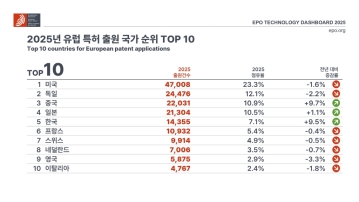
European Patent Applications Surpass 200,000 for the First Time… South Korea Maintains 5th Place, Led by Batteries and Telecommunications
According to the European Patent Office (EPO)'s 'Technology Dashboard 2025', European patent applications last year reached 201,974, surpassing 200,000 for the first time. Korean companies and inventors filed 14,355 applications, representing a 9.5% increase from the previous year and maintaining 5th place by country. Battery, digital communication, and semiconductor technologies led the growth, with Samsung ranking as the top EPO applicant for the second consecutive year and LG reaching 3rd place. The presence of major domestic cities such as Seoul, Suwon, and Yongin was also confirmed. It was also revealed that Korea's European patent strategy is expanding beyond individual technologies to span the entire industry.
2026.03.24by 명세환 기자
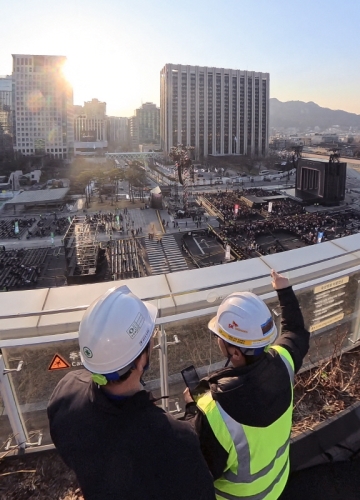
SK Telecom First Applies AI-Based Network Operations at Gwanghwamun K-Pop Concert
SK Telecom announced that it applied an AI-based network operation system for the first time at a large-scale K-pop concert held in the Gwanghwamun area of Seoul on March 21st, managing communication quality throughout the event. Mobile data usage during the three hours before and after the concert reached 12.15TB, approximately doubling compared to the same time slot the previous weekend. SK Telecom monitored traffic using the AI system 'A-One' in five-minute and 50-meter units to respond to potential overload situations, while also operating temporary communication facilities and on-site personnel in parallel. This case is interpreted as confirmation of the practical applicability of AI-based autonomous network operation in an environment where demand from dense events and foreign users increases simultaneously.
2026.03.23by 명세환 기자











