



"COVID-19 Turned from Crisis into Opportunity": Three Major Mobile Carriers Report Strong Q2 Results
 Published2020.08.10 10:41
Breaking expectations, it rose compared to the same period last year
Turning the COVID-19 crisis into an opportunity was key.
The second-quarter 2020 earnings of the three mobile carriers have all been announced.
All three companies achieved strong results, primarily due to turning the COVID-19 crisis into an opportunity. They preserved related costs as opportunities for face-to-face marketing diminished, and boosted performance by strengthening their non-face-to-face service sectors in response to the increasing demand.
Based on K-IFRS consolidated financial statements, KT recorded revenue of 5.8765 trillion won and an operating profit of 341.8 billion won, SK Telecom recorded revenue of 4.6028 trillion won and an operating profit of 359.5 billion won, and LG Uplus recorded revenue of 3.2726 trillion won and an operating profit of 239.7 billion won.
◇ Promoting convergence with other industries to strengthen AI competitiveness
KT posted the highest revenue among the three companies in the second quarter of this year. However, revenue fell by 3.6% compared to the same period last year due to a decline in handset sales caused by COVID-19 and reduced sales from some group companies, such as credit cards and hotels. On the other hand, operating profit increased by 18.6% compared to the same period last year, driven by growth in the wireless and media businesses and strong performance in the AI/DX-based B2B business.
B2B performance stood out this quarter. KT's B2B business revenue increased by 2.4% compared to the same period last year. Driven by rising demand from companies, cloud and data center revenues grew, while blockchain revenue increased due to the rise in local currency issuance. As a result, AI/DX business revenue rose by 16% compared to the same period last year, recording the highest growth rate among KT's major businesses.
KT announced that it will pursue various collaborations with other industries to prepare for the post-COVID era, where non-face-to-face interactions will become the norm, and to enhance its AI competitiveness. Recently, manufacturing and financial companies joined the 'AI One Team,' an AI industry-academia-research collaboration led by KT. Furthermore, the company plans to continue strengthening its capabilities in intelligent service robots and smart factories, as well as integrating Skylife (satellite) with Hyundai HCN (cable).
◇ Increased sales in media, security, and commerce driven by rising demand for non-face-to-face services
SK Telecom's revenue and operating profit in the second quarter of this year increased by 3.7% and 11.4%, respectively, compared to the same period last year, driven by steady growth across all New Biz. sectors and improved performance in the wireless business. Due to increased demand for non-face-to-face services, revenues for SK Broadband (media), ADT Caps and SK Infosec (security), and 11st and SK Store (commerce) increased by 16.2%, 8.7%, and 8.5%, respectively, compared to the same period last year.
Going forward, SK Telecom plans to continue business innovation in its e-sports company 'T1', app market 'ONE Store', and OTT platform 'Wavve' to secure new growth engines in the post-COVID era. In addition, to strengthen competitiveness in its core mobile telecommunications business, it invested 1.2244 trillion won in facilities during the first half of the year alone and announced that it would officially launch 5G cloud gaming with MS in September of this year.
◇ Plan to expand large-scale orders in the second half based on 5G B2B experience in the first half
LG Uplus's revenue and operating profit in the second quarter of this year rose by 5.1% and 2.6%, respectively, compared to the same period last year. Mobile service revenue increased by 4.9% compared to the same period last year due to steady subscriber growth despite a decline in smartphone sales, while cumulative subscribers for MVNOs (low-cost mobile phones) increased by 37.1% compared to last year and 10.3% compared to the previous quarter, driven by the growth of channels such as LG HelloVision and KB LiivM.
Revenue from Smart Home (IPTV and High-Speed Internet) reached 494.6 billion won, a 10.5% increase from the previous year, driven by subscriber growth and an influx of high-value customers. Notably, net IPTV subscribers in the second quarter totaled 130,000, a 42.3% increase compared to the same period last year. Enterprise infrastructure revenue recorded 345 billion won, up 2.7% from the same period last year and 10.1% from the previous quarter, driven by the expansion of IDC and solution businesses.
LG Uplus plans to provide realistic 5G content in its B2C business. In its B2B business, it will focus on expanding large-scale orders in the second half of the year based on 5G B2B cases from the first half. The strategy is to lay the groundwork for mid-to-long-term business growth by discovering 5G network-based business models such as 5G convergence, AR/VR, big data, and education, in line with the government's Digital New Deal policy direction.
◇ Strong performance must lead to investment in 5G, where public dissatisfaction is significant.
Meanwhile, according to the Ministry of Science and ICT, the number of 5G subscribers stood at 7.37 million as of June, an increase of 7.17% compared to the previous month (6,876,914). By operator, the number of 5G subscribers was 3,347,684 for SK Telecom, 2,237,684 for KT, and 1,783,685 for LG Uplus.
With the launch of new 5G smartphones such as the iPhone 12 and Galaxy Z Fold 2 scheduled for the second half of the year, the industry expects the number of 5G subscribers to reach 10 million within this year.
Given the unexpectedly strong results achieved in the first half of the year, it is a time when further investment in 5G infrastructure is needed.
Comments
Related news
"5G Subscribers Steadily Increased Despite COVID-19": South Korea's Three Major Telecom Companies Announce Q1 2020 Earnings
The three domestic telecom companies have all released their performance results for the first quarter of 2020. KT recorded revenue of 5.8317 trillion won and operating profit of 383.1 billion won for the first quarter of 2020. SK Telecom followed with revenue of 4.4504 trillion won and operating profit of 302 billion won, while LG U+ recorded revenue of 3.2866 trillion won and operating profit of 219.8 billion won.
2020.05.15by 이수민 기자
25 trillion won will be invested in building a nationwide 5G network by the first half of 2022.
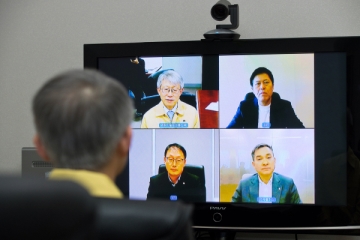
Minister Choi Ki-young of the Ministry of Science and ICT and representatives of the three telecommunications companies held an emergency meeting at the Government Seoul Building to discuss the construction of nationwide 5G networks by 2022. Through the meeting, the three telecommunications companies and SK Broadband agreed to invest approximately 24.5 trillion to 25.7 trillion won in wired and wireless communication infrastructure by 2022.
2020.07.15by 이수민 기자

Samsung Electronics' Q2 earnings: DRAM is a bright spot, NAND is a slogan, thanks to COVID-19.
Samsung Electronics announced its second quarter 2020 results on the 30th, with consolidated revenue of 52.97 trillion won and operating profit of 8.15 trillion won. While memory revenue increased due to growing demand centered on data centers and PCs, overall revenue declined 4.3% quarter-over-quarter and 5.6% year-over-year as set product sales such as smartphones decreased. Operating profit reached 8.15 trillion won, up 1.7 trillion won from the previous quarter, driven by improved memory profitability, one-time gains in display, and peak season effects in consumer appliances.
2020.07.30by 이수민 기자
European Patent Applications Surpass 200,000 for the First Time… South Korea Maintains 5th Place, Led by Batteries and Telecommunications
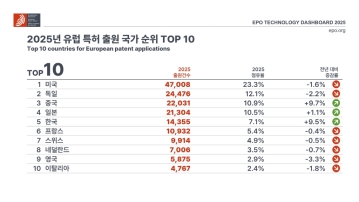
According to the European Patent Office (EPO)'s 'Technology Dashboard 2025', European patent applications last year reached 201,974, surpassing 200,000 for the first time. Korean companies and inventors filed 14,355 applications, representing a 9.5% increase from the previous year and maintaining 5th place by country. Battery, digital communication, and semiconductor technologies led the growth, with Samsung ranking as the top EPO applicant for the second consecutive year and LG reaching 3rd place. The presence of major domestic cities such as Seoul, Suwon, and Yongin was also confirmed. It was also revealed that Korea's European patent strategy is expanding beyond individual technologies to span the entire industry.
2026.03.24by 명세환 기자

SK Telecom First Applies AI-Based Network Operations at Gwanghwamun K-Pop Concert
SK Telecom announced that it applied an AI-based network operation system for the first time at a large-scale K-pop concert held in the Gwanghwamun area of Seoul on March 21st, managing communication quality throughout the event. Mobile data usage during the three hours before and after the concert reached 12.15TB, approximately doubling compared to the same time slot the previous weekend. SK Telecom monitored traffic using the AI system 'A-One' in five-minute and 50-meter units to respond to potential overload situations, while also operating temporary communication facilities and on-site personnel in parallel. This case is interpreted as confirmation of the practical applicability of AI-based autonomous network operation in an environment where demand from dense events and foreign users increases simultaneously.
2026.03.23by 명세환 기자











