


The Role and Limitations of AI Technology in the COVID-19 Pandemic
 Published2020.08.26 16:45
It will also be useful for identifying and eradicating infectious diseases.
There are still not enough cases that have demonstrated clinical utility.
The spread of COVID-19 shows no signs of slowing down. Consequently, interest is growing in systems that enable the prevention, containment, and eradication of infectious diseases, as well as the cutting-edge technologies that support them.
AI technology has recently established itself as a foundational technology across all industries and holds the potential to be useful in infectious disease settings.
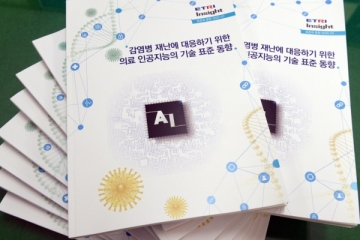
In July, ETRI published a report titled “Technical Standard Trends in Medical Artificial Intelligence for Responding to Infectious Disease Disasters.” The report examined cases of infectious disease disaster response utilizing AI technology, related technical standards, and research and development trends, and presented the elements necessary to utilize AI technology in the national infectious disease quarantine system.
◇ Places where AI technology is needed during an infectious disease outbreak
The report explained that due to the COVID-19 pandemic, many countries around the world are facing the following challenges: ▲Understanding the transmission routes and current status of infectious diseases ▲Differentiating and quantitatively diagnosing new infectious diseases ▲Developing treatments for new infectious diseases ▲Minimizing the impact of infectious diseases on existing clinical settings.
Responding to infectious diseases must be swift, and so must the four tasks above. The report concludes that big data analysis is necessary to address these challenges, and that AI technology is crucial.
Infectious disease data is collected and accumulated in real time through various communication networks. AI technology is necessary to understand regional infectious disease trends and transmission routes, and to predict future situations.
AI technology can also aid in the diagnosis and development of treatments for emerging infectious diseases. It can also play a role in allocating limited medical resources.
What AI Technology Can Do During Quarantine
The report divided infectious disease prevention into four stages. The first is the prediction and prevention stage, where AI technology can be utilized for advance prediction and warning, as well as for supporting quarantine procedures for overseas arrivals.
The second stage is the emergency operations and response phase, where AI technology can be utilized for AI-based automated diagnosis support, unmanned emergency response, optimized management of medical resources, and status analysis and sharing.
The third stage is the infection spread prevention stage, where AI technology can be used for advance prediction and warning, automatic identification of suspected cases, contact tracing and monitoring, support for self-quarantine management, detection of social distancing, identification of risk factors, and prevention of the spread of fake news.
The fourth stage is the research and development stage for treatment and nursing support, where AI technology can be applied to AI-based new drug and vaccine research, remote patient monitoring, critical care nursing support, and patient risk prediction and alerts.
The report stated that many research and developments are underway in AI utilization cases for infectious disease response, and evaluated that the most active movements are in the following areas: △assistance in infectious disease diagnosis △remote patient monitoring and prognosis prediction △self-diagnosis testing and voice recognition △prediction and surveillance of diseases and disasters △contact tracing and monitoring △new drug development. The actual usability was also high.
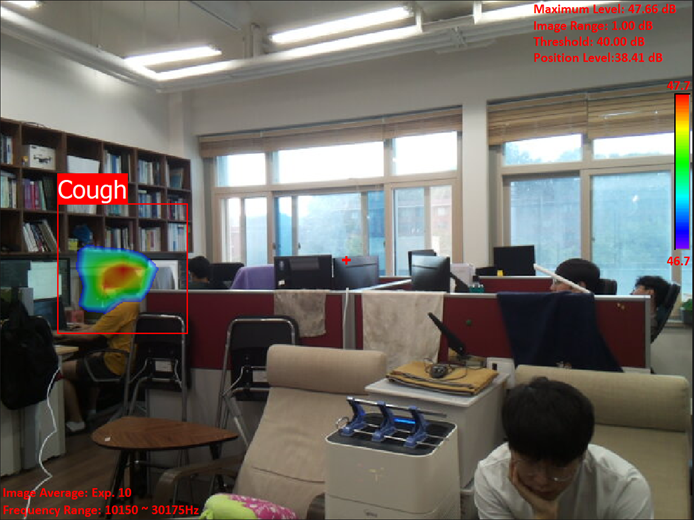
KAIST's deep learning-based approach to representing unknowns
Cough detection camera [Photo = KAIST]
In doing so, he pointed out the necessary steps for the above cases to lead to commercialization, including ▲development of medical devices equipped with AI technology, ▲establishment of a patient data collection/sharing system, and ▲prior work on data standardization.
◇ If AI technology is to be used to fight infectious diseases,
Global exchange and movement are essential to human survival. The report predicts that new infectious diseases similar to COVID-19 will continue to emerge in the future, and argues that research and development that considers the following factors is necessary to utilize AI technology to respond to infectious diseases.
First, the importance of policies for open data and its utilization is paramount. To facilitate the modeling, learning, and development of AI systems necessary for rapid response to urgent infectious disease disasters, a system must be established that allows high-quality data to be made publicly available and freely available.
Second, there is a need to create an open global repository for sharing anonymized clinical data, including medical images or patient histories. The repository should be designed to integrate and utilize data by institution, region, and country.
In addition, clinical protocols and data sharing architecture design for easy data sharing and utilization are needed, and a data governance framework must also be created.
Third, regulatory requirements and privacy protection mechanisms for the use of medical data must also be implemented. In particular, AI for clinical applications must demonstrate not only performance on test data sets but also effectiveness and safety when integrated into actual clinical workflows. Furthermore, all developed AI applications must undergo thorough consideration and evaluation to ensure compliance with ethical principles and avoid potential human rights violations.
Fourth, South Korea has demonstrated remarkable success in leveraging its ICT capabilities even amid the COVID-19 crisis. It is crucial to create more opportunities to apply AI technologies to these cases and experiences, share these experiences internationally, and establish a system that fosters international cooperation.
Fifth, and finally, studies that take into account the situations of various countries are also needed. Beyond the latest devices and cutting-edge technologies, consideration should also be given to the application of appropriate technologies that utilize limited resources and technologies in the context of Africa and developing countries.
The report emphasized that AI technology used to combat infectious diseases is merely medical AI technology that assists medical staff in ensuring that patients receive effective diagnosis and treatment, and that the focus should be on the medical field itself.
Although numerous studies have proven that AI technology can be applied in the medical field, it is still difficult to find examples of actual medical AI technology being used in clinical practice and bringing about meaningful improvements in diagnosis and treatment for patients.
He also advised that efforts are needed to rigorously verify whether medical AI models have robust predictive power and their clinical validity.
Comments
Related news
ETRI publishes "Report on Medical AI Technology and Standards for Infectious Disease Response."
ETRI has published a report on "Technical Standardization Trends for Medical AI in Response to Infectious Disease Disasters." The report analyzes AI utilization cases across the entire lifecycle of infectious disease disasters and describes response measures available in the event of future outbreaks. Based on this report, ETRI's Standards Research Division plans to develop international standards for AI technologies necessary for more concrete infectious disease disaster response.
2020.07.15by 강정규 기자
"Who's coughing?" A real-time cough detection camera has been developed.
A research team led by Professor Park Yong-hwa from the Department of Mechanical Engineering at KAIST and SM Instruments have developed a cough recognition camera that identifies cough sounds in real-time and displays the location of the coughing person as an image. The cough recognition camera is expected to be utilized as medical equipment capable of detecting disease outbreaks in crowded public spaces or continuously monitoring patient conditions in hospitals.
2020.08.04by 이수민 기자
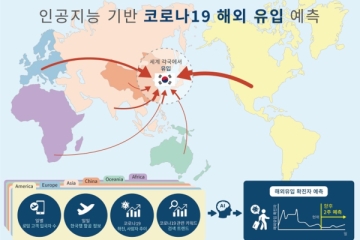
Technology developed to predict the number of confirmed COVID-19 cases imported from overseas has been developed.
A research team led by Professor Lee Jae-gil from the Department of Industrial and Systems Engineering at KAIST has developed a technology that can predict the number of COVID-19 confirmed cases from overseas over the next two weeks. This technology applies AI technology to big data including the number of confirmed cases in various countries, the number of deaths, the frequency of COVID-19 related keyword searches, the number of daily flights to Korea, and the number of roaming customers entering Korea to forecast the number of confirmed cases imported from overseas.
2020.08.24by 이수민 기자

[e4ds Tech Day 2026 ⑨] Sim Sang-gyu, Autocrypt CTO: "In the Physical AI Era, Automotive Security Must Extend Beyond the Vehicle"
At e4ds Tech Day 2026, Sim Sang-gyu, CTO of Autocrypt, explained automotive cybersecurity strategies in the era of Physical AI and SDV (Software-Defined Vehicle). Automobiles are evolving as part of an ecosystem connected to AI, cloud, chargers, IoT, and robots, and he emphasized that the scope of security must expand beyond the vehicle interior to the entire connected environment. In particular, AI model tampering, adversarial attacks, OTA updates, and EV charger hacking were identified as major threats. He explained that response measures require zero trust, AI model integrity protection, intrusion detection, Security by Design and Default, and full lifecycle security management, and that proactive security system establishment beyond regulatory compliance is critical for securing future mobility competitiveness.
2026.10.12by 배종인 기자

NVIDIA to Invest $1 Billion in U.S. Science Over Next Five Years
NVIDIA has announced plans to invest $1 billion over the next five years to strengthen U.S. scientific and technological competitiveness. The company will enhance cutting-edge artificial intelligence research and development capabilities in key areas including quantum computing, healthcare, and energy security, while expanding support for higher education research institutions and cloud service providers. NVIDIA is participating as a major industry partner in the White House Office of Science and Technology Policy's Genesis Mission, and is promoting supercomputer construction in collaboration with national laboratories including Argonne and Los Alamos.
2026.10.12by 배종인 기자











