This page was machine-translated and may differ from the original. View original
Even after the pandemic ends, work PCs must be suitable for working from home.

Telecommuting capabilities have become a key selection criterion for business PCs.
A survey found that many companies are implementing or have implemented remote work, and are planning to purchase laptops instead of desktops as work-from-home PCs in the future.
Dell Technologies Korea announced this on the 10th through the '2020 Work-from-Home Trends and PC Purchase Policy Report' commissioned by IDG Korea and published.
The survey was conducted to understand the current status of telecommuting, PC purchasing policies, and the needs of practitioners in domestic companies. In June 2020, the responses of 555 IT professionals directly or indirectly involved in IT-related work were collected and analyzed through IDG Tech Survey.
According to the survey, 48.8% of respondents said, "We have implemented, are currently implementing, and plan to implement telecommuting in the future," 25.2% said, "We have implemented telecommuting, but have no plans to implement it in the future," and 24.9% said, "We have never implemented it, but may implement it temporarily or permanently in the future," indicating that telecommuting has become a routine policy for the majority of companies. Only 1.1% of respondents said, "We have never implemented it, and we do not plan to implement it in the future."
The adoption of telecommuting was higher in larger companies. Divided into three groups—99 or fewer employees, 100-499 employees, 500-999 employees, and 1,000 or more—83.8% of large companies with 1,000 or more employees reported implementing telecommuting, exceeding the overall average of 74.0%. Additionally, 76.9% of respondents said they had plans to work from home in the future, which was higher than the average of 73.7%.
When asked about their organization's PC policy for working from home, the most common response, at 60.7%, was "using a company-issued laptop for working from home." This was followed by 33.0% who said they "use their own devices (laptops, desktops, etc.)," while only 3.5% said the company purchased and provided a separate laptop for working from home.

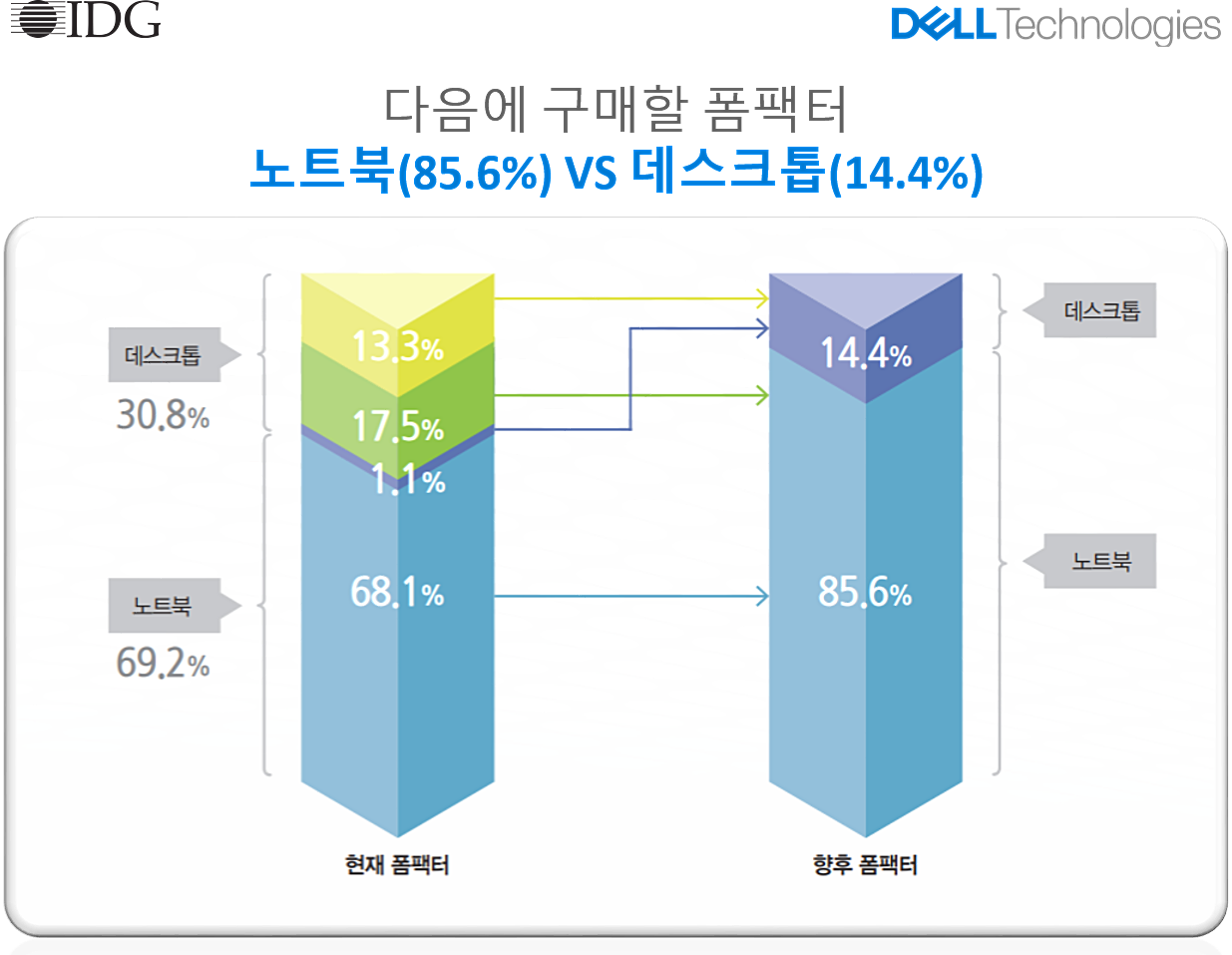
When asked about the form factor of their work PC, the most common response, at 68.1%, was "currently using a laptop," while 17.5% said they "currently use a desktop but plan to choose a laptop in the future." 85.6% of respondents said they would choose a laptop as their future PC form factor. Only 13.3% said they currently use a desktop and plan to choose it in the future.
Meanwhile, among companies using laptops, the response that "we use laptops that were previously provided as equipment for working from home" was 75.9%, which was significantly higher than the overall average of 60.7%, while the response that "we use personally owned equipment" was 21.4%, which was significantly lower than the overall average. We can see that companies with a higher laptop provision ratio have had a smoother transition to working from home.

When asked, "Did you provide any additional equipment beyond computing devices to improve productivity while working from home?" 29.5% of respondents said no additional equipment was provided. Among the equipment companies provided to employees, "keyboards and mice" were the most common at 24.9%, followed by monitors at 20.9% and remote conferencing equipment like headphones at 10.6%. Docking stations followed at 4.3% and printers at 3.5%.
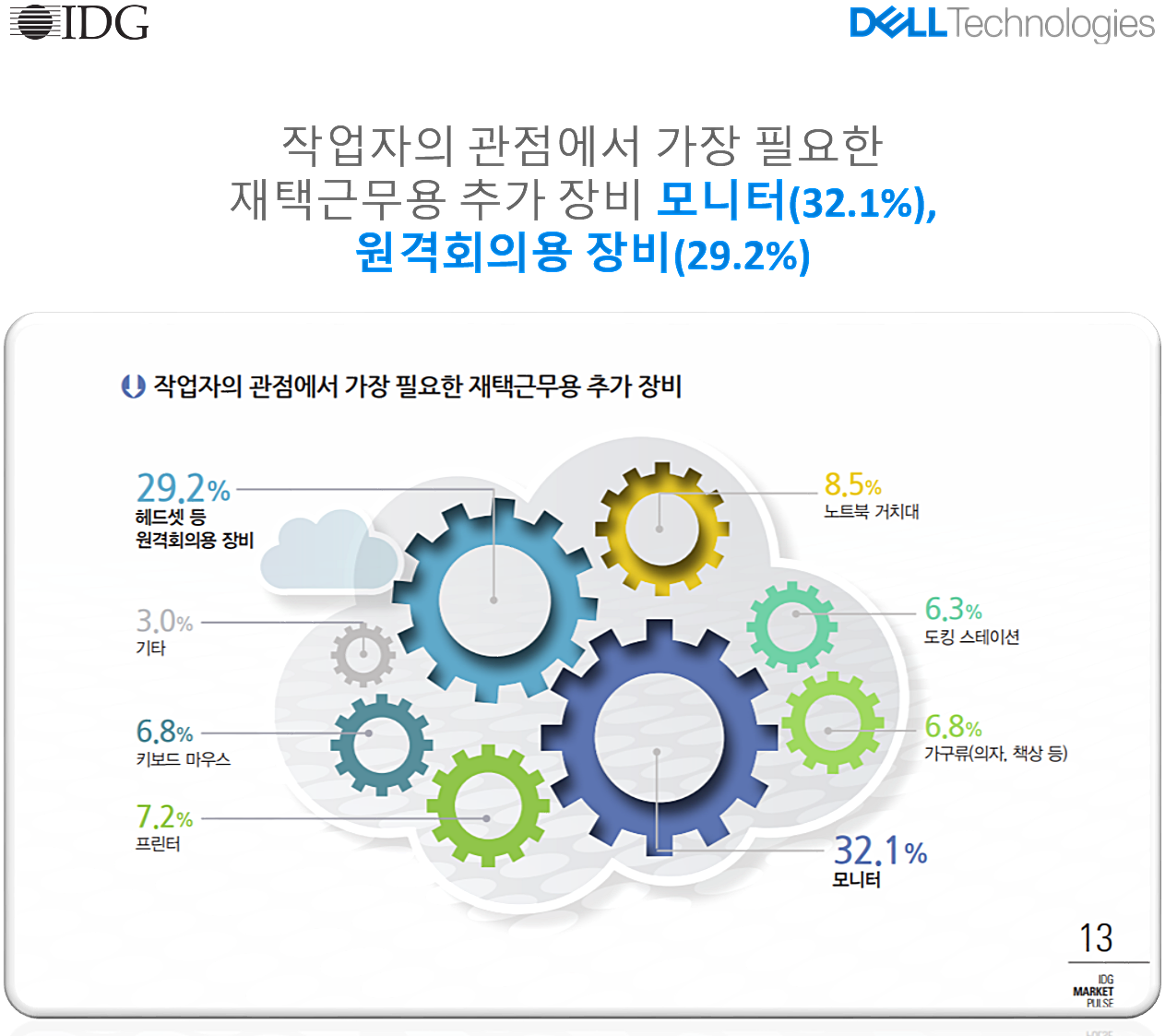
From a user perspective, when asked about the "most necessary additional equipment," monitors (32.1%) and remote conferencing equipment, such as noise-canceling headphones (29.2%), were by far the most popular choices. Keyboards and mice, which many companies actually provide, accounted for only 6.8% of respondents. Considering that only 10.6% of respondents said they provided teleconferencing equipment, it seems necessary for companies to more actively consider providing teleconferencing equipment.

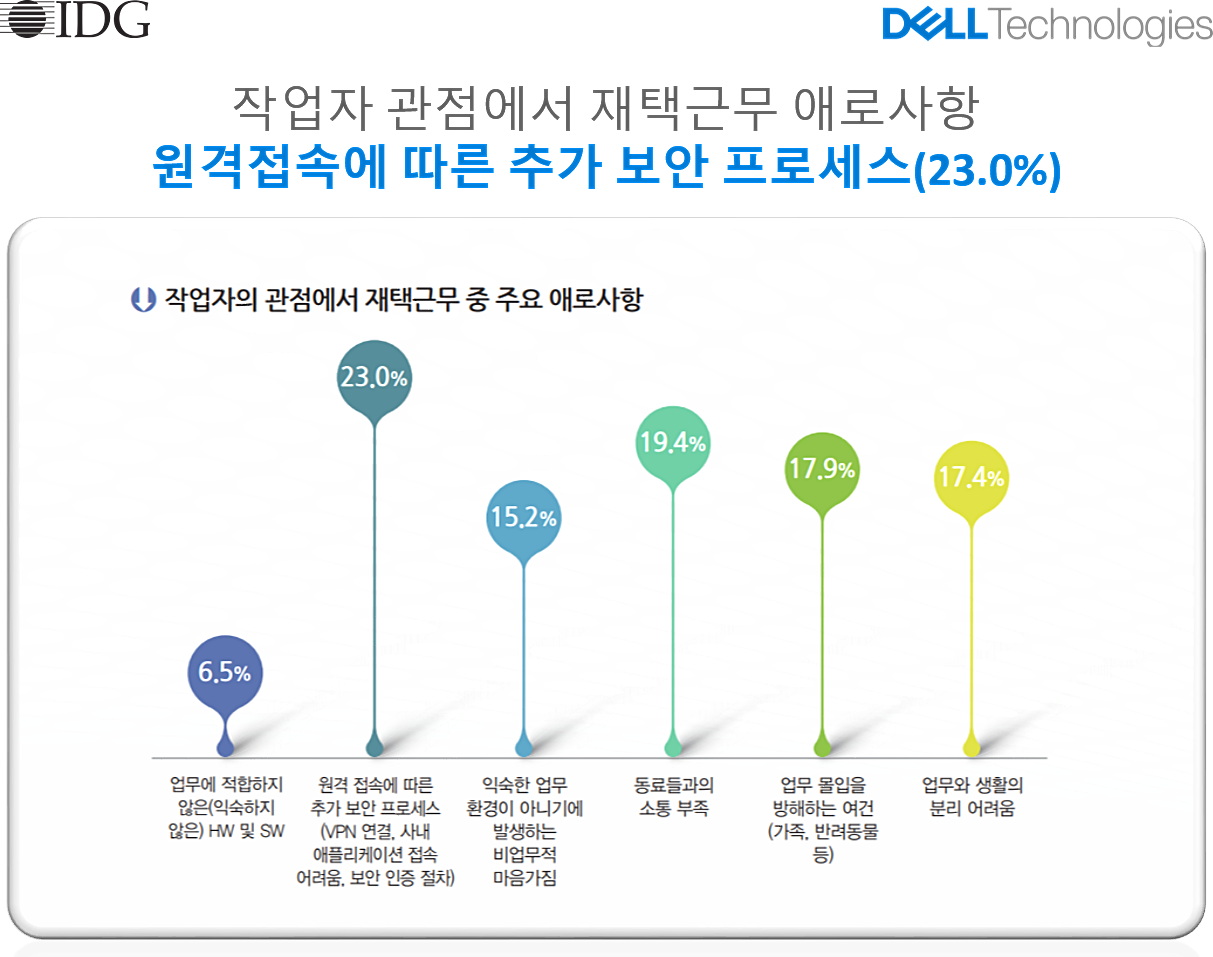
From the perspective of workers, when asked about the main difficulties while working from home, 'additional security processes due to remote access (VPN connection, difficulty accessing in-house applications, security authentication procedures)' accounted for 23.0%, 'lack of communication with colleagues' accounted for 19.4%, 'conditions that interfere with work concentration (family, pets, etc.)' accounted for 17.9%, 'difficulty separating work and life' accounted for 17.4%, 'non-work-related mental states due to unfamiliar work environment' accounted for 15.2%, and 'hardware and software that are unsuitable or unfamiliar for work' accounted for 6.5%.

When replacing your work computer in the future, consider its suitability for remote conferencing, weight, and security as criteria for working from home.
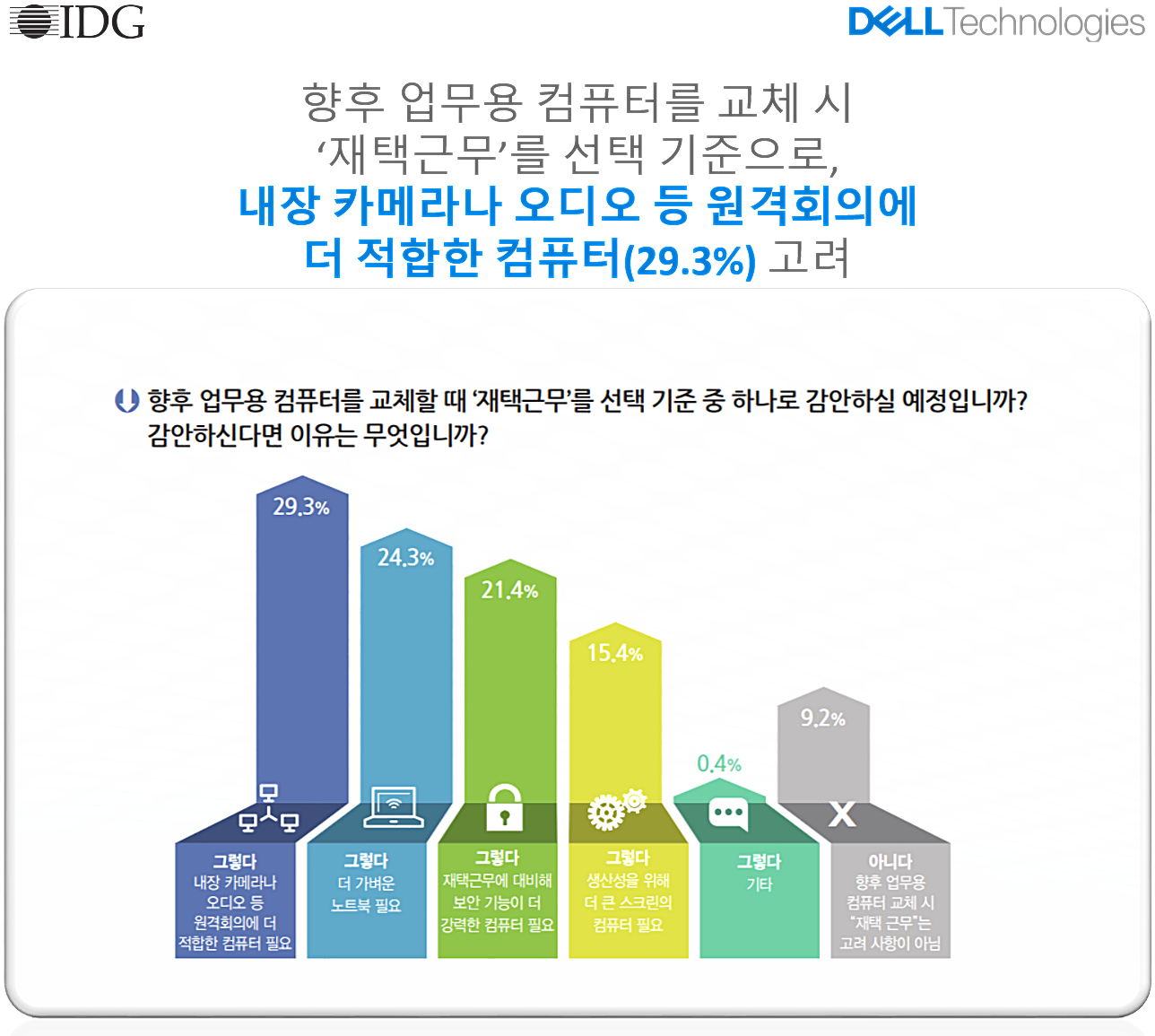
When replacing your work computer in the future, consider 'working from home'85.6% of respondents said they would prioritize "nothing" when selecting a device. Furthermore, when asked what they would prioritize when preparing for remote work, 42.9% chose "built-in camera or audio performance for remote meetings," 35.5% chose "device weight," 31.4% chose "robust security features," and 22.5% chose "screen size," a relatively low number.
Among these, "security features" ranked relatively high among purchasing planners and drafters, at 27.4%, while "weight" was chosen most frequently by collaborative users, at 28.2%. By company size, those with 500 or fewer employees prioritized "weight" (26.8% for 99 or fewer employees, 27.6% for 100-499 employees), while companies with 500 or more employees tended to prioritize "security."
When asked about "promotions you would like to receive from PC suppliers in relation to your company's work-from-home policy," about half of the respondents, or 49%, chose "provision of software (security, collaboration) and optimization services related to work-from-home." Other than this, 'proposals for additional equipment or accessories for working from home' followed with 27.0%, 'special promotions for peripheral devices for employees' with 19.7%, and expansion of A/S period and service area with 2.2%.
“Working from home will now become a normal part of work,” said Kim Kyung-jin, President of Dell Technologies Korea. “Companies should continue to build secure and efficient platforms, infrastructure, processes, and tools to enable a seamless remote work environment, and consider how to integrate them into their corporate culture.”
The survey report is available for free download.
A survey found that many companies are implementing or have implemented remote work, and are planning to purchase laptops instead of desktops as work-from-home PCs in the future.
Dell Technologies Korea announced this on the 10th through the '2020 Work-from-Home Trends and PC Purchase Policy Report' commissioned by IDG Korea and published.
The survey was conducted to understand the current status of telecommuting, PC purchasing policies, and the needs of practitioners in domestic companies. In June 2020, the responses of 555 IT professionals directly or indirectly involved in IT-related work were collected and analyzed through IDG Tech Survey.
According to the survey, 48.8% of respondents said, "We have implemented, are currently implementing, and plan to implement telecommuting in the future," 25.2% said, "We have implemented telecommuting, but have no plans to implement it in the future," and 24.9% said, "We have never implemented it, but may implement it temporarily or permanently in the future," indicating that telecommuting has become a routine policy for the majority of companies. Only 1.1% of respondents said, "We have never implemented it, and we do not plan to implement it in the future."
The adoption of telecommuting was higher in larger companies. Divided into three groups—99 or fewer employees, 100-499 employees, 500-999 employees, and 1,000 or more—83.8% of large companies with 1,000 or more employees reported implementing telecommuting, exceeding the overall average of 74.0%. Additionally, 76.9% of respondents said they had plans to work from home in the future, which was higher than the average of 73.7%.
When asked about their organization's PC policy for working from home, the most common response, at 60.7%, was "using a company-issued laptop for working from home." This was followed by 33.0% who said they "use their own devices (laptops, desktops, etc.)," while only 3.5% said the company purchased and provided a separate laptop for working from home.

▲ Laptops are the most preferred form of PC for working from home [Graph = Dell]
When asked about the form factor of their work PC, the most common response, at 68.1%, was "currently using a laptop," while 17.5% said they "currently use a desktop but plan to choose a laptop in the future." 85.6% of respondents said they would choose a laptop as their future PC form factor. Only 13.3% said they currently use a desktop and plan to choose it in the future.
Meanwhile, among companies using laptops, the response that "we use laptops that were previously provided as equipment for working from home" was 75.9%, which was significantly higher than the overall average of 60.7%, while the response that "we use personally owned equipment" was 21.4%, which was significantly lower than the overall average. We can see that companies with a higher laptop provision ratio have had a smoother transition to working from home.

▲ Teleconferencing equipment is the most in demand [Graph = Dell]
When asked, "Did you provide any additional equipment beyond computing devices to improve productivity while working from home?" 29.5% of respondents said no additional equipment was provided. Among the equipment companies provided to employees, "keyboards and mice" were the most common at 24.9%, followed by monitors at 20.9% and remote conferencing equipment like headphones at 10.6%. Docking stations followed at 4.3% and printers at 3.5%.
From a user perspective, when asked about the "most necessary additional equipment," monitors (32.1%) and remote conferencing equipment, such as noise-canceling headphones (29.2%), were by far the most popular choices. Keyboards and mice, which many companies actually provide, accounted for only 6.8% of respondents. Considering that only 10.6% of respondents said they provided teleconferencing equipment, it seems necessary for companies to more actively consider providing teleconferencing equipment.

▲ Additional security processes are the most inconvenient [Graph = Dell]
From the perspective of workers, when asked about the main difficulties while working from home, 'additional security processes due to remote access (VPN connection, difficulty accessing in-house applications, security authentication procedures)' accounted for 23.0%, 'lack of communication with colleagues' accounted for 19.4%, 'conditions that interfere with work concentration (family, pets, etc.)' accounted for 17.9%, 'difficulty separating work and life' accounted for 17.4%, 'non-work-related mental states due to unfamiliar work environment' accounted for 15.2%, and 'hardware and software that are unsuitable or unfamiliar for work' accounted for 6.5%.

▲ Is a business PC suitable for working from home or not?
Future sales forecast [Graph = Dell]
When replacing your work computer in the future, consider its suitability for remote conferencing, weight, and security as criteria for working from home.
When replacing your work computer in the future, consider 'working from home'85.6% of respondents said they would prioritize "nothing" when selecting a device. Furthermore, when asked what they would prioritize when preparing for remote work, 42.9% chose "built-in camera or audio performance for remote meetings," 35.5% chose "device weight," 31.4% chose "robust security features," and 22.5% chose "screen size," a relatively low number.
Among these, "security features" ranked relatively high among purchasing planners and drafters, at 27.4%, while "weight" was chosen most frequently by collaborative users, at 28.2%. By company size, those with 500 or fewer employees prioritized "weight" (26.8% for 99 or fewer employees, 27.6% for 100-499 employees), while companies with 500 or more employees tended to prioritize "security."
When asked about "promotions you would like to receive from PC suppliers in relation to your company's work-from-home policy," about half of the respondents, or 49%, chose "provision of software (security, collaboration) and optimization services related to work-from-home." Other than this, 'proposals for additional equipment or accessories for working from home' followed with 27.0%, 'special promotions for peripheral devices for employees' with 19.7%, and expansion of A/S period and service area with 2.2%.
“Working from home will now become a normal part of work,” said Kim Kyung-jin, President of Dell Technologies Korea. “Companies should continue to build secure and efficient platforms, infrastructure, processes, and tools to enable a seamless remote work environment, and consider how to integrate them into their corporate culture.”
The survey report is available for free download.
본 기사에 대한 정정·반론·추후보도 청구는 보도 청구 안내를, 그간 게재된 보도문은 정정·반론보도 모아보기를 참고해 주세요.