



Separator technology developed to increase silicon solar cell efficiency using water
 Published2020.09.17 09:20
Increasing the efficiency of silicon solar cell rear separators
A technology has been developed that simplifies the manufacturing process of silicon solar cells using water and increases cell efficiency.
On the 16th, a research team led by Professor Kyung-Jin Choi of the Department of Materials Science and Engineering at Ulsan National Institute of Science and Technology (UNIST) developed a technology to improve the performance of the rear separator of silicon solar cells and simplify the manufacturing process.
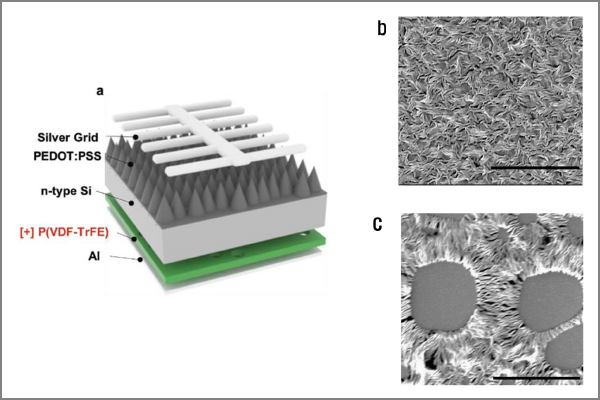
Comparison of internal structure before (b) and after (c) alignment [Figure = UNIST]
The separator is a material that determines the efficiency of a solar cell. The research team improved performance and simplified the manufacturing process by adding water to the organic separator.
Professor Kyung-Jin Choi said, “This film can be used for both n-type (nitrogen) and p-type (boron) silicon solar cells by controlling the electrical properties (direction of the electric field) of the organic thin film (ferroelectric),” and “This research also solved the chronic problem of temperature and humidity instability in organic thin films (1,000 hours of operation possible).”
The rear separator of a silicon solar cell serves to prevent photogenerated electrons from recombinating with the positive space. When exposed to sunlight, the photoactive layer (e.g., silicon, perovskite) releases electrons and holes. This prevents these electrons (negatively charged, -) and holes (positively charged, +) from recombining and disappearing. Since the amount of power a battery produces is determined by the quantity of electrons and holes, a separator that effectively prevents their recombination is essential for increasing battery efficiency.
Professor Choi's team improved the efficiency of the separator by adding a trace amount of water to the organic ferroelectric film. When water is added to the organic film, which, like oil, dislikes water, fiber-like organic particles, several microns (μm, 10-6), are aligned into a dense, regular structure. As the microstructure is aligned, the force that attracts electrons and repels holes increases, improving the performance of the separator.
Furthermore, the battery manufacturing process eliminates the need for the expensive process of drilling holes in the separator. Because separators are non-conductive materials, holes must be drilled to create passages for electrons and holes. In contrast, the newly developed separator can easily create holes by simply evaporating and removing the added water.
Professor Choi said, “This research has expanded the silicon solar cell rear separator technology, which was limited to inorganic materials, to organic materials,” and predicted, “Unlike inorganic thin-film solar cells that require expensive vacuum equipment, using organic thin films simplifies the process, allowing for the creation of cost-competitive solar cells.”
This study was published online on the 13th in the world-renowned academic journal in the field of materials, 'Advanced Functional Materials', under the title 'Ambipolar passivated back surface field layer for Silicon photovoltaics'.

Comments
Related news
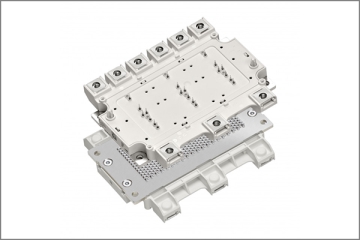
Infineon Announces Power Module for EV Traction Inverters
Infineon Technologies announced the launch of HybridPACK DC6i, an IGBT power module for electric vehicle traction inverters in the 80kW to 100kW power class. The new product is a 6-pack module optimized for hybrid and small battery electric vehicles.
2020.08.11by 명세환 기자
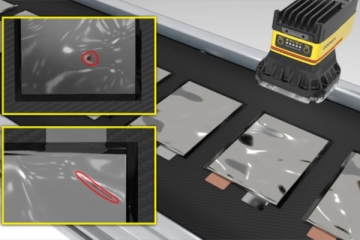
Quality control of electric vehicle battery production requires deep learning solutions
Electric vehicle batteries must be built with durability that can withstand harsh conditions. A single defectively manufactured battery cell can have a negative impact on the overall battery pack performance. Therefore, if quality control is not conducted in a timely manner, numerous defective products can be produced. In response, Cognex has proposed a deep learning-based machine vision solution that can be applied to manufacturing process automation for ensuring the quality and extending the lifespan of electric vehicle batteries.
2020.09.10by 명세환 기자
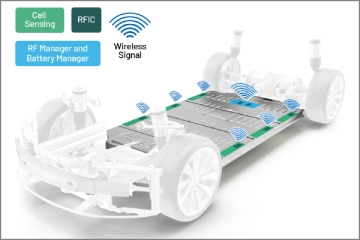
ADI's wireless battery management system will be used in GM electric vehicles.
ADI has launched the industry's first wireless battery management system (wBMS). The wBMS eliminates harnesses, reducing wiring by up to 90% and battery pack volume by up to 15%, while improving design flexibility and manufacturing ease without compromising range and accuracy throughout the battery lifecycle.
2020.09.14by 명세환 기자
Korea Instrument, KOLAS Accredited Calibration Agency First to Simultaneously Acquire ISO/IEC 27,001·27,701
Korea Instrument has become the first among KOLAS accredited calibration agencies to simultaneously acquire ISO/IEC 27,001 and ISO/IEC 27,701 certifications. Through its proprietary platforms CWIZ Enterprise and CWIZ Partners, the company has embedded information security and personal data protection requirements across all business processes including customer information, equipment data, and calibration reports, with plans to continuously advance its management system through regular audits and security inspections.
2026.10.12by 배종인 기자

TeamViewer One, IT Incident Automation Workflow and Resolution Center Enhanced
TeamViewer has added IT incident automation capabilities and an advanced Resolution Center to its integrated digital workplace management platform 'TeamViewer ONE'. Recurrent service disruptions, configuration errors, and capacity shortages are automatically handled according to preset policies, and device status verification through script deployment can be managed in a unified interface, significantly reducing repetitive tasks for IT teams.
2026.10.12by 배종인 기자











