


Huawei Given a Six-Month Lifeline, What Is the Impact on the Korean Economy?
 Published2020.09.22 16:24
If sanctions last longer than a year, related Korean companies will suffer 10 trillion won in losses
The urgent need to develop supply chains and markets to replace Huawei has arisen.
As the U.S. government increasingly escalates sanctions against Huawei, a crisis in the global semiconductor supply chain is becoming a reality.
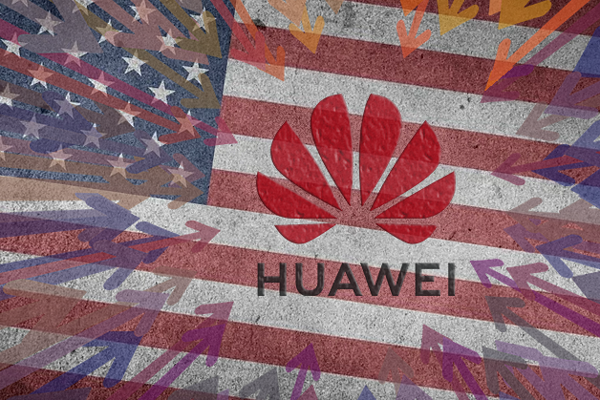
▲ The U.S. semiconductor encirclement against Huawei is tightening.
In May 2019, the United States announced its first round of sanctions requiring government approval for the export of semiconductors using U.S. technology to Huawei. However, these measures were not very effective as they only applied to semiconductors produced within the United States.
In May 2020, the United States announced a second round of sanctions targeting TSMC, the world's largest foundry company based in Taiwan. The sanctions stipulated that if semiconductors "designed by Huawei" produced in a third country utilized U.S. technology, they must be supplied to Huawei with approval from the U.S. government.
Following the second round of sanctions, TSMC announced plans to build a 5nm foundry in Arizona, USA, and in July, officially halted business with Huawei by stating it would not accept new orders. Subsequently, to block alternative supply routes, the U.S. announced a third round of sanctions starting September 15, which removed the phrase "designed by Huawei" from the second round.
Not stopping there, the U.S. government decided to stick to a high-intensity policy, considering adding SMIC, China's largest foundry company, to the sanctions list. One day after the third round of sanctions was imposed, SMIC issued a statement saying it would comply with U.S. sanctions.
Three measures have effectively blocked the supply of semiconductors to Huawei and 106 of its affiliates. There are no semiconductors in the world manufactured without utilizing technology from the United States, the birthplace of semiconductors. U.S. technology also holds an overwhelming share in semiconductor design tools and manufacturing equipment.
South Korea faces 10 trillion won loss if Huawei sanctions continue for more than a year
Huawei's influence in the global semiconductor market is significant. In 2019, Huawei's semiconductor purchases amounted to $20.8 billion, ranking third after Apple ($36.1 billion) and Samsung Electronics ($33.4 billion).
Global companies are seeking alternative clients such as Huawei's competitors in China—including Oppo, Vivo, and Xiaomi—or Apple, the global leader in the premium smartphone sector, but it is expected to take considerable time to secure new supply chains.
Furthermore, market turmoil is expected to intensify if the U.S. government extends sanctions on Huawei to other Chinese smartphone manufacturers such as Oppo or Vivo, or if the Chinese government retaliates against Apple with sanctions.
In particular, the impact is inevitable for domestic companies such as Samsung Electronics and SK Hynix, which sell smartphone DRAM and NAND flash memory semiconductors to Huawei. As of 2019, Huawei is a key customer, accounting for 3.2% and 11.4% of Samsung Electronics and SK Hynix's total revenue, respectively.
According to statistics from the Korea International Trade Association, the share of exports to China in Korea's total semiconductor exports reached 41.1% from January to July of this year. The domestic semiconductor industry estimates that if the export ban continues for one year, it will result in an annual revenue shortfall of 10 trillion won.
Japanese component manufacturers, including Sony (image sensors), Murata Manufacturing (multilayer ceramic capacitors), and Kioxia (memory), which have supplied 30% of the components installed in Huawei smartphones and base station equipment, are also expected to suffer significant losses as they lose their main sources of revenue.
The fallout has also hit the display industry. As display panel driver chips have been included in the sanctions, it has become impossible to supply entire panels.
Consequently, major semiconductor and display companies have requested approval from the U.S. Department of Commerce to conduct business with Huawei. However, given the U.S.'s firm stance, it is unlikely that they will receive a response. Even if approval is granted, it remains uncertain to what extent the license will be granted.
On September 14, British market research firm Omdia projected that the losses for South Korean, Japanese, and Taiwanese companies resulting from the suspension of transactions with Huawei would amount to $29.4 billion, or 34.95 trillion won.
Huawei, on a six-month death sentence, can it fight back?
Faced with a semiconductor supply crisis, Huawei exerted all efforts to secure semiconductor inventory by September 15. It is reported that Huawei has currently secured enough components to last for up to six months. Once the inventory is depleted, Huawei's smartphone and telecommunications equipment businesses are expected to be suspended.
In response to sanctions, Huawei launched the 'Nanniwan' project on August 5, which does not use components containing U.S. technology. In addition, starting in 2021, Huawei plans to develop and install its own OS, Harmony, on its smartphones.
Huawei, which participated in IFA 2020 held in Berlin, Germany for three days from September 3 to 5, announced a strategy to open 50 offline stores across Europe to secure a growth breakthrough. The EMEA (Europe, Middle East, and Africa) region is Huawei's major market following the domestic market in China.
There are also predictions that Huawei could use its 5G patents to attack U.S. companies. Huawei's strength lies in its telecommunications equipment technology. Last June, Bloomberg News reported that Huawei held the most patents, with 302 (19%) out of a total of 1,658 key 5G patents. Six companies hold more than 80% of the total patents, and among them, Qualcomm was the only U.S. company.
However, given the instability in the supply of semiconductors—the core of the electronics industry—Huawei's options are limited. It is difficult to find a breakthrough unless the U.S. takes easing measures or Huawei manufactures semiconductors directly using Chinese technology and equipment.
The technology gap in semiconductor production between China and the United States, South Korea, and Taiwan is three years. It is nearly impossible to reverse this gap in the short term. Given that there is no sector in the semiconductor industry that does not involve U.S. technology, the prevailing view is that Huawei's position will weaken.
You shouldn't get crushed in the fight between the whales.
The three rounds of sanctions are expected to have a direct and indirect impact on the supply chains of the domestic ICT market as well as the global market. As Huawei is a major client of domestic companies, there is an urgent need to discuss measures to offset the shock caused by the suspension of transactions.
The government and businesses need to identify new suppliers and markets to minimize damage, while continuously monitoring the ever-changing situation.
Comments
Related news
Samsung Electronics Ships First EUV Process-Applied DRAM at Pyeongtaek Line 2
Samsung Electronics announced the commencement of operations at Pyeongtaek Line 2, the world's largest semiconductor production line. The line will produce third-generation 10-nanometer-class LPDDR5 mobile DRAM with EUV process technology applied for the first time in the industry. Additionally, the company plans to manufacture next-generation V-NAND and ultra-fine-pitch foundry products starting from the second half of 2021.
2020.08.31by 이수민 기자
Launch of a Single Business Group Overseeing Next-Generation Intelligent Semiconductor Business
The Ministry of Science and ICT and the Ministry of Commerce, Industry and Energy held a launch ceremony for the Next-Generation Intelligent Semiconductor Business Division at the Semiconductor Industry Association located in Seongnam, Gyeonggi Province, and signed an MOU to develop next-generation intelligent semiconductors and build an ecosystem to support it. A total of 1.096 trillion won will be invested over 10 years in the next-generation intelligent semiconductor technology development project overseen by the business division.
2020.09.11by 이수민 기자
The Importance of Semiconductor 2.5D Packaging, Beyond Process Miniaturization
2.5D and 3D integration technologies were designed to address yield issues in advanced semiconductors. Their effectiveness was proven when TSMC mass-produced Xilinx's FPGA using CoWoS technology. Drawing from this, Intel developed Foveros technology to enhance its CPU performance. For Korea's system semiconductor industry to overcome TSMC and Intel, disruptive innovation that challenges the conventional perspective on packaging technology is required.
2020.09.15by 이수민 기자

Intel Unveils Next-Generation 'Core Ultra Series 3' and vPro Platform for Enterprise PCs
Intel has officially unveiled the "Intel Core Ultra Series 3" for next-generation enterprise PCs and the latest vPro platform, addressing a wide range of demands from enterprise notebooks to high-performance workstations.
2026.03.26by 배종인 기자

ROHM Launches ESD Protection Diode Compatible with High-Speed Interfaces of 10Gbps or Higher
Semiconductor specialist ROHM has developed the 'RESDxVx series' of ESD (electrostatic discharge) protection diodes capable of responding to next-generation high-speed data communication environments exceeding 10Gbps, simultaneously enhancing both signal quality maintenance required in high-speed interfaces and IC protection performance.
2026.03.26by 배종인 기자











