



Extending Electric Vehicle Range Requires Safe BMS ICs
 Published2020.10.12 17:28
ST L9963 BMS IC meets ISO 26262 ASIL-D
15 daisy-chain and dual-ring architecture communication possible
Greenhouse gases are a major cause of climate change. To reduce exhaust emissions from internal combustion engine vehicles, governments around the world are implementing policies to encourage the purchase of electric vehicles.
According to the International Energy Agency (IEA), there were only about 17,000 electric vehicles on the road worldwide in 2010. By 2019, that number had increased to 7.2 million. BloombergNEF forecasts that electric vehicle sales will reach 10 million by 2025, 28 million by 2030, and over 56 million by 2040.
Electric vehicles are divided into hybrid electric vehicles (HEV), plug-in hybrid electric vehicles (PHEV), pure electric vehicles (EV), and hydrogen electric vehicles (FCEV) based on their powertrain structure, with the proportion of electricity increasing as the number of PHEVs increases.
The battery is a core component of an electric vehicle, functioning as a power source, though its role may vary depending on the type of vehicle, whether it's auxiliary or central. Depending on how well an electric vehicle utilizes its battery, its driving range can be extended or shortened.
The driving range of electric vehicles, which is only one-third that of internal combustion engine vehicles, is cited as a factor that discourages consumers from readily purchasing them. To overcome this limitation, automotive organizations and companies are developing and adopting systems that utilize 800V batteries, surpassing the existing 400V.
Electric vehicle batteries are composed of cells, modules, and packs. The Battery Management System (BMS) monitors the condition of battery cells, modules, and packs to maintain and manage batteries in optimal condition. This helps predict battery replacement times and proactively detect problems.
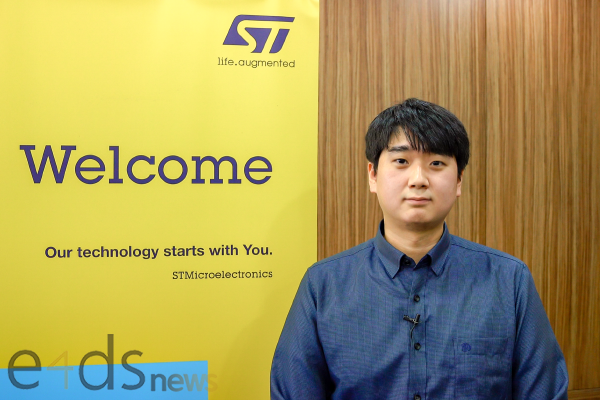
STMicroelectronics has been developing its BMS business with key partners in the electric vehicle battery management sector since 2008. We met with Jinwoo Kim, Assistant Manager for Automotive Powertrain and Safety Products FAE at ST Korea, to discuss the capabilities required to implement an efficient BMS for electric vehicles.
Q. What is the role and function of BMS in electric vehicles?
A. A vehicle BMS must be able to manage the battery's state of charge (SOC) and state of health (SOH) by monitoring voltage, temperature, and current, and implement key functions such as cell balancing. In electric vehicles, a BMS has three main functions.
△The first is a function to protect the battery when the EV goes out of the safe driving area, △The second is a battery monitoring function that estimates the battery pack charge status and lifespan, and △The third is a battery usage optimization function that maximizes the driving range by increasing the battery life and capacity through cell balancing technology.
The ST 'L9963' BMC IC is designed to implement the above functions.
Q. What are the advantages of the L9963 over competing BMS ICs?
A. The L9963 includes a dedicated 16-bit analog-to-digital converter (ADC) for each cell channel, and the 18-bit ADC can be used for a Coulomb counter function. Individual ADCs can simultaneously measure all cell voltages, enabling more accurate SOC and SOH estimation.
Additionally, as a product that satisfies the ISO 26262 ASIL-D level, it is possible to design with enhanced 'functional safety' aspects such as limp home mode and hot-plug protection.
Using the 'L9963T', a transceiver dedicated to the L9963, a dual-ring architecture can be configured, so that even if any L9963 in the daisy chain configuration does not respond, communication can be made through the other direction of the communication line.
Q. Electric vehicle batteries must be safe and robust. How does the L9963 enhance the stability of the BMS?
A. The L9963 supports limp-home mode to meet the aforementioned functional safety level requirements of ISO 26262 ASIL-D, and features two fully independent, identical cell measurement paths for enhanced safety. This means that if there's a voltage problem in one cell, it can be monitored using the ADC in the adjacent cell. It also includes comprehensive fault detection and notification capabilities that meet automotive safety requirements.
Additionally, all cell channels have built-in hotplug protection. Therefore, the built-in 64V/3A diode clamping function protects the IC from surges that occur momentarily when the battery is removed. This eliminates the need for separate Zener diodes for each channel, reducing system costs.
Q. There's a recent movement to replace 400V electric vehicle systems with 800V. Could you explain ST's response to this?
A. The currently released L9963 can connect 14 cells per device and 15 daisy chain connections, so it can be used in electric vehicle systems up to 777V based on 3.7V.
The 'L9963E' BMS IC, which recently completed qualification testing and is now ready for mass production, expands its daisy-chain capability to 31, making it suitable for use in 1,600V electric vehicle systems. Even considering busbar connections and unused cells, it is fully compatible with systems rated at 1,000V or higher.
The BMS must monitor individual battery cells, and based on the information obtained, it must control charging and discharging, diagnose and protect against hazardous situations such as over-discharging and over-charging. Therefore, it must meet ISO 26262 ASIL-D. To achieve this, ST supplies MCUs, control relays, and PMICs capable of functional safety at the same level as the L9963.
The SPC58NN MCU family supports lock step core, DMA, and interrupt controller functions to meet ASIL-D. And it has a built-in HSM that supports the security requirement of 'EVITA Medium'.
The control relay within the power relay assembly (PRA), which is connected to the electric vehicle battery pack and supplies or cuts off battery power, requires a high-side, low-side, or half-bridge driver with a higher functional safety rating that can support functional safety.
The L9301 is an 8-channel IC with high-side, low-side, and half-bridge configurations, enabling the design of control relays in various configurations to meet ASIL-D standards. ST also offers the L9369 and L9001 PMICs, which target braking and steering systems requiring ASIL-D compliance.
Q. What support does ST provide to designers of electric vehicle battery systems adopting the L9963?
A. ST provides an evaluation board that verifies the performance of the L9963 unit, as well as a system board with a GUI that implements the system specifications for practical system application. This system board is ST's integrated BMS solution, consisting of ST's MCU, PMIC, BMS IC, and transceiver, facilitating system verification.
Q. What is your outlook for the future BMS market, and what are ST's goals?
A. ST will continue to research the electrical and chemical characteristics of high-efficiency, low-cost batteries and hydrogen fuel cells that will be required in the future, and through this, we plan to develop next-generation monitoring ICs that satisfy the needs of customers and the market. Additionally, we are preparing a BMS IC with a further increase in daisy chain to make it suitable for energy storage systems (ESS) that use higher voltages.
Comments
Related news
Hyundai Motor Company to Develop Electric Vehicle with 450km Range on a 20-Minute Charge
With the global market share of electric vehicles in new passenger car sales projected to reach 58% by 2040, Hyundai Motor Company announced that it has named its dedicated electric vehicle lineup brand, which is scheduled to launch next year, "IONIQ." The IONIQ will be the first to apply Hyundai's electric vehicle-exclusive platform 'E-GMP,' and the company plans to enable charging within 20 minutes and a driving range of over 450 km on a single charge.
2020.08.11by 명세환 기자
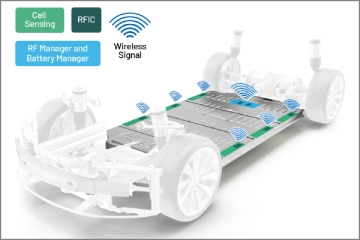
ADI's wireless battery management system will be used in GM electric vehicles.
ADI has launched the industry's first wireless battery management system (wBMS). The wBMS eliminates harnesses, reducing wiring by up to 90% and battery pack volume by up to 15%, while improving design flexibility and manufacturing ease without compromising range and accuracy throughout the battery lifecycle.
2020.09.14by 명세환 기자
ST Unveils Industrial IO-Link Transceiver with Dual Communication Channels
An industrial transceiver with dual communication channels that can enhance driving strength by configuring output at twice the capacity has been released. STMicroelectronics has launched the L6364 transceiver, which supports IO-Link in COM2 and COM3 modes and also supports standard SIO communication. The dual output, consisting of IO-Link CQ pins and standard DIO pins, provides surge pulse protection and reverse polarity protection, respectively.
2020.10.08by 이수민 기자
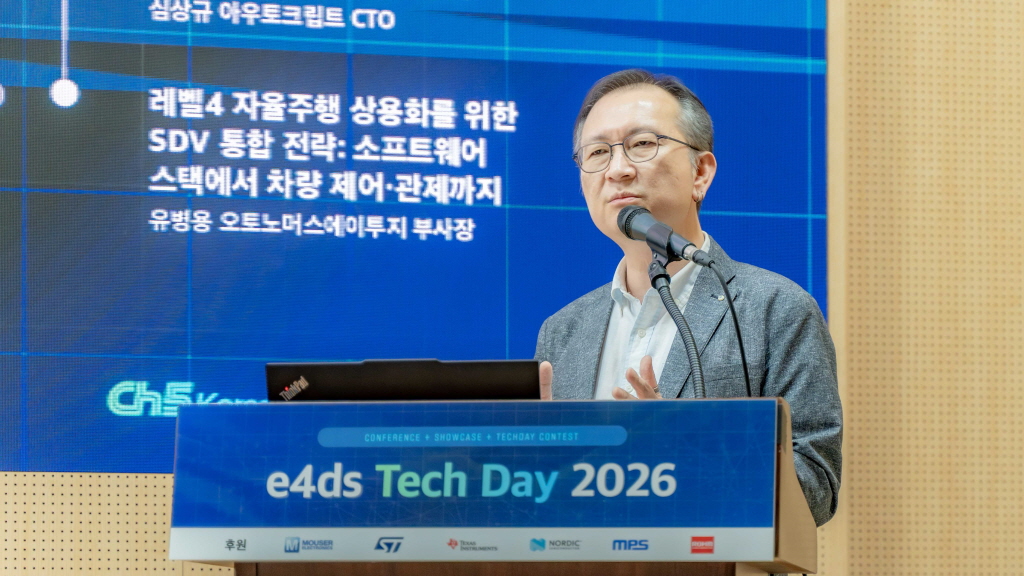
[e4ds Tech Day 2026 ⑨] Sim Sang-gyu, Autocrypt CTO: "In the Physical AI Era, Automotive Security Must Extend Beyond the Vehicle"
At e4ds Tech Day 2026, Sim Sang-gyu, CTO of Autocrypt, explained automotive cybersecurity strategies in the era of Physical AI and SDV (Software-Defined Vehicle). Automobiles are evolving as part of an ecosystem connected to AI, cloud, chargers, IoT, and robots, and he emphasized that the scope of security must expand beyond the vehicle interior to the entire connected environment. In particular, AI model tampering, adversarial attacks, OTA updates, and EV charger hacking were identified as major threats. He explained that response measures require zero trust, AI model integrity protection, intrusion detection, Security by Design and Default, and full lifecycle security management, and that proactive security system establishment beyond regulatory compliance is critical for securing future mobility competitiveness.
2026.10.12by 배종인 기자

Practical HIL Construction Strategy for Automotive and Off-Highway Controller Validation
As vehicle E/E architecture transitions to zonal structures and shifts to software-defined vehicles (SDV), the number of controllers (ECUs) requiring validation and software complexity are surging dramatically. Meanwhile, real vehicle testing cannot provide repeated verification under identical conditions and entails lead time and safety concerns. This white paper explains the principles of HIL (Hardware-in-the-Loop) validation and the structure of the NI platform composed of PXI, SLSC, and VeriStand, and through two actual implementation cases—Camera Record & Replay HIL for In-Cabin Monitoring Controller (ICMU) and Forklift Controller (VCU) HILS—describes how controller-level regression testing becomes possible. Additionally, it explicitly states application boundaries and limitations, such as lack of A2B support.
2026.10.12by 편집부











