


"The US and China are leading the way in AI development," Korea faces a difficult choice.
 Published2020.10.20 17:48
The US is in a favorable position for AI semiconductors, while China is in a favorable position for ML development.
Korea, a choice between two countries pursuing decoupling
The surge in computing power and data availability has led to remarkable advancements in AI technology. AI is now surpassing human capabilities in areas such as image recognition, interpretation, and genome analysis. In 2019, the number of global AI patent applications continued to grow, increasing by tenfold compared to 2013.
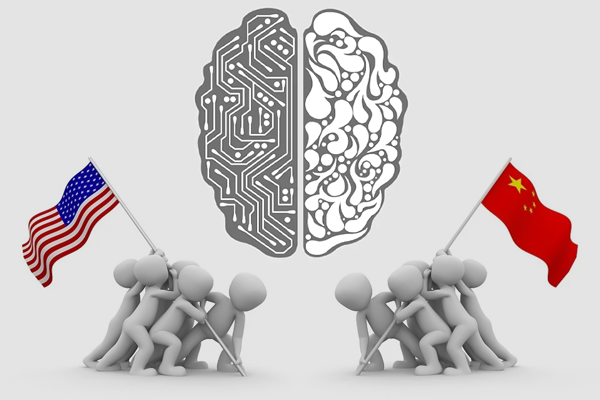
They are abandoning mutual development and pursuing decoupling.
The potential impact of AI on the global economy by 2030 is projected to reach $13-16 trillion, equivalent to the US GDP in 2019. Major countries around the world are competitively investing to secure a lead in the future AI market.
The current global AI competition is centered around the leading US and the latecomer China. The Trends Research Team at the Industrial Technology Policy Center of the Korea Institute for Advancement of Technology (KIAT) published a report titled "Recent US and Chinese AI Policy Trends and Implications," examining the policies and directions of both countries, as well as the domestic situations and challenges.
◇ AI superpowers: the US and China by far
In the US, AI-related companies account for a smaller proportion of cutting-edge technologies than security-related companies, but they account for the largest proportion of funding rounds. China holds the largest share of AI-related companies and the largest number of funding rounds.
The United States leads the world in both quantity and quality of private investment in AI.
According to the 2017 AI evaluation index by country by the Center for Data Innovation, the United States ranked first in four indicators: human resources, research performance, development level, and hardware, while China ranked first in two indicators: adoption status and data.
China is also rapidly narrowing the gap with the United States by rapidly expanding its investment.
By country, China holds the largest number of AI-related patents in the world, with three-quarters of patent applications filed since 2017. When broken down by nationality, China accounts for the overwhelming majority of companies and institutions that held and applied for AI-related patents between January 2000 and March 2020.
While the United States and China are fiercely competing in the AI field, they also share significant interdependence, as they do in other cutting-edge fields. Mutual investment in AI startups between the two countries continues to grow. In 2017, the United States invested in 20 Chinese startups, while China invested in 31 American startups.
However, the US-China trade dispute that began after President Trump's inauguration has led to a decoupling of the economies and technologies between the two countries, further deepening the confrontation surrounding AI. Venture capital (VC) investment between the two countries has plummeted in recent years, a trend that is expected to intensify further due to the COVID-19 pandemic.
As the gap between the United States and China in AI narrows, both governments are developing national strategies centered on AI. The United States is establishing and implementing ▲AI Initiative ▲National AI R&D Strategic Plan Update, while China is establishing and implementing ▲Next-Generation AI Development Plan ▲AI Industry 3-Year Development Action Plan ▲Next-Generation AI Special Zone Designation Plan ▲National Next-Generation AI Standard System Construction Guidelines, etc.
The United States has an advantage over China in the advanced semiconductor design and manufacturing necessary for the advancement of AI and machine learning technologies. China possesses a vast amount of big data, thanks to its large population and weak privacy protection system, giving it an advantage in the advancement of machine learning.
Unlike the United States, China maintains a high level of focus on AI development within its political leadership. The United States cannot afford to rest on its current technological gap. Ultimately, the competition between the two countries boils down to who will dominate global information technology infrastructure and standards.
◇ Similar AI development plans between the US and China
As their AI competition intensifies, the United States and China are pursuing similar policies with comprehensive visions covering R&D, industry, human resources, and regulation.
Expanding government spending on AI-related R&D across all ministries is a common goal for both countries. Notably, the US has established the Select Committee on Artificial Intelligence (SCAI), and China has established the Office for the Promotion of Next-Generation AI Development Planning (SNGIP), to coordinate government-wide opinions.
Both countries are working to cultivate, attract, and retain advanced AI talent both domestically and internationally, and are supporting private companies in eliminating obstacles to AI research and development and commercialization, as well as revitalizing the ecosystem.
The United States is focusing on eliminating obstacles to the testing and deployment of AI technology and establishing standards to foster AI adoption in new AI-related industries and sectors. China expects clustering effects by designating AI special zones tailored to regional characteristics.
Furthermore, both countries are working to establish standards to enhance the explainability and transparency of AI technology and ensure its ethical use. Furthermore, they are approaching issues in a common direction, including data access and sharing, the use of AI for social inclusion and sustainable development, the adoption of AI technology in government services, and strengthening the AI capabilities of the workforce.
◇ AI technology free from foreign interference is directly linked to national competitiveness.
Both governments recognize AI as a "general purpose technology" with significant political, economic, and social impact, along with steam engines, electricity, and information technology. Therefore, each country is struggling to avoid falling under each other's influence.
The US AI initiative emphasizes the need for industry protection rather than openness and cooperation, as is the case with traditional technology development policies.
The Foreign Investment Risk Review Modernization Act (FIRRMA) is a law that allows the U.S. government to halt foreign investment in U.S. companies or order restitution after the transaction is terminated, citing "national security threats."
As seen in the enactment of FIRRMA, the United States is pursuing decoupling with China in terms of research and development cooperation and mutual investment.
In 2018, the U.S. government also strengthened export regulations on foundational and emerging technologies, including dual-use military and civilian products, through the enactment of the Export Control Reform Act.
The Brookings Institution and others believe that this U.S. move is not unrelated to the intensifying competition between the two countries for global leadership.
China is also expected to emphasize domestic technological innovation in its 14th Five-Year Plan, which runs from 2021 to 2026, to shed its dependence on the United States.
Recently, the Chinese government is promoting the construction of seven new infrastructure industries. The seven major industries include 5G networks, ultra-high voltage equipment, intercity highways and subways, new energy vehicle charging stations, big data centers, industrial internet, and AI.
While official investment in new infrastructure remains at around 1 trillion yuan, representing 5% of total fixed asset investment, related investment is expected to expand significantly with the implementation of the 14th Five-Year Plan starting next year. In particular, AI is expected to accelerate technological advancements as it converges with big data, cloud computing, 5G, and the Internet of Things.
◇ What are the ways to secure domestic AI capabilities that lag behind those of the US and China?
Domestic AI capabilities lag far behind those of the United States and China.
Excluding some factors like patent share and number of startups, many sectors fall below 10% of the leading country. As of 2018, China's patent share was 47.3%, compared to Korea's 17.4%, or 36.8% of China's. Furthermore, the number of startups was 1,393 in the US and 465 in Korea, or 33.4% of the US's.
In terms of the number of universities and graduate schools, the UK had 55, while Korea had 0. Regulatory sandboxes were also analyzed to be 29 in the UK and 0 in Korea. In addition, the market size is $766.5 million in the US and $47.6 million in Korea, which is only 6.2% of the US market, and the number of AI companies is 2,028 in the US and 26 in Korea, which is only 1.3% of the US market.
In the 'Global AI Index' conducted by Tortoise Media, Korea ranked 8th out of 54 countries, following the US, China, the UK, Canada, Germany, France, and Singapore. However, it remained in the middle of the rankings, ranking 28th in talent, 30th in operating environment, 22nd in research, 31st in government strategy, and 25th in commercial ventures (startups, investments, and businesses).
Our government plans to ensure that the private sector—the people who will drive the transformation of the AI era, businesses that will secure AI competitiveness, and academia that will shape future directions—leads innovation, while the government supports this drive and consolidates national capabilities. The government is focusing on developing strategies that maximize domestic strengths, such as the public's high level of education, receptiveness to cutting-edge technologies, world-class ICT infrastructure, and semiconductor and manufacturing technologies.
However, the industry points out that the domestic AI industry is growing slowly despite its excellent ICT infrastructure, and argues that improvements are needed in areas such as government investment support, a limited talent pool, and regulatory constraints to secure competitiveness in the global AI market.
South Korea is forced to choose between the US and China. Both countries already possess capabilities in AI, allowing them to pursue decoupling policies. South Korea, on the other hand, cannot. AI is a foundational technology for the Fourth Industrial Revolution. To preserve and advance its future national competitiveness, South Korea must choose cooperation, not dependence.
Comments
Related news
.jpg)
Ministry of Science and ICT Promotes AI Data Quality Standard as International Standard
The Ministry of Science and ICT announced that it will pursue international standardization of AI data quality standards, a key resource of the Digital New Deal 'Data Dam'. In this regard, it will develop a standard that establishes the concept and scope of quality and detailed requirements, and on the 6th will officially propose it to the group standardization organization within the Korea Information and Communication Technology Association (TTA PG 1005, AI-based Technology), with plans to make it a TTA group standard.
2020.10.05by 김동우 기자
AI semiconductors are kick-starting our journey to becoming a comprehensive semiconductor powerhouse by 2030.
A foundation is being established for Korea to leap forward as an AI semiconductor powerhouse. The government held the 13th Ministerial Meeting on Science and Technology at the System Semiconductor Design Support Center and announced an AI semiconductor industry development strategy. The AI semiconductor market remains in an early stage with no dominant player, and the government has formulated this strategy to concentrate on fostering AI semiconductors based on Korea's unique strengths, including world-leading memory semiconductor manufacturing capabilities.
2020.10.13by 이수민 기자
Data and AI introduced to new materials R&D "Hub construction confirmed"
Data and AI are being applied to materials research to minimize trial and error through experimentation and theory, and to shorten new material development timelines. The Ministry of Science and ICT held a competitiveness enhancement committee meeting for small and medium-sized parts, materials, and equipment suppliers, and announced that it has confirmed and will formally pursue the establishment and utilization plan of a data-driven materials research innovation hub.
2020.10.15by 이수민 기자
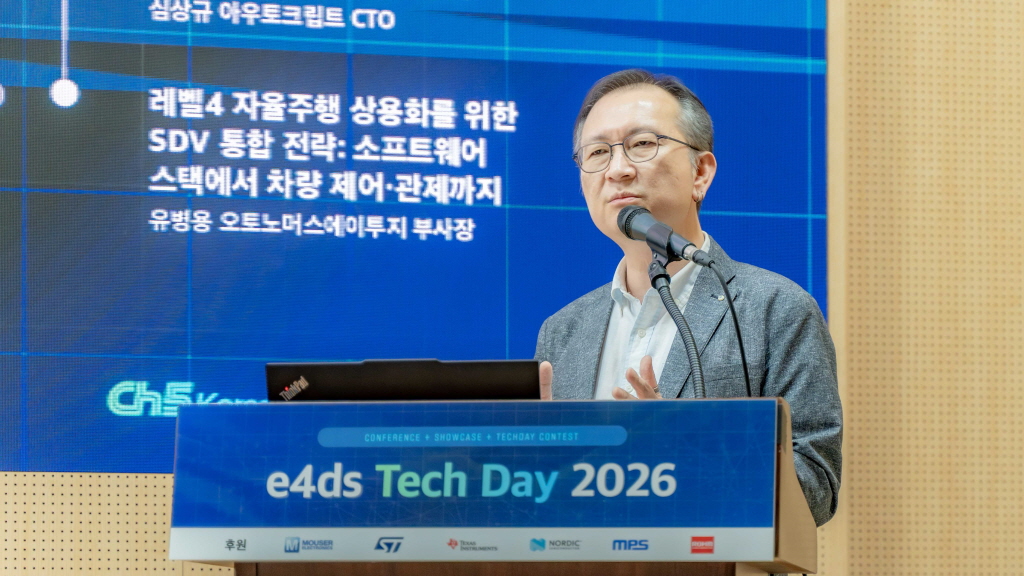
[e4ds Tech Day 2026 ⑨] Sim Sang-gyu, Autocrypt CTO: "In the Physical AI Era, Automotive Security Must Extend Beyond the Vehicle"
At e4ds Tech Day 2026, Sim Sang-gyu, CTO of Autocrypt, explained automotive cybersecurity strategies in the era of Physical AI and SDV (Software-Defined Vehicle). Automobiles are evolving as part of an ecosystem connected to AI, cloud, chargers, IoT, and robots, and he emphasized that the scope of security must expand beyond the vehicle interior to the entire connected environment. In particular, AI model tampering, adversarial attacks, OTA updates, and EV charger hacking were identified as major threats. He explained that response measures require zero trust, AI model integrity protection, intrusion detection, Security by Design and Default, and full lifecycle security management, and that proactive security system establishment beyond regulatory compliance is critical for securing future mobility competitiveness.
2026.10.12by 배종인 기자
NVIDIA to Invest $1 Billion in U.S. Science Over Next Five Years
NVIDIA has announced plans to invest $1 billion over the next five years to strengthen U.S. scientific and technological competitiveness. The company will enhance cutting-edge artificial intelligence research and development capabilities in key areas including quantum computing, healthcare, and energy security, while expanding support for higher education research institutions and cloud service providers. NVIDIA is participating as a major industry partner in the White House Office of Science and Technology Policy's Genesis Mission, and is promoting supercomputer construction in collaboration with national laboratories including Argonne and Los Alamos.
2026.10.12by 배종인 기자











