



Tektronix Launches Second-Generation IsoVu Probe with '1 GHz' Isolation
 Published2020.11.03 14:57
1 GHz isolated probe
Achieves industry-leading common mode rejection ratio
Tektronix announced on the 3rd the launch of the TIVP series, the second-generation IsoVu isolated probe.
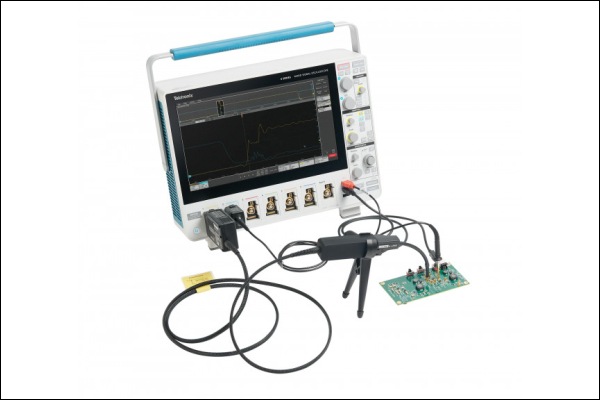
The CMRR rating of non-isolated probes degrades rapidly as frequency increases, making high-frequency measurements impossible. Additionally, by using optical cables, long cable runs are supported and the probe is largely unaffected by EMI.
The TIVP series probe is 80% smaller than the first-generation, and this compact size advantage allows easier access to measurement points that were previously unreachable. Additionally, the controller box that was previously required as a separate bundle has been eliminated and integrated into the probe itself.
The new probe delivers higher visibility and voltage sensitivity when measuring ±50V in wide bandgap designs thanks to increased sensitivity and reduced noise.
Accuracy has also been improved in various aspects including DC accuracy, gain accuracy across the entire input range, and temperature drift compensation. This enables more in-depth characterization of wide bandgap designs with greater energy efficiency.
In addition, the expanded dynamic range of the sensor head requires fewer tips to handle the same voltage range as the first-generation IsoVu. This reduces the time required to perform device testing, eliminating the possibility of errors during tip swapping, and eliminates the need to purchase multiple tips as with the first-generation IsoVu, thereby reducing costs.
Srinivasan Nuthikatla, Director of Mainstream Solutions Division, stated, "This second-generation IsoVu will enable a wider range of customers to leverage cutting-edge isolated measurement technology for R&D, verification, and EMI troubleshooting work."
Comments
Related news
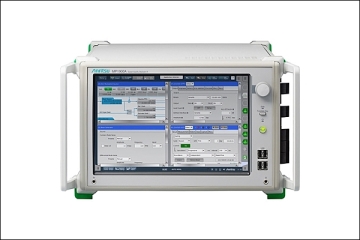
Anritsu Enhances Signal Quality Analyzer-R MP1900A PCIe RX
Anritsu Corporation announced on the 14th that it has released enhanced functionality for the Signal Quality Analyzer-R MP1900A PCI Express1 RX. The Signal Quality Analyzer-R MP1900A series is a multi-channel bit error rate (BER) measurement instrument required for designing and testing high-speed bus interfaces such as PCI Express 4.0/5.0, USB3.2/4, and Thunderbolt, as well as next-generation network interfaces such as 400 and 800GbE. The newly enhanced analyzer functionality upgrades the high-quality waveform performance of the PAM4 PPG MU196020A to the latest high-speed, high-capacity PCI Express standard for PCIe RX testing. As a result, customers planning and developing PCIe Gen 6 (PAM4 32 Gbaud) products for data centers and other applications now possess an all-in-one measurement instrument that covers not only current PCIe 3.0/4.0/5.0 receiver testing but also future PCIe Gen 6 upgrades.
2020.10.15by 강정규 기자

To improve the energy efficiency of industrial equipment, CbM technology must be introduced.
Seawater desalination technology requires substantial energy consumption. It also demands considerable time, money, and resources. ADI's Autosense platform provides an opportunity to achieve improved efficiency in this technology. Autosense is a CbM technology capable of continuously and accurately measuring and monitoring the integrity of equipment, and it can accumulate data regarding equipment condition faster and more accurately than other sensing platforms.
2020.10.26by 이수민 기자
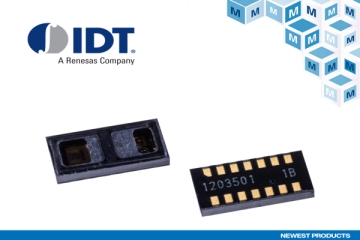
Mouser to Supply Integrated OB1203 Biosensor Module
The OB1203 sensor module combines biosensor, ambient light sensor, proximity sensor, and color sensor in an integrated solution, delivering a highly integrated solution for mobile and wearable devices. It is therefore suitable for applications including headphones, gesture sensing, occupancy sensors, fitness and wellness trackers. The Renesas OB1203 sensor module provided by Mouser offers non-invasive measurement capabilities such as blood oxygen concentration, heart rate, and pulse oximetry. The module is equipped with a hypoallergenic glass cover, making it usable in health applications requiring direct skin contact. Beyond wearable devices, the OB1203 sensor module integrates light source and driver in a single optically optimized package to determine the proximity of nearby objects. The device's biosensor provides oxygen saturation (SpO2) measurement capability, making it a useful solution in aesthetically pleasing industrial design. The OB1203 sensor module is offered in an optically enhanced 4.2mm x 2mm x 1.2mm package.
2020.10.30by 강정규 기자
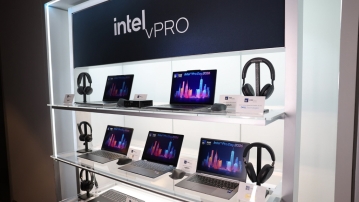
Intel Unveils Next-Generation 'Core Ultra Series 3' and vPro Platform for Enterprise PCs
Intel has officially unveiled the "Intel Core Ultra Series 3" for next-generation enterprise PCs and the latest vPro platform, addressing a wide range of demands from enterprise notebooks to high-performance workstations.
2026.03.26by 배종인 기자
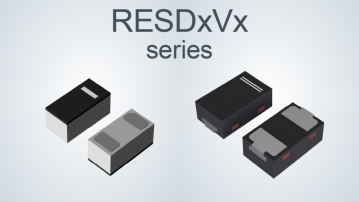
ROHM Launches ESD Protection Diode Compatible with High-Speed Interfaces of 10Gbps or Higher
Semiconductor specialist ROHM has developed the 'RESDxVx series' of ESD (electrostatic discharge) protection diodes capable of responding to next-generation high-speed data communication environments exceeding 10Gbps, simultaneously enhancing both signal quality maintenance required in high-speed interfaces and IC protection performance.
2026.03.26by 배종인 기자











