



How to implement intelligent motion sensing with autonomous radar sensors?
 Published2020.11.18 15:43
인피니언 60GHz 레이더 센서 BGT60LTR11AIP,
움직임 감지될 때만 시스템 가동하게 할 수 있어
자율형 레이더 센서를 활용하면 조명 제어, 자동 문 개폐, 보안 경보 같은 모션 센싱 애플리케이션의 지능화가 가능하다.

지능화할 수 있다 [사진=인피니언]
인피니언의 ‘센시브(XENSIV™)’ 60GHz 레이더 센서 ‘BGT60LTR11AIP’는 60GHz ISM(Industrial Scientic and Medical) 대역에서 동작하는 도플러 모션 센서로, 단일 패키지로 제공되는 레이더 솔루션이다. 자율 동작이 가능하고, 최대 5m 거리에서 사람을 감지할 수 있으며 5mW 미만의 전력을 소비한다.
고도의 통합으로 복잡한 안테나 설계, RF에 대한 전문 지식, 레이더 신호 프로세싱이 필요하지 않다. 또한, 비금속 물질을 통과하는 송수신이 가능하여 제품 안으로 숨길 수 있어 일상생활 공간에 레이더 기술을 도입할 수 있다.
랩탑, 스피커, 태블릿, TV 같은 시스템에 이 센서를 통합하면 움직임이 감지될 때만 시스템이 가동하게 할 수 있다. 지정된 시간 동안 움직임이 감지되지 않으면 시스템을 슬립 모드로 전환할 수 있어 전력을 절약할 수 있고, 키워드 없이 동작만으로 시스템을 활성화할 수 있다.
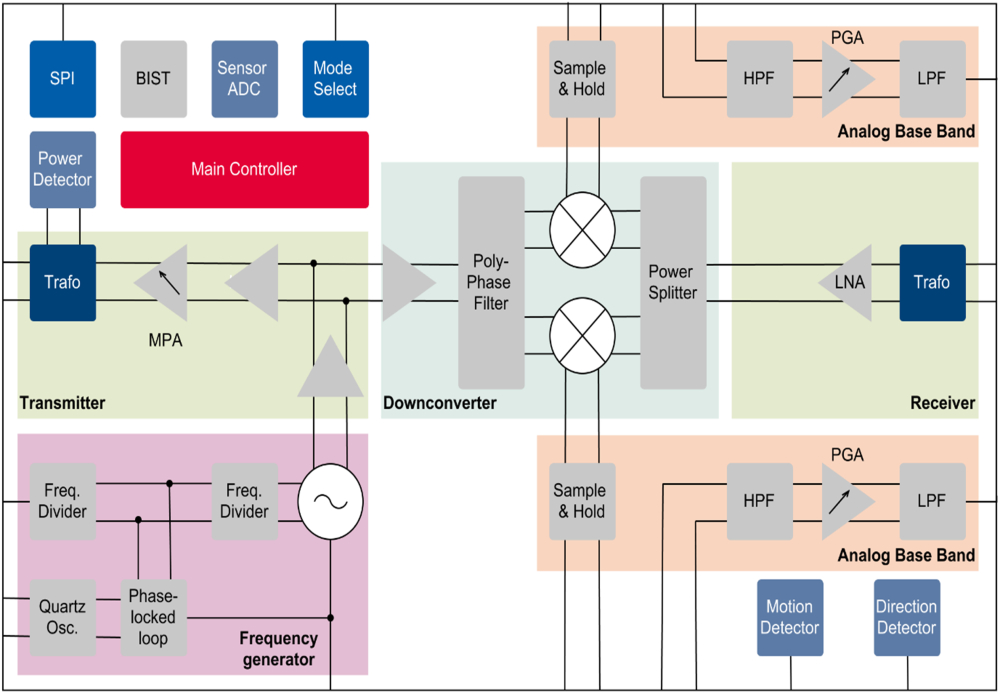

위의 그림은 BGT60LTR11AIP 단일칩 초고주파 집적회로(Monolithic Microwave Integrated Circuit; MMIC)의 기능 블록 다이어그램이다. 이 MMIC 패키지는 하나의 송신 및 하나의 수신 브로드빔 안테나를 포함한다. 2개의 안테나는 수평 및 수직 반전력 빔폭(Half-power Beamwidth)이 80°이므로 커버리지를 최대한 넓힌다.
블록 다이어그램을 보면, 전압 제어 오실레이터(VCO)가 60GHz 레이더 신호를 발생시키고, 이것을 위상 동기 루프(PLL)를 사용해서 안정화한다. 송신 신호 체인은 출력 전력을 설정 가능한 중간 전력 증폭기를 포함하며 SPI를 통해서 제어할 수 있다. 전력 검출기는 송신 전력을 모니터링한다.
BGT60LTR11AIP MMIC는 저잡음 쿼드러처(Quadrature) 리시버와 저잡음 증폭기를 포함하며, 이는 쿼드러처 호모다인(Homodyne) 하향 변환 믹서로 이어진다. 따라서 감도가 우수하다. 내부적 VCO 신호를 받는 RC 다위상 필터는 쿼드러처 믹서를 위해서 쿼드러처 로컬 오실레이터 신호를 생성한다.
아날로그 기저대는 저전력 듀티 사이클 동작을 위한 샘플-앤-홀드(Sample-and-Hold) 회로와 뒤이어서 외부적으로 구성 가능한 하이 패스 필터, 가변 이득 증폭기(VGA), 로우 패스 필터로 이루어진다.
표적 감지기들은 아날로그 비교기로서 레이더 앞에서 표적 움직임에 따라서 펄스를 발생시킨다. 이들 검출기는 2개 디지털 출력 신호를 제공한다. 하나는 표적의 움직임을 지시하는 것이고, 또 하나는 표적이 가까워지거나 멀어지는 것과 같은 움직임 방향을 지시하는 것이다.
검출기 회로는 홀드 시간, 히트 카운터, 검출 임곗값을 사용자가 구성할 수 있어 유연성이 높고 오탐지 가능성을 줄일 수 있다. 홀드 시간은 표적을 감지한 후에 검출기 출력이 유지되는 시간을 말하고, 히트 카운터는 유효한 표적 감지를 판단하는 데 필요한 비교기 출력 펄스 수를 말한다.
BGT60LTR11AIP MMIC는 자율 모드로 실행하면서도 성능 파라미터를 유연하게 설정할 수 있도록 QS1부터 QS4까지 4개의 4상태 입력 핀을 제공한다.
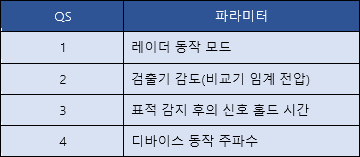
QS2를 사용해서 사용자는 4가지 임곗값 중에서 선택해서 검출기 감도를 높이거나 낮출 수 있다. 숙련된 레이더 사용자는 QS1 핀을 사용해서 반자율 및 SPI 동작 모드를 선택할 수도 있다. 이들 모드는 원시 레이더 데이터를 추출하고 SPI를 통해서 PC나 외부 마이크로컨트롤러로 커스텀 알고리즘을 사용해서 신호 프로세싱을 할 수 있다.
외부 프로세싱을 위해서는 이 평가 보드를 아두이노 MKR 보드나 인피니언 레이더 베이스보드(MCU7)로 연결할 수 있다.
인피니언은 BGT60LTR11AIP MMIC 플랫폼을 지원하기 위해서 데모 소프트웨어와 레이더 그래픽 사용자 인터페이스를 제공한다. 이 그래픽 사용자 인터페이스는 포착된 데이터를 시간 및 주파수 도메인으로 표시하고 분석할 수 있다. 이 센서는 ETSI 및 FCC 규정을 충족한다.
◇ 높은 사용 편의성
BGT60LTR11AIP MMIC는 모션과 모션 방향 정보를 제공하며 상태 머신이 디바이스를 제어한다. 완전 자율 모드로 쉽게 레이더를 활용할 수 있게 되는 것이다.
작은 크기의 3.3mm x 6.7mm x 0.56mm MMIC인 BGT60LTR11AIP는 2층 라미네이트 패키지로 2개의 안테나를 포함한다. 그러므로 사용자가 복잡한 안테나 설계를 할 필요가 없다. 이 MMIC는 PCB 디자인에 표준적인 FR4 소재를 사용할 수 있다.
또한, BGT60LTR11AIP MMIC는 지원 회로로서 저잡음 전압 레귤레이터, 38.4MHz 크리스털 오실레이터, 외부적 커패시터만 있으면 된다. 2개 LED는 레이더 센서의 동작을 지시한다. 녹색은 표적을 감지했다는 것이고, 빨간색은 모션 방향을 감지했다는 것이다.
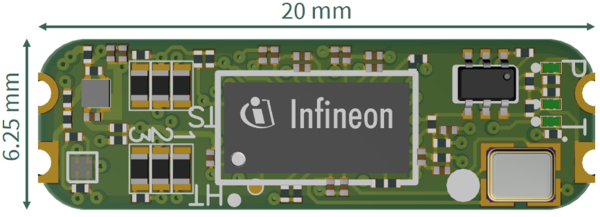
이 올인원 솔루션은 시스템 통합이 쉽고, 빠르게 프로토타입을 개발해 제품 기능을 평가할 수 있다. 위의 데모 보드는 턴키 솔루션으로, 이 레이더 센서 MMIC의 기능들을 평가할 수 있으며, VCC와 접지 배선 사이에 전원장치를 연결하고 시스템에 그대로 사용할 수도 있다.
BGT60LTR11AIP MMIC는 저전력 또는 배터리 구동 애플리케이션으로 기존 패시브 적외선 센서를 대체할 수 있도록 크기가 작고, 다수의 기능을 통합하고, 경제성 뛰어난 솔루션을 제공한다.
이 기사는 인피니언 테크놀로지스 코리아가 기고한 ‘자율형 레이더 센서를 활용한 스마트 모션 센싱(Autonomous Radar Sensor Enables Smart Motion Sensing)’이란 글을 정리한 것입니다.
Comments
Related news
Infineon Radar-based People Count Solution "Anonymity Guaranteed"
With the spread of COVID-19, there became a need for solutions to help people maintain social distance within buildings. Infineon's smart people counting solution for entrances integrates a 60GHz radar sensor and software on a compact discrete radar board to accurately and anonymously count the number of people.
2020.08.04by 강정규 기자
.png)
Mouser to Supply Millimeter-Wave Sensors for TI Industrial Radars
Mouser supplies TI's IWR6x millimeter-wave sensor product line. The IWR6x sensor products are integrated millimeter-wave sensors based on FMCW radar technology capable of operating in the 60GHz to 64GHz band, manufactured using low-power 45nm RFCMOS process.
2020.09.14by 강정규 기자
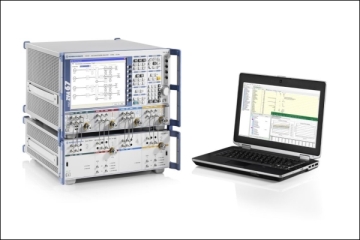
Rohde & Schwarz Unveils AESA Radar TRM Verification Solution
AESA radar is a technology utilized across the global aerospace and defense industries. The performance of AESA radar systems is determined by the performance of TRMs assembled in the antenna array. Accordingly, Rohde & Schwarz has unveiled a TRM performance validation solution that maximizes the performance of AESA radar.
2020.10.27by 이수민 기자
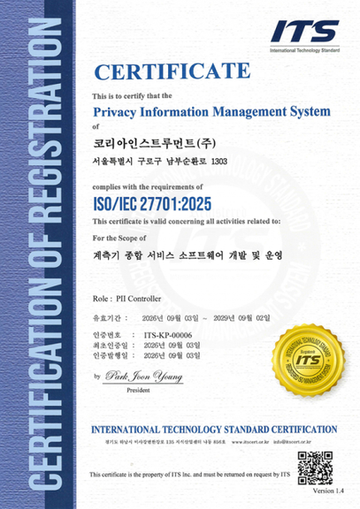
Korea Instrument, KOLAS Accredited Calibration Agency First to Simultaneously Acquire ISO/IEC 27,001·27,701
Korea Instrument has become the first among KOLAS accredited calibration agencies to simultaneously acquire ISO/IEC 27,001 and ISO/IEC 27,701 certifications. Through its proprietary platforms CWIZ Enterprise and CWIZ Partners, the company has embedded information security and personal data protection requirements across all business processes including customer information, equipment data, and calibration reports, with plans to continuously advance its management system through regular audits and security inspections.
2026.10.12by 배종인 기자

TeamViewer One, IT Incident Automation Workflow and Resolution Center Enhanced
TeamViewer has added IT incident automation capabilities and an advanced Resolution Center to its integrated digital workplace management platform 'TeamViewer ONE'. Recurrent service disruptions, configuration errors, and capacity shortages are automatically handled according to preset policies, and device status verification through script deployment can be managed in a unified interface, significantly reducing repetitive tasks for IT teams.
2026.10.12by 배종인 기자











