



EV Quality Depends on Efficiency of “Battery Activation and Testing Process”
 Published2020.11.26 15:45
Batteries, a key component accounting for 40% of electric vehicle prices
Activation/Test Process Efficiency Improvement, Electric Vehicle/Battery Quality↑
A look at the roads of any major city center shows how the automotive industry is changing. These days, it’s not uncommon to spot electric vehicles (EVs) with blue license plates.
The spread of EVs is gaining momentum. It is predicted that battery-powered cars will account for 10% of all car sales by 2025, up from less than 2% today.

Battery demand is also rapidly increasing amid the outlook [Photo = ADI]
As the EV market grows rapidly, the demand for high-performance batteries is also rapidly increasing. Over time, the demand for replacement of aging batteries is also expected to increase. Pressure to quickly launch battery manufacturing equipment is also increasing. In order to meet stringent battery requirements, manufacturing equipment performance must also be excellent.
Batteries that shape EV reputation
Rising battery prices will lead to higher EV prices. On average, batteries account for about 40% of the EV price. The activation and testing processes, which are the final steps in battery manufacturing, are particularly demanding and account for up to 20% of the battery cost.
As proven in other markets such as mobile phones, power tools and gaming, battery performance plays a critical role in brand success.
Battery manufacturers and battery manufacturing equipment manufacturers need to scale up production and improve efficiency to capture opportunities in the growing EV market. But the key is not early launch to gain market share. It’s battery performance and quality.
The activation and testing process is a time-consuming process that requires repeated charging and discharging to activate the chemical materials of the battery. It can take two days to complete the process.

“Improving the battery activation process can increase battery yields and reduce scrap rates,” said Vikas Choudhary, strategic marketing manager for battery activation and test products at Analog Devices (ADI).
To produce safe, high-performance batteries, the precision and reliability of these processes must be improved. ADI currently offers a range of products, reference designs and integrated solutions to help improve the process and test higher volumes with limited factory facilities.
Streamlining activation and testing processes, reducing battery costs
To reduce battery costs, manufacturers must take a holistic approach across the ecosystem, with system-level understanding to increase channel count while reducing the overall battery test circuit footprint.
However, it must meet stability and reliability requirements without compromising the speed of battery activation and test measurements.
It’s not an easy task, as the front end must tightly control the power supply to drive the battery charging circuit, and also monitor the current and voltage profiles used during power cycling to prevent overcharging or undercharging of the cells.
This will ensure safety during testing, increase battery life and reduce maintenance costs for end users.
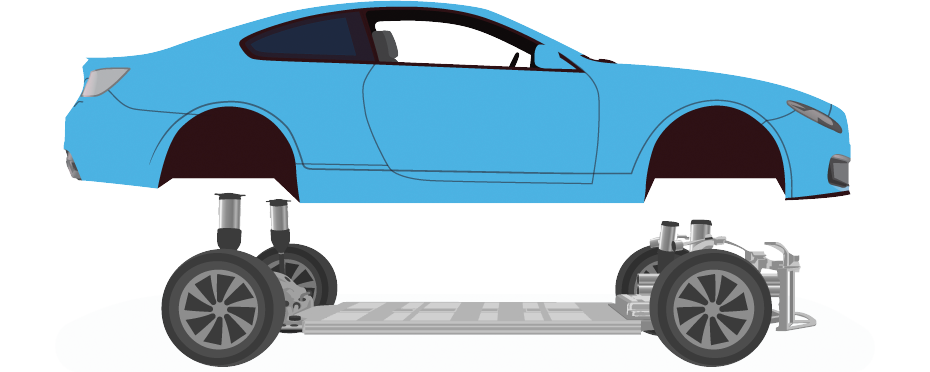
Contributes to lowering battery and EV prices [Image = ADI]
ADI goes beyond providing sophisticated components and building blocks to provide integrated solutions based on system-level expertise. We also provide a variety of reference designs to help battery manufacturers easily adopt the system architecture.
Battery manufacturers can develop systems three to four times faster than if they had to develop activation and test systems from scratch.
Not only that, it provides higher precision at the system level during battery activation and cell charge/discharge testing, enabling the implementation of power architectures that reuse energy across multiple cells.
This enables manufacturers to achieve previously impossible production efficiencies, increasing production rates and reducing waste, resulting in cost-effective battery production.
This article is a summary of a contribution by Analog Devices Korea titled ‘Precision battery formation and testing: Game-changer for EVs.’
Comments
Related news
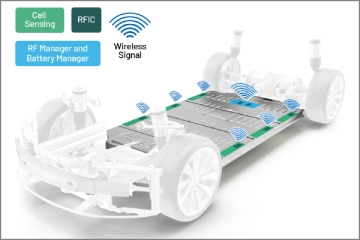
ADI's wireless battery management system will be used in GM electric vehicles.
ADI has launched the industry's first wireless battery management system (wBMS). The wBMS eliminates harnesses, reducing wiring by up to 90% and battery pack volume by up to 15%, while improving design flexibility and manufacturing ease without compromising range and accuracy throughout the battery lifecycle.
2020.09.14by 명세환 기자

Extending Electric Vehicle Range Requires Safe BMS ICs
The battery is a core component of electric vehicles, functioning as a power source with varying roles—either auxiliary or central—depending on the type of electric vehicle. The driving range of an electric vehicle can be extended or shortened depending on how efficiently the battery is utilized. We met with Kim Jin-woo, Assistant Manager at ST Korea, to discuss the competencies required to implement an efficient battery management system for electric vehicles.
2020.10.12by 이수민 기자
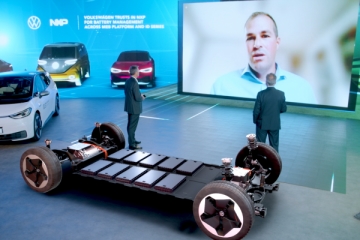
NXP to Supply BMS Solutions for Volkswagen's MEB EV Platform
Kurt Sievers, NXP CEO, announced during the keynote address at NXP Connect, the annual developer conference, that the company is collaborating with Volkswagen in the EV electrical systems field. Volkswagen has currently adopted NXP's BMS in its MEB platform, extending driving range, prolonging battery life, and enhancing safety.
2020.10.21by 명세환 기자

[e4ds Tech Day 2026 ⑨] Sim Sang-gyu, Autocrypt CTO: "In the Physical AI Era, Automotive Security Must Extend Beyond the Vehicle"
At e4ds Tech Day 2026, Sim Sang-gyu, CTO of Autocrypt, explained automotive cybersecurity strategies in the era of Physical AI and SDV (Software-Defined Vehicle). Automobiles are evolving as part of an ecosystem connected to AI, cloud, chargers, IoT, and robots, and he emphasized that the scope of security must expand beyond the vehicle interior to the entire connected environment. In particular, AI model tampering, adversarial attacks, OTA updates, and EV charger hacking were identified as major threats. He explained that response measures require zero trust, AI model integrity protection, intrusion detection, Security by Design and Default, and full lifecycle security management, and that proactive security system establishment beyond regulatory compliance is critical for securing future mobility competitiveness.
2026.10.12by 배종인 기자

Practical HIL Construction Strategy for Automotive and Off-Highway Controller Validation
As vehicle E/E architecture transitions to zonal structures and shifts to software-defined vehicles (SDV), the number of controllers (ECUs) requiring validation and software complexity are surging dramatically. Meanwhile, real vehicle testing cannot provide repeated verification under identical conditions and entails lead time and safety concerns. This white paper explains the principles of HIL (Hardware-in-the-Loop) validation and the structure of the NI platform composed of PXI, SLSC, and VeriStand, and through two actual implementation cases—Camera Record & Replay HIL for In-Cabin Monitoring Controller (ICMU) and Forklift Controller (VCU) HILS—describes how controller-level regression testing becomes possible. Additionally, it explicitly states application boundaries and limitations, such as lack of A2B support.
2026.10.12by 편집부











