



Saenggiwon Develops High-Power All-Solid-State Battery Material with Reduced Fire Risk
 Published2020.11.27 14:52
Saenggiwon succeeds in developing an integrated composite anode material.
Minimizes interparticle interfacial resistance, making it advantageous for high output.
Safety is a paramount issue for lithium-ion batteries, which are used as power sources for electric vehicles and renewable energy energy storage systems (ESS). Commercial lithium-ion batteries use highly flammable liquid electrolytes, posing a risk of explosion if overheated or damaged.
On the other hand, all-solid-state batteries based on solid electrolytes are attracting attention as next-generation batteries due to their excellent heat resistance and durability and no risk of fire or explosion.
On the 26th, the Korea Institute of Industrial Technology (KITECH) succeeded in developing an 'integrated composite cathode material' that can maximize the energy density of oxide-based all-solid-state batteries, while also increasing safety and output performance.
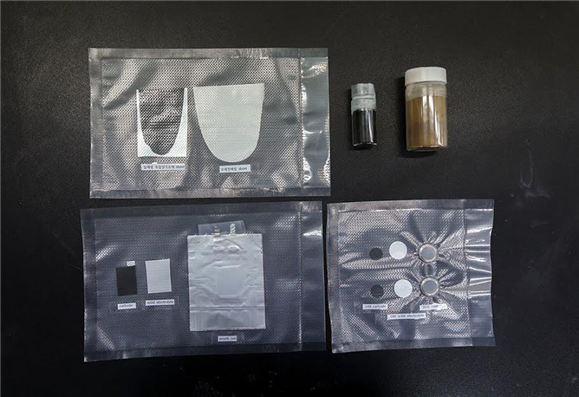
A prototype of an all-solid-state battery using this [Photo = Saenggiwon]
The developed material can significantly reduce the interfacial resistance between particles within the electrode, which has been pointed out as the biggest drawback of existing solid-state batteries, making it advantageous for high output. In addition, since it is a composite material in which the positive electrode active material and solid electrolyte are integrated, high-density electrode manufacturing is also possible.
The cathode structure of an oxide-based solid-state battery is largely composed of △ a solid electrolyte and a 'conductive material' responsible for electronic conduction, △ an 'active material' that determines the battery capacity, and △ a 'binder' that binds these together to physically stabilize the electrode.
Dr. Jinseop Lim's research team at the Smart Energy Nano-Fusion Research Group of the Korea Advanced Institute of Science and Technology (KAIST) has developed a process for coating lithium-lanthanum-zirconium-oxygen (LLZO), one of the oxide-based solid electrolytes, around high-nickel (NCM80) cathode active material particles using a Couette-Taylor reactor.
This process eliminates the need to separately place a solid electrolyte within the electrodes of an all-solid-state battery, thereby reducing the volume of the battery and allowing that volume to be used to place active materials, maximizing energy density.
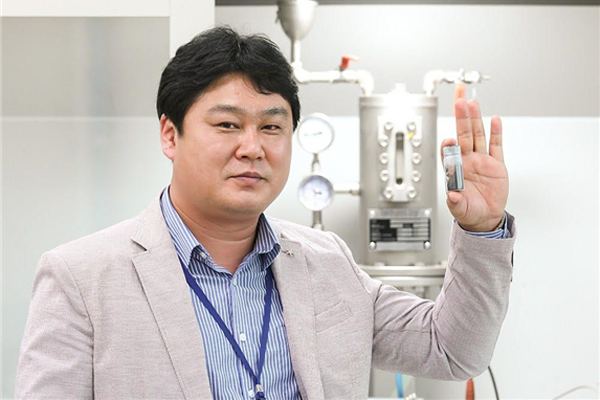
Dr. Jinseop Lim of Saenggiwon [Photo = Saenggiwon]
Dr. Lim Jin-seop said, “Recently, the research and development focus on all-solid-state batteries is shifting to simultaneously achieving safety and energy density,” and explained, “We have developed a cathode material that has improved both output performance and safety, bringing us closer to commercializing oxide-based all-solid-state batteries.”
/> Meanwhile, the results of this study were published in October in the Journal of Material Chemistry A under the topic of the effect of cathode surface modification on oxide-based all-solid-state batteries.
Comments
Related news
ETRI-DGIST Develop New All-Solid State Battery Electrode Structure
A joint research team from the Electronics and Telecommunications Research Institute (ETRI) and Daegu Gyeongbuk Institute of Science and Technology (DGIST) has announced the design of a new electrode structure for all-solid-state secondary batteries by clarifying the smooth lithium-ion diffusion characteristics between active materials. All-solid-state secondary batteries are next-generation batteries that utilize solid materials as the electrolyte for ion transfer in battery electrodes. Unlike primary batteries, which cannot be reused after a single use, secondary batteries can be repeatedly recharged and used like smartphone batteries even after discharge. Additionally, solid electrolytes offer the advantage of being safer than liquid electrolytes, which can potentially cause fires, and can improve energy density by enabling the implementation of bipolar secondary batteries.
2020.10.15by 김동우 기자
Next-Generation Electric Vehicle Battery Seminar Held Both Online and Offline
As electric vehicle adoption expands, the global electric vehicle fleet is expected to reach 22 million units in 2025. Accordingly, demand for solid-state batteries and secondary batteries is growing. Engineers now need to develop their capabilities to address the numerous challenges surrounding electric vehicle batteries. Myceforum will hold the 2020 Next-Generation Battery Latest Technology Seminar in both online and offline formats on Thursday, December 17, at the aT Center in Yangjae, Seoul.
2020.11.26by 명세환 기자
EV Quality Depends on Efficiency of “Battery Activation and Testing Process”
EV adoption is on track. Battery-powered vehicles are projected to account for 10% of total automotive sales in 2025. Demand for high-performance batteries is also surging rapidly. Batteries represent approximately 40% of EV prices. The activation and testing processes, which are the finishing steps in battery manufacturing, account for up to 20% of battery production costs. By achieving efficiency improvements in both processes, EV price competitiveness and quality can be secured.
2020.11.26by 이수민 기자
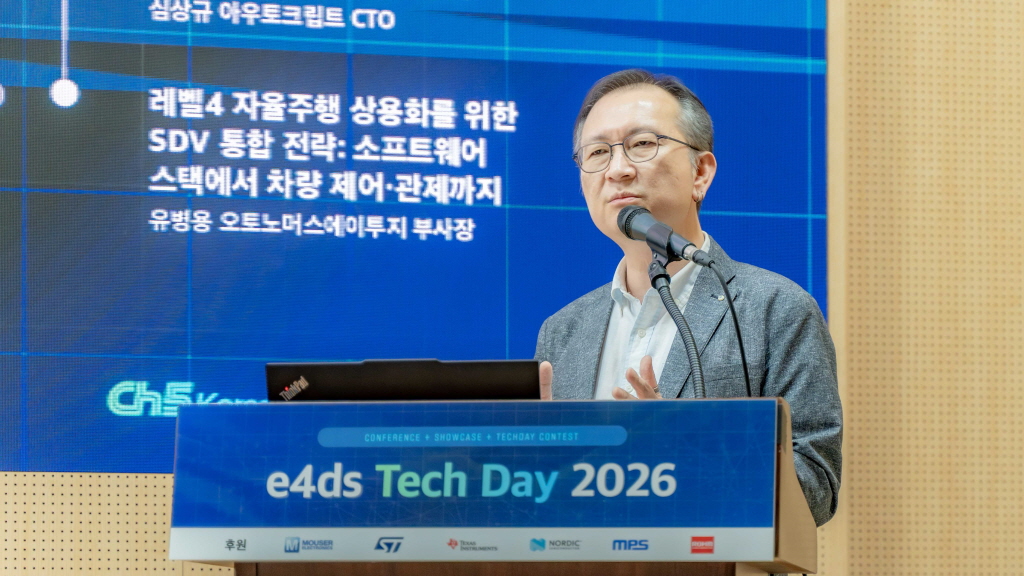
[e4ds Tech Day 2026 ⑨] Sim Sang-gyu, Autocrypt CTO: "In the Physical AI Era, Automotive Security Must Extend Beyond the Vehicle"
At e4ds Tech Day 2026, Sim Sang-gyu, CTO of Autocrypt, explained automotive cybersecurity strategies in the era of Physical AI and SDV (Software-Defined Vehicle). Automobiles are evolving as part of an ecosystem connected to AI, cloud, chargers, IoT, and robots, and he emphasized that the scope of security must expand beyond the vehicle interior to the entire connected environment. In particular, AI model tampering, adversarial attacks, OTA updates, and EV charger hacking were identified as major threats. He explained that response measures require zero trust, AI model integrity protection, intrusion detection, Security by Design and Default, and full lifecycle security management, and that proactive security system establishment beyond regulatory compliance is critical for securing future mobility competitiveness.
2026.10.12by 배종인 기자

Practical HIL Construction Strategy for Automotive and Off-Highway Controller Validation
As vehicle E/E architecture transitions to zonal structures and shifts to software-defined vehicles (SDV), the number of controllers (ECUs) requiring validation and software complexity are surging dramatically. Meanwhile, real vehicle testing cannot provide repeated verification under identical conditions and entails lead time and safety concerns. This white paper explains the principles of HIL (Hardware-in-the-Loop) validation and the structure of the NI platform composed of PXI, SLSC, and VeriStand, and through two actual implementation cases—Camera Record & Replay HIL for In-Cabin Monitoring Controller (ICMU) and Forklift Controller (VCU) HILS—describes how controller-level regression testing becomes possible. Additionally, it explicitly states application boundaries and limitations, such as lack of A2B support.
2026.10.12by 편집부











