


Semiconductor companies' transactions reached a record high last year. "In the next-generation semiconductor competition, only mergers can win."
 Published2021.01.25 17:00
Qualcomm is pursuing an M&A with Applied Materials.
Hynix grows through funds, LGE through joint ventures
In 2020, corporate transactions in the semiconductor sector reached an all-time high.
IC Insights announced on January 12 that the total mergers and acquisitions (M&A) in the global semiconductor market in 2020 reached a record $118 billion (approximately 130 trillion won).
This figure surpasses the $107.7 billion recorded in 2015.
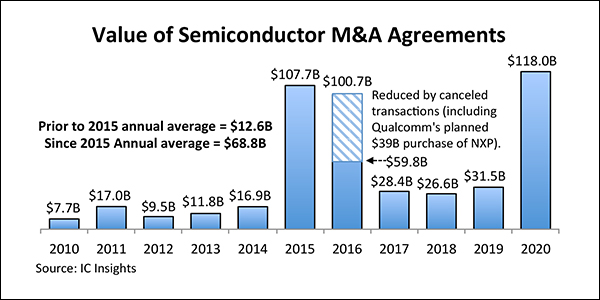
In the first half of 2020, it was only $2.1 billion due to economic uncertainty and weakened consumer sentiment caused by the COVID-19 pandemic, and in the second quarter, when the global lockdown was at its most severe, it exceeded $300 million.
However, since July, large-scale M&As have continued, with the total transaction volume reaching over $100 billion, approaching 90% of the annual semiconductor market M&A volume.
△Nvidia's acquisition of Arm ($40 billion), △AMD's acquisition of Xilinx ($35 billion), △Analog Devices (ADI)'s acquisition of Maxim Integrated ($21 billion), △Marvel's acquisition of Inphi ($10 billion), and △SK Hynix's acquisition of Intel's NAND flash division ($9 billion) were among the big deals that drew attention.
The semiconductor industry's investment in preparation for the future is interpreted as gradually expanding, driven by the emergence of low-priced companies for sale in the wake of COVID-19 and the rapid transition to non-face-to-face and digital solutions.
IC Insights analyzed that in recent years, semiconductor market M&A has been driven by large companies seeking to strengthen their positions in the AI, electric vehicle, and autonomous driving markets. It also analyzed that the increase in data centers for cloud computing services and the proliferation of IoT sensors and systems were also key drivers.
Qualcomm targets the data center market with Nubia, solidifying its 5G presence.
Qualcomm opened the door to M&A in the semiconductor industry this year. On January 17th, Qualcomm acquired Nubia, founded by three key engineers who had previously designed Apple's "A Series" chips, for approximately $1.4 billion.
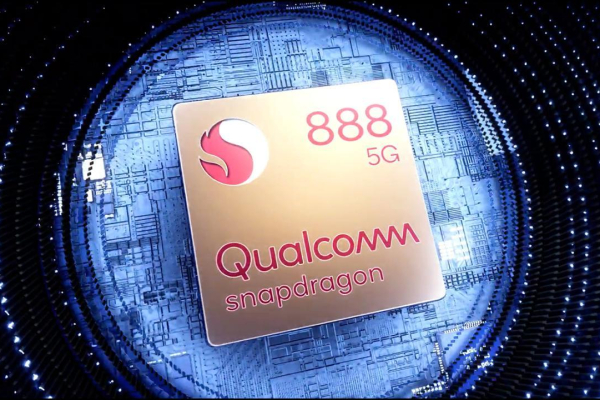
We plan to expand. The picture shows Qualcomm's latest AP.
Snapdragon 888 [Image = Qualcomm]
Nubia is a startup founded in 2019, and its strength lies in CPU design technology used in data centers. Qualcomm plans to leverage Nubia's technology across a wide range of applications, including flagship smartphones, laptops, in-vehicle infotainment (IVI) systems, and advanced driver assistance systems (ADAS).
Additionally, Nubia's CPU design capabilities are expected to contribute to improving the performance and power efficiency of application processors (APs), which are key chips in the 5G networking market.
Some interpret this as a strategy to reduce reliance on Arm to counter rival Nvidia. Currently, most of Qualcomm's chips use cores licensed from Arm.
◇ Acquisitions to secure market dominance and contain China
Applied Materials, the world's leading semiconductor equipment company, is in the process of acquiring Kokusai Electric, a Japanese company in the same field. Kokusai Electric possesses advanced film deposition equipment technology, which creates the fundamental film of electrical circuits on wafers, the primary material for semiconductors.
Applied Materials, which currently supplies equipment to most major semiconductor companies, including Intel, TSMC, and Samsung Electronics, is expected to further strengthen its market dominance if this acquisition goes through. According to Gartner, Applied Materials ranked first in the global semiconductor equipment market in 2019 with an 18.5% share.
The acquisition is also being driven by the desire to secure competitiveness in autonomous driving and AI fields in the 5G era, while also preventing semiconductor technology from leaking to China.
In fact, the acquisition price was initially $2.2 billion when the deal between the two companies was first signed in July 2019, but Applied Materials raised the acquisition price by about 59% to $3.5 billion in December 2020 when an unknown Chinese company entered the bidding battle.
◇ Domestic industry seeks growth engines through funds and joint ventures instead of M&A.
Excluding SK Hynix's acquisition of Intel's NAND memory business in the second half of 2020, there have been no M&As in the domestic semiconductor industry that would have impacted the global market.

LG Electronics, meanwhile, will invest $1 billion in a joint venture (JV) with Canada's Magna International in December 2020 to produce electric vehicle parts, entering the automotive semiconductor market in July.
LG Electronics has been steadily investing in automotive electronics technology, including the acquisition of automotive parts design company V-ENS in 2013 and automotive headlamp manufacturer ZKW in 2018.
Automotive semiconductors are installed in both the drivetrain and electrical systems of automobiles.
Current cityThe vehicles on sale contain 200 to 300 semiconductors, and it is expected that more than 2,000 will be needed for Level 3 autonomous vehicles that will be commercialized in the future.
Going forward, the domestic industry is expected to expand its dominance in the memory semiconductor market to the entire semiconductor market by seeking to expand investment in automotive semiconductors and establish funds.
Samsung Electronics, which has been aggressively investing in system semiconductors, is expected to have a high possibility of acquiring a competitive startup as it aims to become the number one global semiconductor company in the future.
SK Hynix signed a $3 billion funding agreement with the Industrial Bank of Korea, the Export-Import Bank of Korea, and Nonghyup Bank on January 19th for semiconductor industry investment over the next five years, which is expected to bolster its M&A efforts.
◇ The next-generation semiconductor market is one that even large companies cannot address on their own.
With the Fourth Industrial Revolution and digital transformation occurring faster than expected, demand for next-generation semiconductors, such as APs, GPUs, and sensors, which play key roles in 5G, AI, and autonomous driving, is also increasing.
The COVID-19 pandemic has restricted movement, driving explosive demand for gaming devices, and the expansion of data centers to support companies' digital transformation are also driving semiconductor demand.
As securing a lead in the next-generation semiconductor market becomes directly linked to a company's future competitiveness, the industry is actively investing. M&A investments, in particular, are an effective means of quickly responding to market changes and securing talent.
Even global companies can no longer keep up with the pace of technological innovation through their own efforts.
It's time to diversify and explore effective investment strategies that can create synergy effects by focusing on promising startups and small and medium-sized enterprises (SMEs) with diverse technologies and unique ideas.
Comments
Related news
RISC-V, could it be a replacement for the 'Arm architecture' that has come under NVIDIA?
Nvidia's acquisition of Arm was the semiconductor industry M&A transaction that garnered the most attention in 2020. Arm is a company that has established itself as an implicit industry standard by providing licenses for the 'Arm architecture,' a RISC-based ISA, to vendors without discrimination since 1990. The 'RISC-V architecture,' an open-source, RISC-based ISA that began at UC Berkeley in 2010, is now receiving attention as an alternative in light of this M&A news.
2021.01.04by 이수민 기자
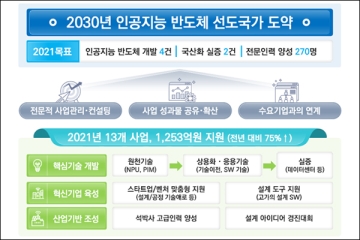
Four AI semiconductors will be developed this year and two will be commercialized
AI semiconductors are high-performance, low-power system semiconductors specialized for AI implementation such as learning and inference. The Ministry of Science and ICT will launch full-scale support projects for AI semiconductors as a follow-up measure to the 'AI Semiconductor Development Strategy' announced in October 2020 in conjunction with related government departments. The scale of this year's support projects, into which a total of 125.3 billion won will be invested across 13 projects, has increased by approximately 75% compared to last year (9 projects, 71.8 billion won).
2021.01.13by 이수민 기자
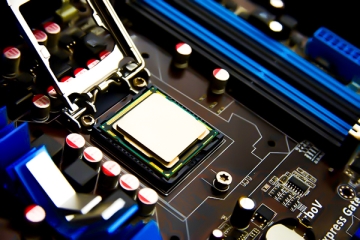
Fostering the System Semiconductor Industry, Demand-Linked Fabless is the Key
System semiconductors are specialized in computation and control, unlike memory semiconductors which are specialized in storage. Additionally, while the memory semiconductor ecosystem is centered on IDMs that handle both design and production simultaneously, the system semiconductor ecosystem has well-established division of labor between fabless companies that handle design and foundries that handle production. To grow the system semiconductor industry further than it currently is, it is necessary to foster and support fabless companies that are capable of customer-centric semiconductor design specialized in specific tasks, rather than foundries which have high barriers to entry.
2021.01.19by 이수민 기자
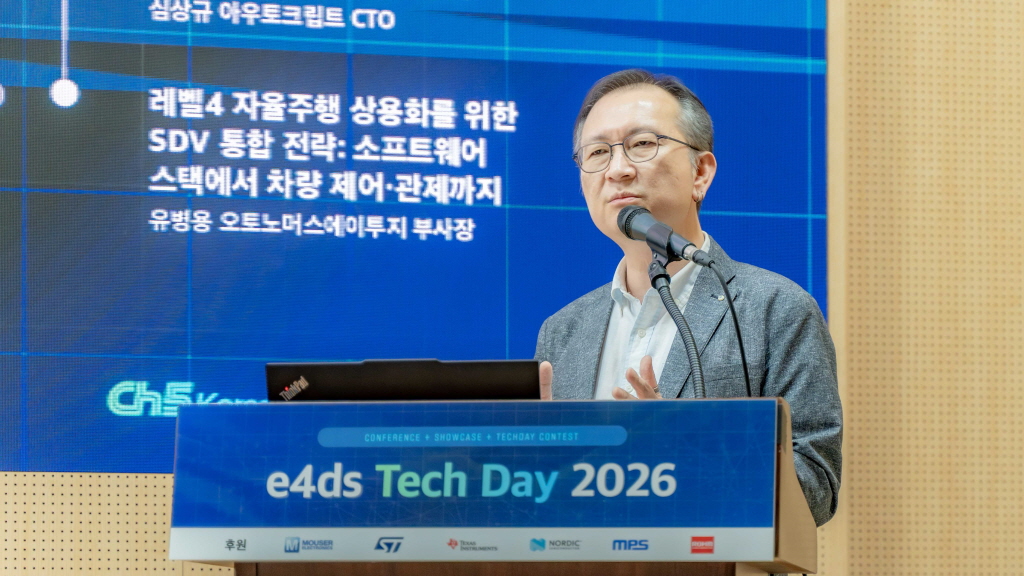
[e4ds Tech Day 2026 ⑨] Sim Sang-gyu, Autocrypt CTO: "In the Physical AI Era, Automotive Security Must Extend Beyond the Vehicle"
At e4ds Tech Day 2026, Sim Sang-gyu, CTO of Autocrypt, explained automotive cybersecurity strategies in the era of Physical AI and SDV (Software-Defined Vehicle). Automobiles are evolving as part of an ecosystem connected to AI, cloud, chargers, IoT, and robots, and he emphasized that the scope of security must expand beyond the vehicle interior to the entire connected environment. In particular, AI model tampering, adversarial attacks, OTA updates, and EV charger hacking were identified as major threats. He explained that response measures require zero trust, AI model integrity protection, intrusion detection, Security by Design and Default, and full lifecycle security management, and that proactive security system establishment beyond regulatory compliance is critical for securing future mobility competitiveness.
2026.10.12by 배종인 기자

Practical HIL Construction Strategy for Automotive and Off-Highway Controller Validation
As vehicle E/E architecture transitions to zonal structures and shifts to software-defined vehicles (SDV), the number of controllers (ECUs) requiring validation and software complexity are surging dramatically. Meanwhile, real vehicle testing cannot provide repeated verification under identical conditions and entails lead time and safety concerns. This white paper explains the principles of HIL (Hardware-in-the-Loop) validation and the structure of the NI platform composed of PXI, SLSC, and VeriStand, and through two actual implementation cases—Camera Record & Replay HIL for In-Cabin Monitoring Controller (ICMU) and Forklift Controller (VCU) HILS—describes how controller-level regression testing becomes possible. Additionally, it explicitly states application boundaries and limitations, such as lack of A2B support.
2026.10.12by 편집부











