



Samsung Electronics announces Q4 2020 earnings, earning more than in 2019
 Published2021.01.28 09:45
Profits increased compared to the fourth quarter of 2019 due to improved business conditions.
Uncertain economic recovery and a weak dollar are variables this year.
Samsung Electronics announced on the 28th that it achieved consolidated sales of 61.55 trillion won and operating profit of 9.05 trillion won in the fourth quarter of 2020. This represents a decrease compared to the previous quarter, but an increase compared to the same period last year.
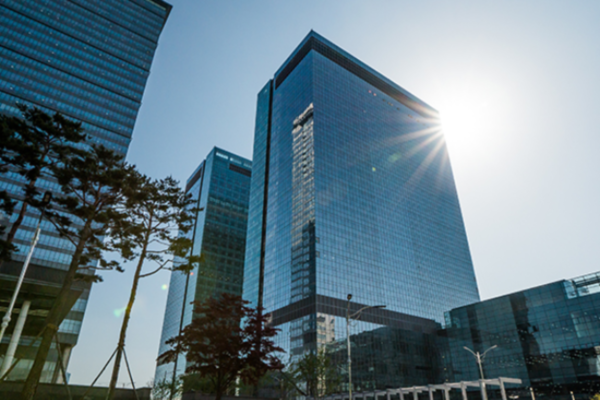
Last year's fourth quarter sales decreased by 5.41 trillion won compared to the previous quarter due to intensifying competition in set products and falling memory prices, but increased by 1.67 trillion won compared to the same period last year due to improved demand for components.
Operating profit decreased by KRW 3.3 trillion compared to the previous quarter due to a decrease in set business sales, decline in memory prices, increase in marketing expenses, and negative exchange rate impacts. However, compared to the same period last year, operating profit increased by KRW 1.89 trillion due to improvement in the display and memory industries.
Samsung Electronics predicted that it would gradually overcome the impact of COVID-19 this year and find new growth engines. However, it added that various uncertainties remain, including the uncertain pace of economic recovery, the weak dollar, and the initial costs associated with establishing new production lines.
◇ Semiconductor demand is expected to increase, but the weak dollar is a variable.
In the semiconductor business, Samsung Electronics recorded sales of KRW 18.18 trillion and operating profit of KRW 3.85 trillion in the fourth quarter of 2020, representing decreases of KRW 0.7 trillion and KRW 1.69 trillion, respectively, compared to the previous quarter. Compared to the same period last year, they increased by 1.39 trillion won and 0.4 trillion won, respectively.
In the fourth quarter, the memory sector posted strong sales thanks to strong mobile demand and healthy PC and server demand, but profits weakened due to continued price declines, a weak dollar, and the cost of new equipment.
The memory sector is expected to see overall improvement in the first quarter of this year, driven by the full-blown expansion of the mobile market, increased demand for data center purchases, and increased demand for laptops for remote work. However, performance is expected to weaken compared to the previous quarter due to the weak dollar and the initial costs of new facilities.
Samsung Electronics plans to strengthen its cost competitiveness and market dominance by expanding the proportion of 1z nanometers in the DRAM sector and promoting timely sales, and accelerating the transition to 6th-generation V-NAND in the NAND sector.
In the non-memory sector, demand for mobile DDIs and image sensors increased in the fourth quarter, driven by major customer smartphone launches. However, earnings declined due to the impact of unfavorable exchange rates. However, the launch of the Exynos 1080, the company's first 5nm SoC, is believed to have laid the foundation for customer expansion.
This year, the market is expected to recover due to the launch of new 5G products by major smartphone manufacturers and increased demand. The company plans to expand supply, focusing on 5G SoCs and sensors, to achieve double-digit sales growth in its business unit.
The foundry business achieved record quarterly revenue, driven by growing demand for 5G mobile chips, sensors, and HPC chips. However, earnings declined due to the weak dollar. Samsung Electronics has now completed the designs for its second-generation 5nm and first-generation 4nm mobile products, strengthening its process competitiveness.
Demand across all processes is expected to remain strong in the first quarter of this year, with supply shortages expected to persist for the time being. Accordingly, Samsung Electronics plans to operate its lines flexibly while also focusing on the development of the first and second generations of 3nm.
◇ Displays, mobile devices, wireless devices, TVs, and home appliances are also showing positive trends.
The display business recorded sales of KRW 9.96 trillion and operating profit of KRW 1.75 trillion in the fourth quarter, achieving its highest quarterly performance ever thanks to recovering demand for key products such as smartphones and TVs.
Small and medium-sized displays saw a significant improvement in performance compared to the previous quarter due to strong demand from major customers, while large displays saw a narrowing of the deficit compared to the previous quarter due to continued demand for TV and monitor panels stemming from the expansion of non-face-to-face services and a rise in average panel selling prices.
The small and medium-sized display business is expected to see a decline in performance compared to the previous quarter in the first quarter of this year due to a decrease in demand from major customers. However, the operating rate is expected to improve compared to the same period last year as major customers increase their adoption of OLED models.
The IM business recorded sales of KRW 22.34 trillion and operating profit of KRW 2.42 trillion in the fourth quarter. The mobile market saw increased demand compared to the previous quarter, driven by the year-end peak season and a gradual market recovery.
The wireless division saw sales and profits decline compared to the previous quarter due to intensifying year-end competition and increased marketing expenses. However, efforts to improve its cost structure maintained a double-digit operating profit margin. This year, based on the Galaxy S21, the company plans to popularize foldable devices like the Galaxy Z Fold and Flip, strengthen its mid- to low-priced 5G lineup, and continue to strengthen its tablet and wearable businesses.
The network division improved performance compared to the previous quarter by responding to domestic 5G expansion and expanding LTE and 5G businesses in overseas markets such as North America. We plan to actively pursue new business expansion in response to the commercialization of 5G both domestically and internationally in the future.
The CE division recorded sales of KRW 13.61 trillion and operating profit of KRW 0.82 trillion in the fourth quarter. The TV market expanded quarter-on-quarter, driven by strong pent-up demand in advanced markets during the year-end peak season. The home appliance market also saw a slight increase in demand as economic activity resumed in emerging markets.
◇ Last year, we invested 40 trillion won in facilities and launched a sustainability council.
Facility investment in 2020 was approximately KRW 38.5 trillion, with KRW 32.9 trillion for semiconductors and KRW 3.9 trillion for displays.
Memory investments increased due to advanced process migration and capacity expansion to meet future demand growth. Foundry investments also increased significantly year-on-year, driven by expansions such as the EUV 5nm process. Display investments also increased year-on-year, driven by the expansion of QD display production capacity and new small and medium-sized technology processes.
Additionally, Samsung Electronics elevated the Sustainability Management Council, a company-wide consultative body that discusses the company's sustainable management strategy, to the position of CFO, enabling it to reflect sustainable management at a higher level of priority in the overall management decision-making process.
Meanwhile, Choi Yoon-ho, President and Chief Financial Officer of Samsung Electronics, explained the company's shareholder return policy for the three-year period (2021-2023) during a corporate briefing following the company's Q4 2020 earnings announcement, stating, "There is a possibility that we will achieve meaningful M&A within that period." As of Q3 2020, Samsung Electronics held a total of 116.2 trillion won in cash.
Comments
Related news
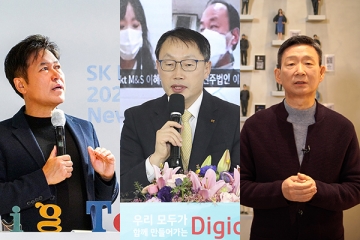
The three major mobile carriers' 2021 blueprints prioritize AI and platforms over 5G and infrastructure.
Last year, the three telecom companies secured a significant number of high-priced 5G subscribers and recorded modest revenue growth in the telecommunications sector, while in the B2B segment, they achieved notable results in AI solutions and IDC business driven by accelerated digitalization. However, the core business of the three companies is not delivering returns commensurate with their investments. In response, the heads of the three telecom companies emphasized moving beyond telecommunications in their New Year's addresses and expressed their aspirations for transformation into comprehensive ICT companies.
2021.01.05by 이수민 기자

Samsung Electronics Receives CC International Security Certification for 5G Mobile Communications Equipment
Samsung Electronics has obtained Common Criteria (CC) certification for 5G mobile communication equipment. CC certification is based on the ISO 15408 international standard that evaluates the security of IT products. It can be obtained by verifying compliance with common evaluation items among security assessment standards managed by various countries worldwide.
2021.01.22by 이수민 기자
Foundry Process Competition, Following 'EUV', 3D "GAA" Ignites
Foundry competition is currently centered on EUV technology. Since only TSMC, which holds the top foundry market share, and Samsung Electronics, in second place, have adopted EUV processes, demand is concentrated with these two companies. Samsung Electronics plans to introduce MBCFET based on GAA technology, a three-dimensional structure, at the 3nm node. TSMC also intends to adopt the GAA approach, similar to Samsung Electronics, starting from the 2nm process and below.
2021.01.23by 이수민 기자

Intel Unveils Next-Generation 'Core Ultra Series 3' and vPro Platform for Enterprise PCs
Intel has officially unveiled the "Intel Core Ultra Series 3" for next-generation enterprise PCs and the latest vPro platform, addressing a wide range of demands from enterprise notebooks to high-performance workstations.
2026.03.26by 배종인 기자

ROHM Launches ESD Protection Diode Compatible with High-Speed Interfaces of 10Gbps or Higher
Semiconductor specialist ROHM has developed the 'RESDxVx series' of ESD (electrostatic discharge) protection diodes capable of responding to next-generation high-speed data communication environments exceeding 10Gbps, simultaneously enhancing both signal quality maintenance required in high-speed interfaces and IC protection performance.
2026.03.26by 배종인 기자











