



Power measurement systems require self-calibrating ICs.
 Published2021.02.17 16:45
Measurement system calibration is required for accurate power measurements.
ADI mSure Calibration Without Expensive Calibration Equipment
As electricity consumption continues to rise, power metering solutions are gaining traction to reduce electricity bills and carbon emissions. As various devices and facilities become increasingly connected via the Internet, the adoption of smart cities and smart factories is accelerating, and the power metering market is also experiencing steady growth.
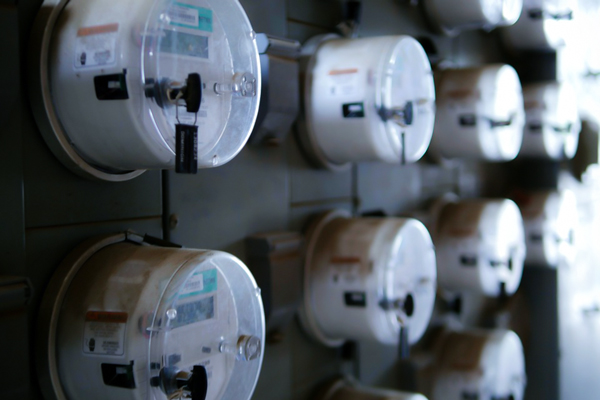
It is the foundation for improving product operation efficiency. [Photo = Pixabay]
According to Mordor Intelligence's report, "Power Metering Market - Growth, Trends, COVID-19 Impact, and Forecasts 2021-2026," the market is expected to grow by 4.5% annually from 2020 to 2025. The widespread adoption of contactless solutions due to COVID-19 is further accelerating this trend.
Knowing exactly how much power your devices and equipment are consuming helps individuals and organizations manage their finances. In addition, it is possible to monitor various power-related figures beyond just calculating power consumption and to detect product failures in advance.
“There has been a growing interest in power consumption recently, and there is a growing number of applications that accurately measure usage and charge for it,” said Seungkyu Lee, manager of Analog World’s technical support team. He cited streetlight controllers, electric vehicle chargers, and data center power supplies as examples.
Power measurement systems are widely adopted in homes and businesses, leading to mass production of various systems. Manager Lee stated, "Power measurement systems vary in accuracy even among mass-produced products." He added, "Clock and sensor deviations, as well as differences between components, collectively reduce accuracy, so calibration is essential to improve accuracy."
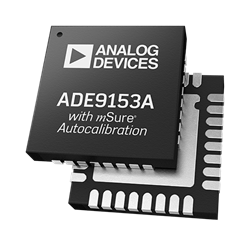
Calibrating accuracy individually for each product is challenging. Some chipset manufacturers are incorporating automatic calibration features into their power measurement system ICs. Analog Devices (ADI)'s ADE9153A power measurement IC includes a hardware block called "mSure." mSure generates its own signals and analyzes the signals received back through the sensor.
The power measurement system measures power through the signal flow path, such as 'sensor → filter → amplifier → ADC → DSP'. mSure performs calibration accurately by utilizing the same power measurement signal path used by the system.
“The ADE9153A power measurement IC calibrates itself on the chip, so there is no need to have expensive calibration equipment separately, and there is no additional labor required for calibration,” said Vice President Seung-gyu Lee. “Therefore, there is no need to maintain the calibration equipment, and even engineers unfamiliar with the concept of calibration can easily perform the calibration work.”
The ADE9153A power measurement IC, which includes self-calibration capabilities, can measure voltage, current, real/reactive/apparent power, power factor, line frequency, phase angle, and more.
Vice President Seung-gyu Lee advised, “For single-phase systems, it would be easy to produce and manage a highly accurate power measurement system by utilizing the previously explained ADE9153A power measurement IC and the ADE7953 single-phase multi-function measurement IC with neutral current measurement function, and for three-phase systems, the ADE9000 high-performance multi-phase power quality measurement IC.”
Comments
Related news

TI Announces Highly Accurate Voltage Monitoring/Balancing IC for EVs
For automobile manufacturers, filtering system-level noise to accurately measure battery cell voltage and temperature and reliably transmit this information to the MCU is a very important design challenge. Texas Instruments has released the BQ79616-Q1, an automotive battery monitoring and balancing IC that enables accurate voltage measurement even in high-voltage systems of up to 800V.
2021.01.07by 명세환 기자
Maxim Launches ASIL-D Compliant 14-Channel Battery Monitoring IC
Maxim Integrated has released the MAX17852, an ASIL-D rated 14-channel high-voltage battery data acquisition system. It enables typical cell voltage measurement of ±0.45mV at room temperature, with a maximum error range of ±2mV in the 5~40℃ temperature range. Designed for integration into various vehicle applications, it is suitable for smart junction boxes, 48V electrical systems, and 400V charging systems.
2021.02.04by 강정규 기자
Mouser to Offer Microcurrent Measurement 'ADI Photodetector Receiver'
Mouser Electronics supplies Analog Devices' ADA4355 photodetector receiver micromodule. Offered in an ultra-compact package that saves up to 75% board space, the ADA4355 includes all active and passive components necessary to realize data acquisition solutions for various general-purpose applications, as well as specific use cases for communications, instrumentation, aerospace and defense.
2021.02.05by 강정규 기자

Intel Unveils Next-Generation 'Core Ultra Series 3' and vPro Platform for Enterprise PCs
Intel has officially unveiled the "Intel Core Ultra Series 3" for next-generation enterprise PCs and the latest vPro platform, addressing a wide range of demands from enterprise notebooks to high-performance workstations.
2026.03.26by 배종인 기자

ROHM Launches ESD Protection Diode Compatible with High-Speed Interfaces of 10Gbps or Higher
Semiconductor specialist ROHM has developed the 'RESDxVx series' of ESD (electrostatic discharge) protection diodes capable of responding to next-generation high-speed data communication environments exceeding 10Gbps, simultaneously enhancing both signal quality maintenance required in high-speed interfaces and IC protection performance.
2026.03.26by 배종인 기자











