


DC/DC Converter Design: Understanding Electrical Characteristics First
 Published2021.02.24 14:55
DC/DC converter providing stable power supply
You must know how to evaluate electrical characteristics to complete the design.
A DC/DC converter is a device that converts DC (direct current) into DC, and depending on the conversion method, it is also called a linear regulator or a switching regulator.
Most devices on the PCB operate solely on DC. Each device has a unique operating voltage range and different voltage precision requirements.
A DC/DC converter is required because supplying an unstable power source can cause problems such as device malfunction or performance degradation.
DC/DC converters affect not only power supply design but also the overall product design. Therefore, power design engineers must be able to evaluate electrical characteristics such as load regulation, inductor current, output voltage, and power efficiency.

We asked Na Hee-won, a principal researcher at ROHM Korea Technical Center, about the competencies an engineer must possess to evaluate the electrical characteristics of a DC/DC converter.
Q. What points should be considered when evaluating the electrical characteristics of a DC/DC converter?
A. Measurement results must not vary depending on the evaluation environment and method during the evaluation. It is most important to familiarize yourself with the precise evaluation methods for each characteristic assessment item to ensure consistent results.
Q. What are the reasons for the decrease in power efficiency of DC/DC converters?
A. There are conduction losses caused by the on-resistance of the switch element, switching losses caused by the switching operation, charging losses of the switch gate, parasitic diode losses caused by dead time, IC power consumption losses, and losses due to inductor winding resistance.
Q. Why is it necessary to measure load regulation?
A. Load regulation refers to checking how much the output voltage fluctuates depending on the load current. The most important role of a DC/DC converter is to output a stable voltage. If the output voltage fluctuates, there is a possibility that devices using the converter's output as input may malfunction, so it must be checked.
Q. How important are inductors in DC/DC converters?
A. To understand the importance of inductors, you must know the operating characteristics of DC/DC converters. To maintain a stable output voltage, a DC/DC converter supplies power by turning on the input voltage switch when the output voltage drops. At this time, magnetic energy is accumulated in the inductor.
Conversely, when the output voltage increases, the ground switch is turned on. At this time, the magnetic energy stored in the inductor becomes current and is supplied to the load. The DC/DC converter repeats these two operations to create a stable output voltage. This is why inductors are needed in DC/DC converters.
Q. Why is it necessary to measure the output voltage of a DC/DC converter?
A. When a DC/DC converter repeats switching operations, ripple voltage and spike noise are generated in the output voltage. Since devices such as SoCs and FPGAs require high output voltage precision, such as ±2% or less, inspectors must verify the output voltage precision of the device using an oscilloscope.
Q. What measuring equipment is required for the evaluation?
A. Basically, a power supply to provide input power to the DC/DC converter and an electronic load to regulate the output load are required. An oscilloscope to measure switching waveforms, inductor current, and output voltage stability, as well as voltage and current probes, are also necessary, along with a multimeter to measure accurate efficiency.
Q. What DC/DC converter design support measures does ROHM provide to engineers?
A. ROHM currently offers a diverse lineup of DC/DC converters based on input voltage and output current ranges. Additionally, we share circuit design information and case studies through the Tech Web.
In addition, we provide a free simulation tool that verifies power devices and driver ICs simultaneously, and we are continuously adding to our lineup of simulation-enabled ICs.
Comments
Related news
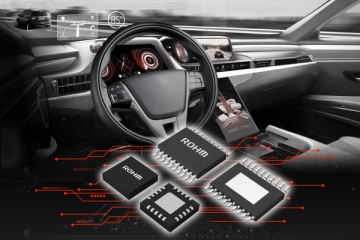
ROHM Begins Mass Production of its BD9P Series Automotive DC/DC Converters
ROHM has developed a total of 12 models in the "BD9P Series" of primary DC/DC converters for automotive applications. The "BD9P Series" employs proprietary advanced power technology 'Nano Pulse Control™' and a new control method to simultaneously achieve fast response and high efficiency. The power IC achieves a power conversion efficiency of 92% under high load conditions and a power conversion efficiency of 85% under light load conditions.
2020.10.27by 명세환 기자
.jpg)
Vicor Releases Radiation-Fault Tolerant DC/DC Converter Module
Vicor announced the launch of its first radiation-hardened DC-DC converter module fabricated in a new plated SM-ChiP package. The module can deliver up to 300W of power to low-voltage ASICs from a 100V nominal supply, and Boeing testing has demonstrated resilience to a total ionizing dose of 50Krad and immunity to single event upset.
2021.01.05by 이수민 기자
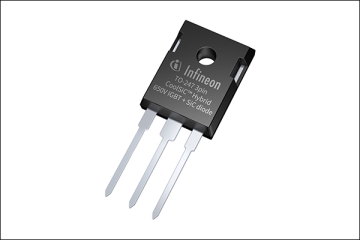
Infineon Launches 'Si+SiC' 650V Hybrid IGBT Family
Infineon launches a 650V CoolSiC hybrid IGBT discrete product family. The product family combines 650V TRENCHSTOP 5 IGBT technology with a unipolar Schottky barrier CoolSiC diode. With high switching frequency and low switching loss, it is suitable for DC/DC converters and PFC, and can be utilized in battery charging infrastructure, energy storage solutions, solar inverters, UPS, server and telecom SMPS applications.
2021.02.18by 강정규 기자

Intel Unveils Next-Generation 'Core Ultra Series 3' and vPro Platform for Enterprise PCs
Intel has officially unveiled the "Intel Core Ultra Series 3" for next-generation enterprise PCs and the latest vPro platform, addressing a wide range of demands from enterprise notebooks to high-performance workstations.
2026.03.26by 배종인 기자
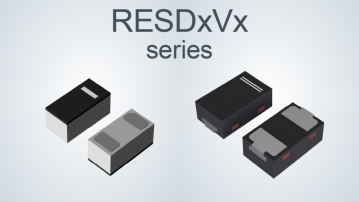
ROHM Launches ESD Protection Diode Compatible with High-Speed Interfaces of 10Gbps or Higher
Semiconductor specialist ROHM has developed the 'RESDxVx series' of ESD (electrostatic discharge) protection diodes capable of responding to next-generation high-speed data communication environments exceeding 10Gbps, simultaneously enhancing both signal quality maintenance required in high-speed interfaces and IC protection performance.
2026.03.26by 배종인 기자











