



"10BASE-T1L Ethernet PHY" Increases Industrial Communication Scalability
 Published2021.03.15 09:00
Between devices up to 1 km apart via PoDL
Support for power and data transmission and reception, increasing the number of applications
As smart factories become more widespread, efforts are being made to achieve factory autonomy beyond factory automation. In addition, as the COVID-19 pandemic prolongs, the non-face-to-face trend is strengthening across society, and the number of companies seeking to introduce remote solutions is also increasing.
In order to properly introduce autonomous systems and remote solutions, it is essential to build a communication infrastructure that reliably transmits large amounts of data. Recently, wireless communication solutions, led by 5G, have been receiving a lot of attention, but wired communication solutions, which are still evaluated well in terms of reliability, are being adopted more. Ethernet is one of them.
However, due to its relatively short communication distance (200 m), Ethernet’s use in the industry was limited to process automation within factories. Then, in November 2019, the trend changed when IEEE approved the 10BASE-T1L Ethernet PHY standard.
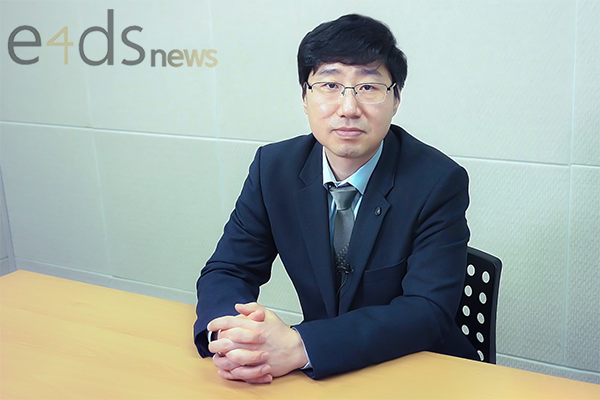
We met with Kim Ryeong-mo, deputy manager in charge of broad market application technology support at Analog Devices Korea (ADI), and asked him about the changes that the 10BASE-T1L standard will bring to the industry in the future.
Q. How does the 10BASE-T1L Ethernet PHY standard, approved in November 2019, improve upon existing Ethernet PHY standards?
A. There are improvements in three areas. First, the ability to detect link losses of less than 10 μs in real-time industrial Ethernet protocols has been added. Second, packet detection for IEEE 1588 timestamps has been added to ensure accurate timing across the network. Third, the system-level robustness has been improved at power-on through an on-chip power supply monitor.
Q. The 10BASE-T1 standard is for automotive use, so why is 10BASE-T1L suitable for industrial use? Is it just a similar name?
A. 100BASE-T1 is a 100 Mbps automotive Ethernet standard to increase data throughput in in-vehicle infotainment (IVI), ADAS, powertrain, and other electrical systems, meet stringent automotive emission standards, and reduce cabling weight and cost.
On the other hand, 10BASE-T1L can reuse some of the existing installed Ethernet cables and can upgrade brown field process automation installations using Ethernet-APL (Advanced Physical Layer) based on the 10BASE-T1L physical layer. In addition, it provides high data rates, ease of use, and interoperability in the field.
For example, it supports two amplitude modes: using 2.4 V peak to extend the communication distance of a point-to-point communication support solution up to 1 km, or using 1.0 V peak for shorter distances. The 1.0 V peak amplitude mode allows application in explosion-proof system (Ex) environments and meets demanding maximum energy limits.
Q. 10BASE-T1L is a single-pair Ethernet standard. What is the difference between single-pair Ethernet and 2-pair and 4-pair Ethernet?
A. 10BASE-T1L is a technology that simultaneously transmits power and data over long distances using a single shielded twisted pair cable using two-wire technology. It has four differences compared to 2/4-pair Ethernet. First is the transmission speed. 2/4-pair Ethernet can transmit up to Gb, but 10BASE-T1L is a 10Mb dedicated line.
Second is the data transmission distance. 2/4 pair Ethernet supports up to 100m, and 10BASE-T1L supports up to 1km. Third is the connector type. 2/4 pair Ethernet uses RJ45, but 10BASE-T1L uses a 2-pin connector. Fourth is the power transmission part. 2/4 pair Ethernet uses PoE (Power over Ethernet) to transmit power and data, and 10BASE-T1L uses PoDL (Power over Data Line).
The 10BASE-T1L standard provides seamless edge-to-cloud connectivity for process automation systems, thereby supporting the creation of rich data sets for advanced data analytics.
Q. What is the correlation between the introduction of a 10BASE-T1L solution and the presence or absence of a gateway installation? Why does it reduce the need for gateway installation?
A. The 10BASE-T1L solution integrates Ethernet as a communication method at the enterprise, control, and field levels in process automation, reducing the need for complex and power-hungry gateways.
Gateway savings translate into reduced gateway installation costs and complexity. 10BASE-T1L based converged networks offer simple installation, easy device replacement, and faster network commissioning and configuration. This results in simpler root cause analysis and maintenance in the field, as well as faster software updates.
Q. Why is 10BASE-T1L suitable for 'Zone 0' applications?
A. Zone 0 is a hazardous area where sensors or actuators for flow, level, pressure and temperature are installed. Unlike machine building or factory automation, in process automation, sensors and actuators are not located close to the controller. It is rare for a sensor to be 200 m away from an I/O, and the distance between field switches is up to 1 km.
Unlike existing Ethernet PHY standards that could only support up to 200 m, 10BASE T1L is the optimal solution for controlling ultra-low-power, high-durability field devices suitable for Zone 0 applications at distances of up to 1 km.
Q. Do you see the Ethernet PHY standard completely replacing the 4mA-20mA HART and fieldbus protocols in the long term?
A. Legacy protocols have been successfully deployed in process automation applications for years and are well-proven, robust solutions that won’t disappear overnight.
However, 10BASE-T1L can be customized at the point of installation, which has the advantage of reducing time to market, reducing design resources, and providing a universal product that can be used widely across projects and customers. New 10BASE-T1L-compliant devices are expected to coexist with existing protocol-compliant devices for some time.
Q. Why is the 10BASE-T1L solution less difficult to build?
A. Existing process automation engineers have knowledge and experience in installing, deploying, and debugging 4mA to 20mA using HART and fieldbus protocols. On the other hand, engineers who are just graduating from college are more familiar with Ethernet-based technologies. Therefore, they can build 10BASE-T1L solutions faster than legacy ones.
Q. If there is a 10BASE-T1L related solution provided by ADI, please introduce it.
A. ADI recently launched the 'ADIN1100' industrial Ethernet PHY device to support the 10BASE-T1L Ethernet PHY standard.
The device complies with 10BASE-T1L IEEE Std 802.3cg-2019™ and supports 1.0/2.4V transmission levels for Zero 0 domain. Suitable for intrinsically safe applications, the ADIN1100 provides an MII, RMII MAC interface to the host processor, with pin strapping for master/slave selection, amplitude transfer, and PHY addressing.
The low-power ADIN1100 is available in a compact 6×6 40-pin LFCSP package and operates over the –40 to 105°C temperature range.
Comments
Related news
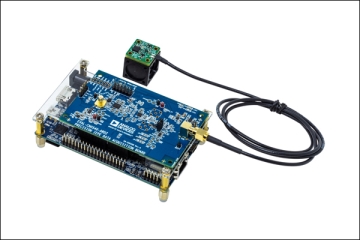
ADI Unveils 'CN0549', IEPE Sensor-Compatible CbM Development Platform
ADI has announced a new condition-based monitoring (CbM) development platform, 'CN0549', designed to accelerate the development of condition monitoring hardware, software, and algorithms. By utilizing CN0549, real-time vibration data processing becomes possible, enabling faster development of machine learning algorithms for predictive maintenance services.
2021.02.06by 강정규 기자

Microchip Unveils Automotive IVI Ethernet AVB Controller
Microchip has launched the LAN9360, a single-chip Ethernet controller that embeds hardware-based audio endpoint solution protocols for Ethernet AVB. The new controller connects audio between Ethernet AVB and local audio interfaces such as I2S, TDM, and PDM. It also supports audio transmission over Ethernet AVB, including gPTP, timestamping, transmission protocols, and content protection using HDCP. It additionally supports secure boot over Ethernet and secure remote updates.
2021.02.16by 강정규 기자
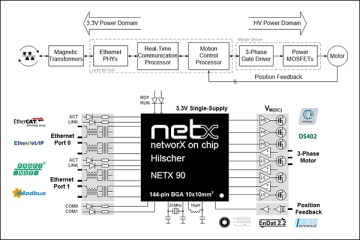
Hillscher Launches Communication Solution for Real-Time Control of Industrial Motors
Hilscher has launched NetMotion, a firmware-configured communication solution with motor control functionality for networked factory and process control systems as well as applications such as assembly, packaging, and robotics. Developers can implement real-time Ethernet connectivity and general-purpose motor and motion control functionality as a single-chip solution through NetMotion.
2021.02.16by 이수민 기자
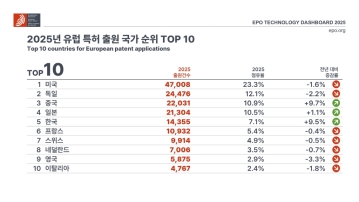
European Patent Applications Surpass 200,000 for the First Time… South Korea Maintains 5th Place, Led by Batteries and Telecommunications
According to the European Patent Office (EPO)'s 'Technology Dashboard 2025', European patent applications last year reached 201,974, surpassing 200,000 for the first time. Korean companies and inventors filed 14,355 applications, representing a 9.5% increase from the previous year and maintaining 5th place by country. Battery, digital communication, and semiconductor technologies led the growth, with Samsung ranking as the top EPO applicant for the second consecutive year and LG reaching 3rd place. The presence of major domestic cities such as Seoul, Suwon, and Yongin was also confirmed. It was also revealed that Korea's European patent strategy is expanding beyond individual technologies to span the entire industry.
2026.03.24by 명세환 기자

SK Telecom First Applies AI-Based Network Operations at Gwanghwamun K-Pop Concert
SK Telecom announced that it applied an AI-based network operation system for the first time at a large-scale K-pop concert held in the Gwanghwamun area of Seoul on March 21st, managing communication quality throughout the event. Mobile data usage during the three hours before and after the concert reached 12.15TB, approximately doubling compared to the same time slot the previous weekend. SK Telecom monitored traffic using the AI system 'A-One' in five-minute and 50-meter units to respond to potential overload situations, while also operating temporary communication facilities and on-site personnel in parallel. This case is interpreted as confirmation of the practical applicability of AI-based autonomous network operation in an environment where demand from dense events and foreign users increases simultaneously.
2026.03.23by 명세환 기자











