



Processing massive IoT data requires a robust algorithm system.
 Published2021.03.25 16:44
A large amount of data transmitted by numerous IoT nodes,
The Liti algorithm-driven system is advantageous for processing
The adoption of IoT technology is rapidly increasing. The number of IoT devices worldwide is expected to reach hundreds of billions in the future. Representative use cases of IoT technology include monitoring environmental parameters such as temperature, humidity, and air quality.
Organizations can make decisions and take appropriate action based on data collected through IoT technology. For example, analyzing the composition of gas emitted from a plant's chemical treatment equipment can help determine whether a malfunction requires maintenance or replacement due to end of life, allowing for appropriate action.
However, effectively analyzing the massive amount of data continuously captured by sensors and determining appropriate actions is a daunting task. While processing data from a few nodes isn't difficult, smart home/farm/building/factory systems typically contain a massive number of IoT nodes.
Automated decision-making processes are essential for maximizing efficiency and achieving rapid response times. This requires advanced algorithms. With so many IoT nodes to process, simply storing a set of rules in a database and applying them to incoming data is ineffective. This quickly leads to processing limitations. Therefore, a more sophisticated yet streamlined approach is needed.
The Rete algorithm is a prime example. Already used in numerous applications, this algorithm was first developed in the late 1970s. The basic framework of the Liti algorithm is a pattern matching mechanism that allows for rapid comparison of large amounts of pattern data with a database containing various objects. This avoids data repetition and allows for the storage of specific pattern states during processing. This eliminates the need to revert to previously applied rules, resulting in faster processing.
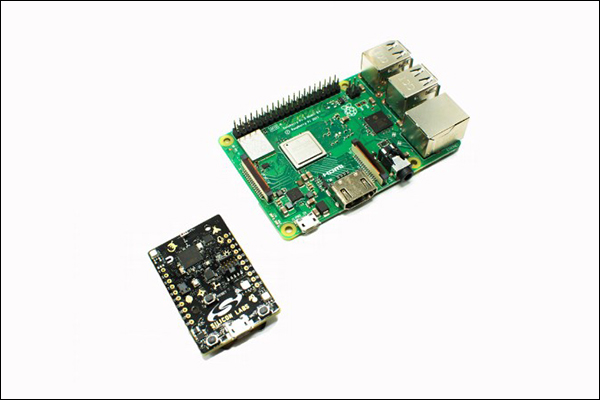
Ursareo's IoT system based on [Photo = Mouser]
UrsaLeo's cloud-based analytics system, based on Silicon Labs' Thunderboard 2 sensor module and a Raspberry Pi 3B+ computer pre-loaded with Yocto Linux, uses the Lity algorithm.
Rather than referencing time and then referencing a lookup table, this system applies a tree-based rule structure to captured data, matching patterns and taking appropriate action accordingly. This allows for efficient decision-making without adding unwanted delays to the system.
You can view your compiled data sets in a customized dashboard, and you can even set up alerts to alert workers when specific events requiring human intervention occur.
You can also use an intuitive visual editor tool to build a set of rules tailored to your application's needs. For example, you can set it to notify you whenever a message is received, or when no messages are received within a certain time interval.
Alternatively, for long-term monitoring purposes, you can configure notifications to occur at specific intervals, such as every hour, day, or week. You can also apply geofencing rules to notify when a mobile node enters or leaves a specific area.
This method can be used in factories to ensure that forklifts do not leave a specific area, and can also be used in fleet management or livestock tracking applications.
If captured data values are different from normal, for example, if they consistently remain the same or consistently display zero, this may indicate that the sensor is not functioning properly. You can configure the system to notify you in these cases, allowing for prompt repairs.
◇ Collects diverse environmental data, capable of processing data from up to 2 million nodes.
The Thunderboard 2 module can capture environmental data from a variety of sensors measuring things like light, air quality, barometric pressure, relative humidity, and temperature, and can even add gas sensing capabilities. It also includes a 6-axis inertial sensor (for spatial orientation) and a Hall-effect sensor (for geographic orientation).
The Raspberry Pi board connects directly to the Google Cloud Platform, acting as an IoT gateway. All compiled data can be transmitted to the cloud via wireless (Wi-Fi) or wired (Ethernet) connections. Depending on the application's needs, the hardware can be powered by USB or lithium-ion coin cells.
This system employs a tree-based methodology, enabling it to handle any number of IoT nodes connected within the network, potentially processing hundreds of thousands of events and alerts per second. A medium-capacity server can handle 500,000 messages per second. A high-capacity server can handle up to 1 to 2 million messages per second.
A system featuring optimized cloud-connectable hardware and the LIT algorithm enables rapid and efficient processing of data transmitted by IoT nodes across various industries. This accelerates the adoption of IoT technology and enables the connection of more nodes.
This article is a summary of the article, "More Effective Analysis of Environmental Sensor Data Through Automated Cloud-Based Analysis," by Mark Patrick, Technical Marketing Manager at Mouser Electronics.
Comments
Related news

Silicon Labs Provides Software to Accelerate IEEE 1588 System Development
IEEE 1588 packet-based time synchronization is being adopted across increasingly diverse fields beyond communication networks. In response, Silicon Labs has announced "Clockbuilder Pro," an integrated solution that enables easy implementation of IEEE 1588 in communications, financial trading, smart grids, industrial applications, and other sectors.
2020.11.18by 이수민 기자
Nordic Provides SiP Equipped with 'GPS-Supported' LTE-M/NB-IoT Modem
Nordic's nRF9160 low-power SiP, which integrates LTE-M/NB-IoT modem and GPS functionality, has been adopted in the C7004 Cube GPS tracking device from U.S. startup Cube Trackers. The Cube GPS is a device measuring approximately 70×40×16mm that periodically transmits the location of tracked objects to the cloud through a cellular network, maintaining battery life of approximately 10 to 60 days depending on GPS update intervals.
2021.03.10by 이수민 기자

Maxim Unveils Three Power ICs to Extend Battery Life in IoT Systems
Next-generation IoT systems are oriented toward ultra-compact, low-power, and high-performance designs. To enable designers to extend battery life and reduce solution size in industrial, consumer, and medical IoT systems, Maxim Integrated has launched three Essential Analog Efficient Power ICs.
2021.03.16by 강정규 기자
Korea Instrument, KOLAS Accredited Calibration Agency First to Simultaneously Acquire ISO/IEC 27,001·27,701
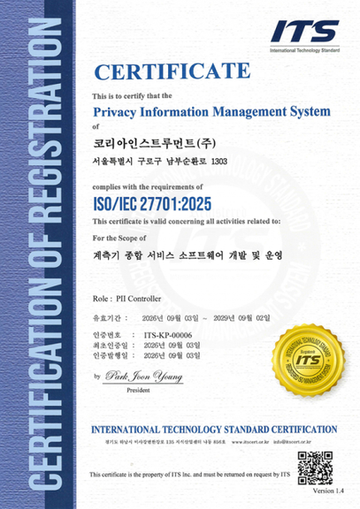
Korea Instrument has become the first among KOLAS accredited calibration agencies to simultaneously acquire ISO/IEC 27,001 and ISO/IEC 27,701 certifications. Through its proprietary platforms CWIZ Enterprise and CWIZ Partners, the company has embedded information security and personal data protection requirements across all business processes including customer information, equipment data, and calibration reports, with plans to continuously advance its management system through regular audits and security inspections.
2026.10.12by 배종인 기자

TeamViewer One, IT Incident Automation Workflow and Resolution Center Enhanced
TeamViewer has added IT incident automation capabilities and an advanced Resolution Center to its integrated digital workplace management platform 'TeamViewer ONE'. Recurrent service disruptions, configuration errors, and capacity shortages are automatically handled according to preset policies, and device status verification through script deployment can be managed in a unified interface, significantly reducing repetitive tasks for IT teams.
2026.10.12by 배종인 기자











