


Infineon Offers TPM 2.0 to Strengthen Linux System Security
 Published2021.03.26 11:58
Infineon Launches OptiGa TPM 2.0 Solution
Support for easy TPM integration into Linux-based systems
The Trusted Platform Module (TPM), which provides high-level security for remote software updates, disk encryption, and user authentication, is an essential component of embedded devices.
Infineon Technologies announced on the 25th that it is offering the 'OPTIGA™ TPM 2.0' solution that includes comprehensive TSS (TPM Software Stack) host software to enable easy integration of TPM into Linux-based systems.
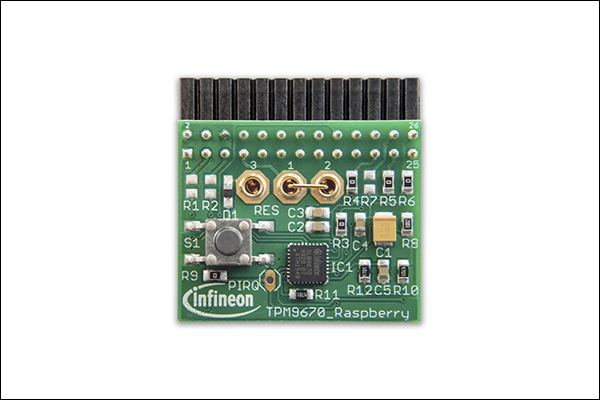
IoT system integrators can enhance the security of connected devices using the Optiga TPM 2.0, which supports Plug & Play (PNP).
Infineon, in collaboration with Intel and the Fraunhofer Institute for Secure Information Technology, has developed open-source software implementing the latest FAPI (Feature API) standard. By integrating TSS-FAPI, even those without expertise in low-level security specifications can reduce source code development time by up to 1/16th. Additionally, industrial device certification according to the IEC 62443 standard can also be easily carried out.
Additionally, the TSS stack has implemented the FAPI specification, recently announced as an international standard by the Trusted Computing Group (TCG), along with related tools and plugins. The TSS stack is open-source software that enables seamless integration of TPM 2.0 into Linux-based systems. It includes Linux software support for device authentication, data encryption, software updates, and remote device management.
FAPI is a general-purpose interface for user authentication, single sign-on (SSO), and email encryption/signing, enabling basic support for the PKCS#11 standard. It also provides default configurations for automated handling of cryptographic functions, system integration, and security mechanisms, following the latest industry best practices.
The Optiga TPM acts as a vault for sensitive data in connected devices, reducing the risk of data loss and production downtime due to cyberattacks. Furthermore, Infineon has been certified by an independent certification body according to Common Criteria (CC), an international guideline and standard developed for evaluating information security products. This verifies the compatibility and interoperability between the TSS stack, which includes the latest FAPI, and the Infineon TPM.
Comments
Related news

"The importance and value of IoT security solutions will increase further"
Many companies are viewing the adoption of IoT technology as the starting point for digital transformation. However, IoT devices are connected to networks, which creates the possibility that anonymous attackers could steal control authority and misuse corporate assets. IoT security has now become a critical consideration that must be addressed during the development of related applications.
2020.06.05by 이수민 기자

Infineon Introduces Solution for Verifying Qi 1.3 Wireless Charging Certification
Inductive wireless charging devices have been rapidly spreading with convenience at the forefront. However, unauthenticated chargers can not only shorten the battery life of devices but also potentially harm users in the worst cases. In response, Infineon has unveiled the "OPTIGA Trust Charge" product line, an embedded security solution for safe wireless charging.
2020.11.17by 강정규 기자
Mossa Receives IEC 62443-4-1 Industrial Network Security Certification
According to IDC, 48.8% of IT/OT administrators identified security as the biggest barrier to IT/OT convergence. In response, Moxa obtained IEC 62443-4-1 certification related to industrial network security. This certification defines a secure development lifecycle for developing and maintaining security products for industrial automation and control systems.
2021.03.16by 이수민 기자
.png)
Databricks Unveils Open AI Security Monitoring 'Lakewatch'
Databricks entered the security market on March 24 by unveiling LakeWatch, an open-source agentic SIEM. The core functionality of this product is to integrate and analyze security, IT, and business data in a single environment to support AI-based threat detection and investigation. The company explained that it reduces the limitations of existing security operations centers, which have had to forgo some data due to high cost structures, and enables large-scale data analysis and automation based on open formats and ecosystems. LakeWatch is currently offered as a private preview, with Adobe and Dropbox mentioned as early customers. Databricks also announced an expanded partnership with Anthropic as well as the acquisition of Antimatter and SiftD.ai.
2026.03.26by 배종인 기자

Kaspersky Unveils Revamped 'NEXT' Combining SOC Integrated Management and AI Analytics
As enterprises increase demand for integrated management and automation in the construction and operation of Security Operations Centers (SOC), Kaspersky has disclosed updates to its B2B security product suite 'Kaspersky Next'. This update expands EPP, EDR, XDR, and SIEM integration through a single console based on OSMP, incorporates AI capabilities such as DLL hijacking detection and suspicious account takeover behavior identification, and includes integration with generative AI assistant tool KIRA. The company stated that in large-scale deployment environments, EDR Expert can reduce resource requirements by up to 30%, and XDR Expert by up to 60%.
2026.03.25by 배종인 기자











